Antegrade persufflation of porcine kidneys improves renal function after warm ischemia
Catherine Min, Jean-Philippe Galons, Ronald M. Lynch, Leah V. Steyn, Nicholas D. Price, Brad P. Weegman, Michael J. Taylor, Abhishek Pandey, Robert Harland, Diego Martin, David Besselsen, Charles W. Putnam, Klearchos K. Papas

TL;DR
Persufflating pig kidneys with oxygen during preservation improves their function after being without blood flow, compared to traditional cold storage.
Contribution
Antegrade persufflation is shown to better preserve renal function in a porcine model of donor after circulatory death.
Findings
Persufflated kidneys had significantly higher estimated glomerular filtration rate (eGFR) compared to static cold storage.
Persufflated kidneys showed higher whole-organ oxygen consumption and lower lactate production.
No morphological differences were observed between persufflated and cold-stored kidneys.
Abstract
Transplantation of kidneys from expanded criteria donors (ECD), including after circulatory death (DCD), is associated with a higher risk of adverse events compared to kidneys from standard criteria donors. In previous studies, improvements in renal transplant outcomes have been seen when kidneys were perfused with gaseous oxygen during preservation (persufflation, PSF). In the present study, we assessed ex-vivo renal function from a Diffusion Contrast Enhanced (DCE)-MRI estimation of glomerular filtration rate (eGFR); and metabolic sufficiency from whole-organ oxygen consumption (WOOCR) and lactate production rates. Using a porcine model of DCD, we assigned one kidney to antegrade PSF, and the contralateral kidney to static cold storage (SCS), both maintained for 24 h at 4°C. Post-preservation organ quality assessments, including eGFR, WOOCR and lactate production, were measured under…
Genes, proteins, chemicals, diseases, species, mutations and cell lines named across the full text — each resolved to its canonical identifier and authoritative record.
Click any figure to enlarge with its caption.
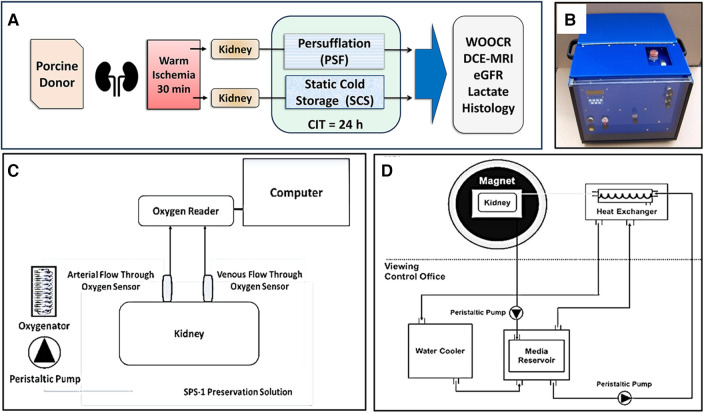 Figure 1
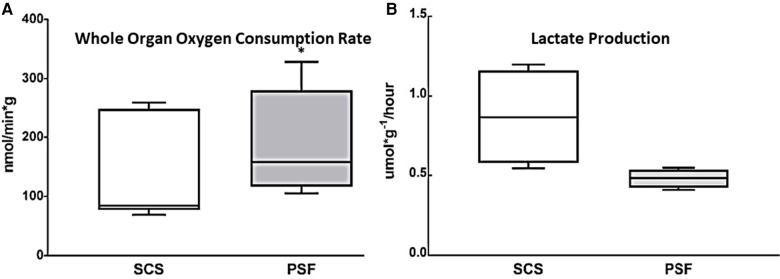 Figure 2
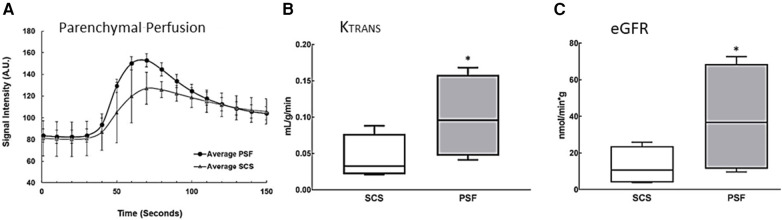 Figure 3
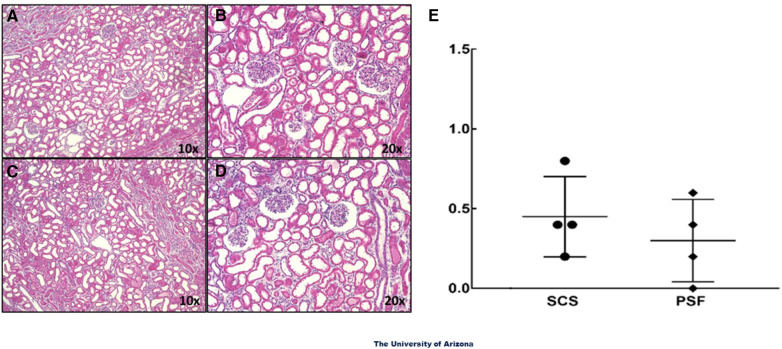 Figure 4
Peer Reviews
No public reviews on file for this paper yet. If you reviewed it on a platform where reviews are public (OpenReview, ICLR, NeurIPS, ICML), you can paste yours below so the community can read it here.
Videos
No videos yet. Explain this paper in a talk, walkthrough, or lecture? Add one.
Taxonomy
TopicsOrgan Transplantation Techniques and Outcomes · MRI in cancer diagnosis · Liver Disease and Transplantation