Application of a count regression model to identify the risk factors of under-five child morbidity in Bangladesh
Md Ismail Hossain, Abu Sayed Md Ripon Rouf, Md Rukonozzaman Rukon, Shuvongkar Sarkar, Iqramul Haq, Md Jakaria Habib, Faozia Afia Zinia, Tanha Akther Tithy, Asiqul Islam, Md Amit Hasan, Mir Moshiur, Md Shakil Ahmed Hisbullah

TL;DR
This study identifies risk factors for child illness in Bangladesh using health survey data and statistical models.
Contribution
The study applies a Poisson regression model to determine key risk factors for under-five child morbidity in Bangladesh.
Findings
The prevalence of non-symptomatic children increased, while fever, diarrhoea, and ARIs decreased over time.
Child age, sex, underweight, and maternal education are significant determinants of child morbidity.
Children of mothers with primary education face higher morbidity risks compared to those with higher education.
Abstract
Bangladesh has seen a significant decline in child mortality in recent decades, but morbidity among children <5 y of age remains high. The aim of this analysis was to examine trends and identify risk factors related to child morbidity in Bangladesh. This analysis is based on data from four successive cross-sectional Bangladesh Demographic and Health Surveys for the years 2007, 2011, 2014 and 2017–18. Several count regression models were fitted and the best model was used to identify risk factors associated with morbidity in children <5 y of age. According to the results of the trend analysis, the prevalence of non-symptomatic children increased and the prevalence of fever, diarrhoea and acute respiratory infections (ARIs) decreased over the years. The Vuong's non-nested test indicated that Poisson regression could be used as the best model. From the results of the Poisson regression…
Genes, proteins, chemicals, diseases, species, mutations and cell lines named across the full text — each resolved to its canonical identifier and authoritative record.
Click any figure to enlarge with its caption.
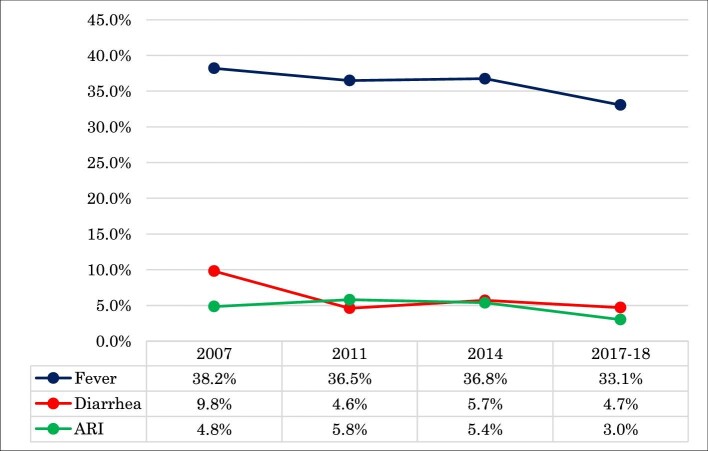 Figure 1
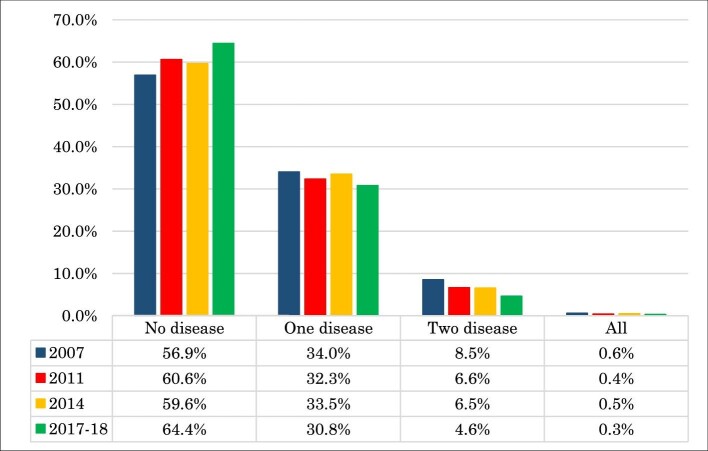 Figure 2
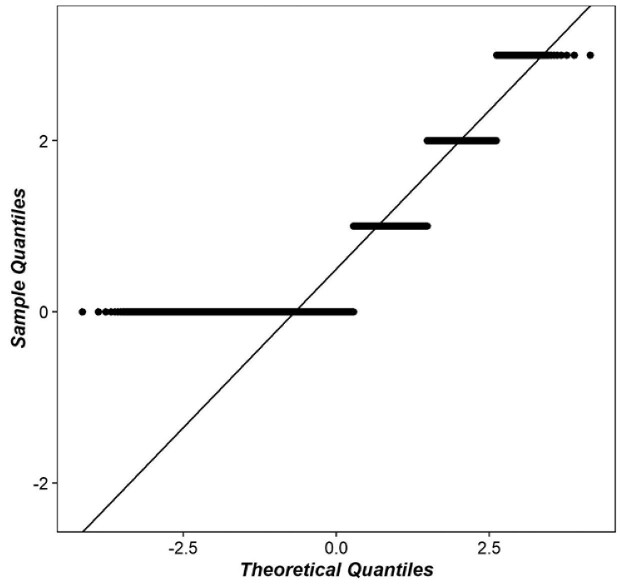 Figure 3
Peer Reviews
No public reviews on file for this paper yet. If you reviewed it on a platform where reviews are public (OpenReview, ICLR, NeurIPS, ICML), you can paste yours below so the community can read it here.
Videos
No videos yet. Explain this paper in a talk, walkthrough, or lecture? Add one.
Taxonomy
TopicsChild Nutrition and Water Access · Global Maternal and Child Health · Global Health and Epidemiology