The ANTI-LAMBDA: A Non-statical Tonal Indicator Low-Frequency Air-Bone Gap of Ménière’s Bouts and Disease Activity
Francisco Alves de Sousa, João Tarrio, Joana Ida Dias, Ana Pinto, Luís Meireles, Ângela Reis Rego

TL;DR
This study identifies a low-frequency air-bone gap as a potential indicator of Ménière’s disease activity and instability.
Contribution
The study introduces the ANTI-LAMBDA as a novel clinical indicator for Ménière’s disease activity and stability.
Findings
Low-frequency air-bone gaps (LFABGs) were significantly associated with unstable Ménière’s disease (p < 0.001).
LFABG magnitude correlated with increased disease activity, especially at 250 Hz and 500 Hz (p < 0.001).
The ANTI-LAMBDA has high sensitivity (93.8%) and specificity (82.7%) for identifying unstable Ménière’s disease.
Abstract
Introduction: There have been reports of patients with Ménière´s disease (MD) showing unexplained audiometric air-bone gaps at low frequencies. Little is known about the clinical significance of this finding. The objective of this study was to describe this phenomenon while relating it with clinical features, namely the incidence of attacks. Methods: Unilateral MD patients were selected and cerebral magnetic resonance imaging (cMRI) was assessed to exclude structural pathology. A retrospective longitudinal analysis regarding disease activity and audiometric details was performed. A coincidence index and regression predictive models were considered to assess the relationship between the air-bone gap and MD activity. Results: A total of 70 MD patients were enrolled and 252 audiograms were assessed. Low-frequency air-bone gaps (LFABGs) were significantly associated with unstable MD (p <…
Genes, proteins, chemicals, diseases, species, mutations and cell lines named across the full text — each resolved to its canonical identifier and authoritative record.
Click any figure to enlarge with its caption.
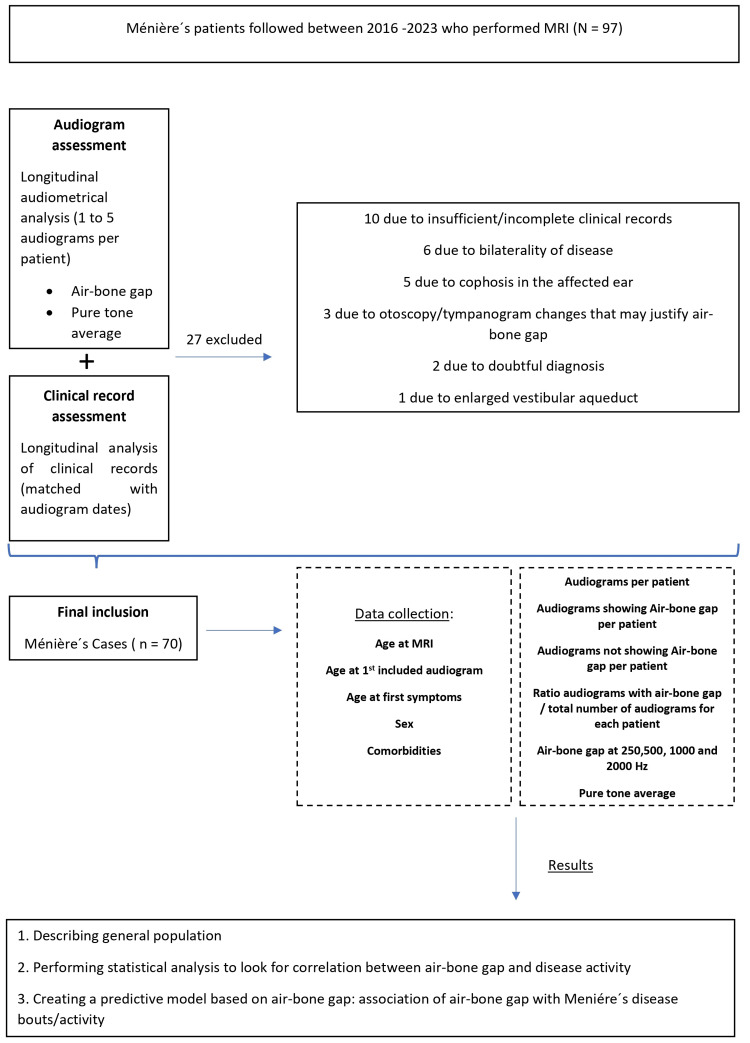 Figure 1
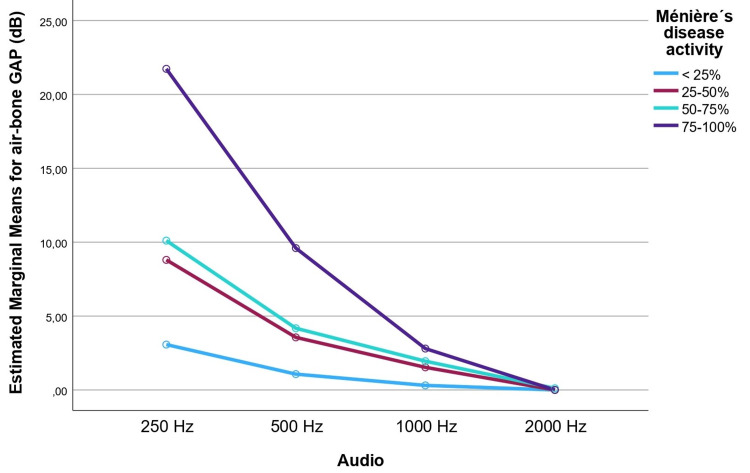 Figure 2
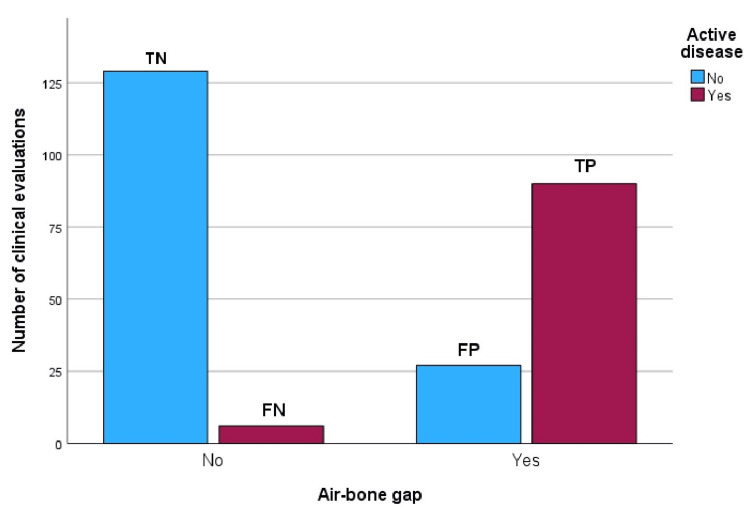 Figure 3
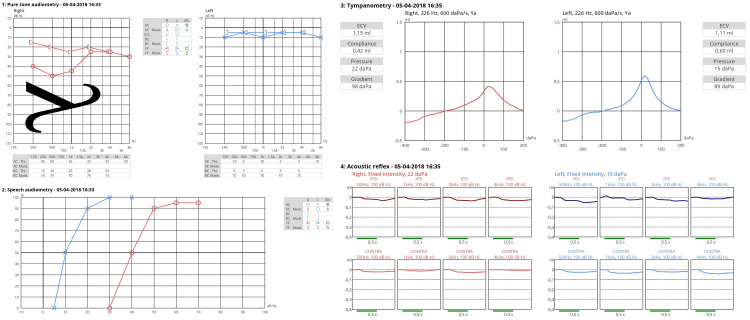 Figure 4
Peer Reviews
No public reviews on file for this paper yet. If you reviewed it on a platform where reviews are public (OpenReview, ICLR, NeurIPS, ICML), you can paste yours below so the community can read it here.
Videos
No videos yet. Explain this paper in a talk, walkthrough, or lecture? Add one.
Taxonomy
TopicsVestibular and auditory disorders · Hearing, Cochlea, Tinnitus, Genetics · Effects of Vibration on Health