Relationship between right-to-left shunt and white matter lesions in patients with migraine: a single-center study
Zhihong Liu, Mingzhu Jiang, Jing He, Yuchan Lin, Lou He, Yan Li, Qi Pan, Shan Wu

TL;DR
This study finds that migraine patients with aura are more likely to have a right-to-left shunt, but this shunt does not seem to be linked to white matter lesions.
Contribution
The study provides new insights into the relationship between right-to-left shunts and white matter lesions in migraine patients.
Findings
Migraine with aura patients had a higher proportion of right-to-left shunts compared to those without aura.
The presence of a right-to-left shunt did not significantly correlate with white matter lesions in migraine patients.
Migraine with aura was associated with earlier onset and shorter disease duration compared to migraine without aura.
Abstract
Migraine patients have an increased long-term risk of cardio and cerebrovascular events. However, whether these patients are more susceptible to white matter lesions (WMLs) remains debated. To explore this question, our study assessed the proportion of RLS in migraine patients and explored the association between right-to-left shunt (RLS) and WMLs. In this study, we included 998 migraine patients. Contrast transcranial doppler (c-TCD) was used to diagnose RLS and assess the extent of the shunt in RLS patients. Of the 998 patients, 505 underwent cranial magnetic resonance imaging (MRI) assessments. WMLs were classified into periventricular white matter lesions (pvWMLs) and deep white matter lesions (dWMLs). Among the 998 migraine patients, 946 had migraine without aura (MO; mean age 36.68 ± 10.46 years; 80.5% female), and 52 had migraine with aura (MA; mean age 29.85 ± 8.59 years;…
Genes, proteins, chemicals, diseases, species, mutations and cell lines named across the full text — each resolved to its canonical identifier and authoritative record.
Click any figure to enlarge with its caption.
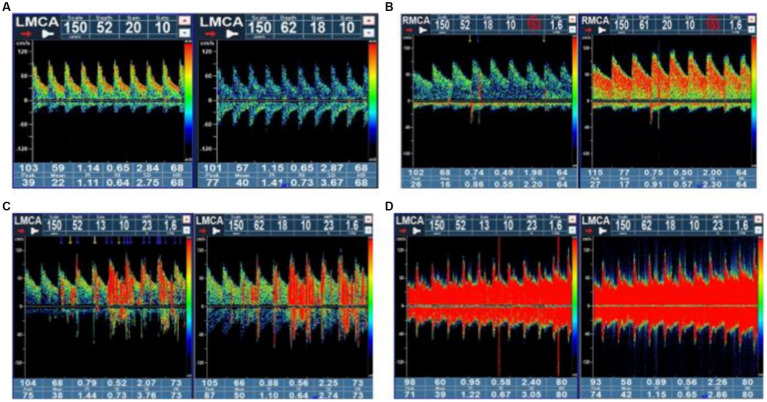 Figure 1
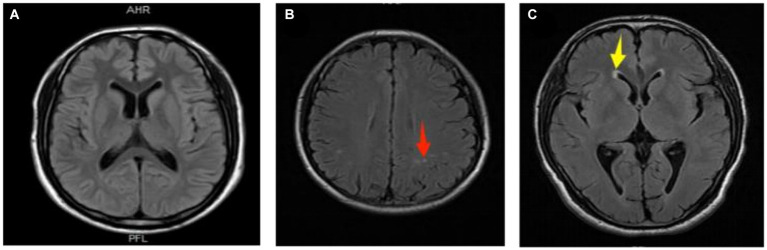 Figure 2
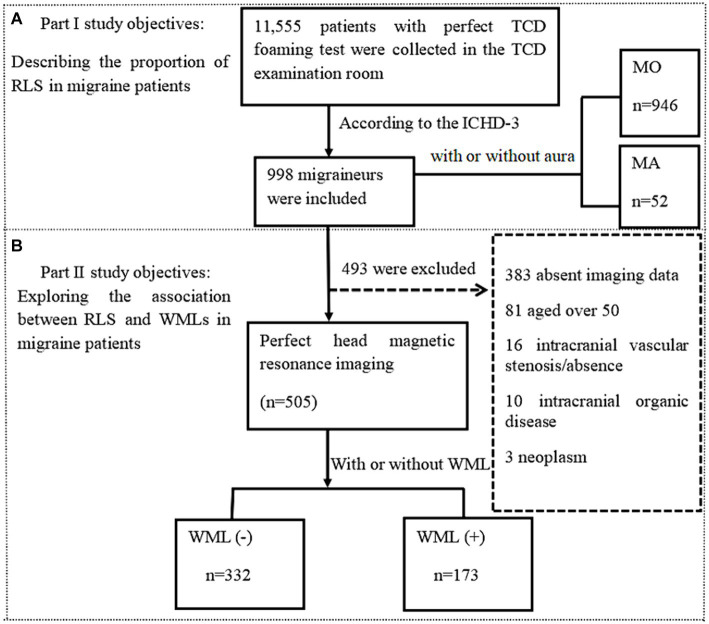 Figure 3
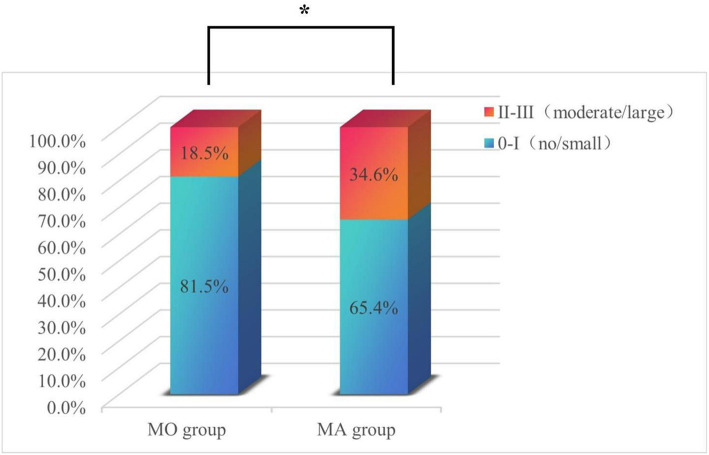 Figure 4
Peer Reviews
No public reviews on file for this paper yet. If you reviewed it on a platform where reviews are public (OpenReview, ICLR, NeurIPS, ICML), you can paste yours below so the community can read it here.
Videos
No videos yet. Explain this paper in a talk, walkthrough, or lecture? Add one.
Taxonomy
TopicsMigraine and Headache Studies · Cardiovascular and Diving-Related Complications · Obstructive Sleep Apnea Research