Associations between fatty infiltration of rotator cuff muscles and tear size or location of rotator cuff tendon
Shiro Kajiyama, Ko Chiba, Tatsunari Aoki, Kiyoshi Sada, Shuntaro Sato, Makoto Osaki

TL;DR
This study shows that fatty infiltration in rotator cuff muscles is linked to the size of tears in those muscles and in adjacent muscles, and it increases with age.
Contribution
The study reveals that fatty infiltration in rotator cuff muscles is associated with both the tear size in the same muscle and in adjacent muscles.
Findings
Fatty infiltration grades were significantly associated with tear size in the same muscle (P < 0.01).
Fatty infiltration in one muscle was also significantly associated with tear size in adjacent muscles (P < 0.01).
Age at surgery was significantly linked to fatty infiltration progression (P < 0.01).
Abstract
Fatty infiltration (FI) of rotator cuff muscles in patients with rotator cuff tears is an important imaging factor for determining surgical indications. However, the associations between FI grade and the size or location of adjacent rotator cuff tears are not well-known. This study aimed to primarily determine whether tear size and location, especially for the SSc tendon, are associated with FI of adjacent rotator cuff muscles. The secondary aim was to clarify which patient factors are associated with rotator cuff muscle FI in rotator cuff tear cases. This study examined 373 shoulders of 348 patients (264 males and 109 females; mean age of 62.8 years) who underwent arthroscopic rotator cuff surgery. The FI grades of the supraspinatus (SSP), infraspinatus (ISP), and subscapularis (SSc) muscles were assessed using preoperative magnetic resonance imaging (MRI) using the Goutallier…
Genes, proteins, chemicals, diseases, species, mutations and cell lines named across the full text — each resolved to its canonical identifier and authoritative record.
Click any figure to enlarge with its caption.
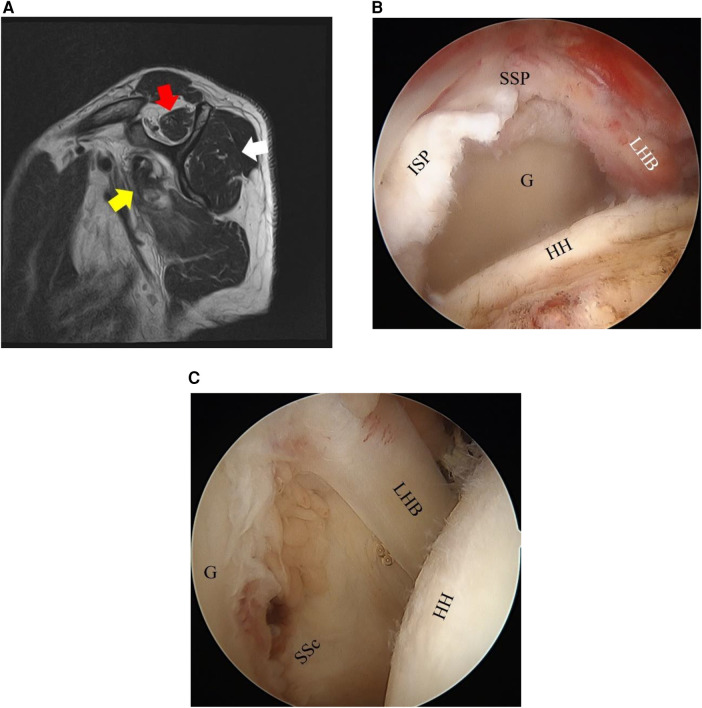 Figure 1
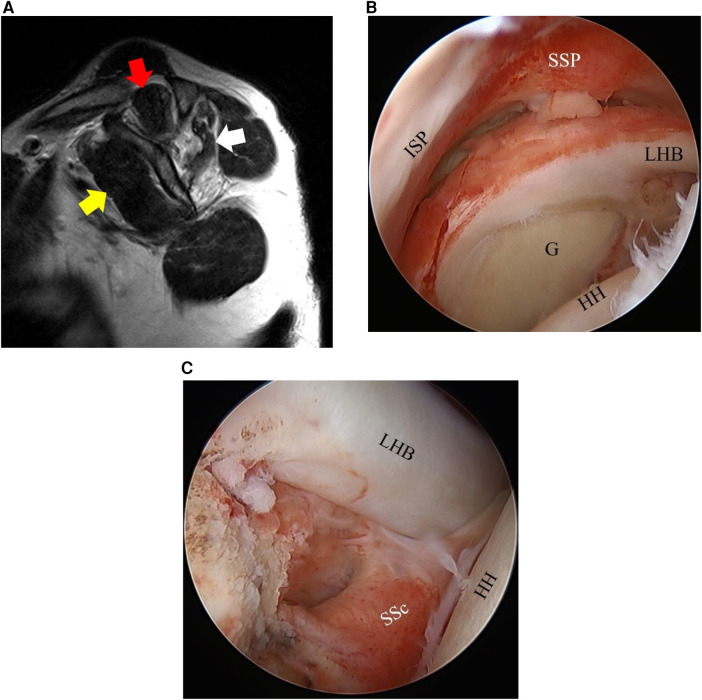 Figure 2
Peer Reviews
No public reviews on file for this paper yet. If you reviewed it on a platform where reviews are public (OpenReview, ICLR, NeurIPS, ICML), you can paste yours below so the community can read it here.
Videos
No videos yet. Explain this paper in a talk, walkthrough, or lecture? Add one.
Taxonomy
TopicsShoulder Injury and Treatment · Shoulder and Clavicle Injuries · Trauma Management and Diagnosis