Percutaneous Surgical Treatment of Trigger Finger
Serdar Satılmış Orhan

TL;DR
This study shows that a minimally invasive procedure for trigger finger is highly effective and has advantages over traditional surgery.
Contribution
Demonstrates the high success rate and practical benefits of percutaneous release for trigger finger treatment.
Findings
98.3% of patients had successful outcomes with percutaneous release.
No joint motion limitations were observed in any patients.
Only two patients required open surgery due to re-entanglement.
Abstract
Objective To evaluate the efficacy of percutaneous release therapy for patients with trigger finger. Methods We obtained the hospital records of 120 patients who underwent percutaneous release, and their final status was evaluated by telephone. Results The sample was composed of 84 (70%) female and 36 (30%) male patients, with a mean age of 55.4 (range: 30–79) years, and a mean follow-up of 28.6 (range: 6–74) months. Successful results were obtained in 118 (98.3%) patients. In the first week after the procedure, release was performed through the open surgical method in two patients who had complaints of re-entanglement in their fingers. No limitation to the joint range of motion was detected in any finger. Conclusions Percutaneous release has advantages over the open surgery method in the surgical treatment of trigger finger, due to its low cost, ease of application, performance…
Genes, proteins, chemicals, diseases, species, mutations and cell lines named across the full text — each resolved to its canonical identifier and authoritative record.
Click any figure to enlarge with its caption.
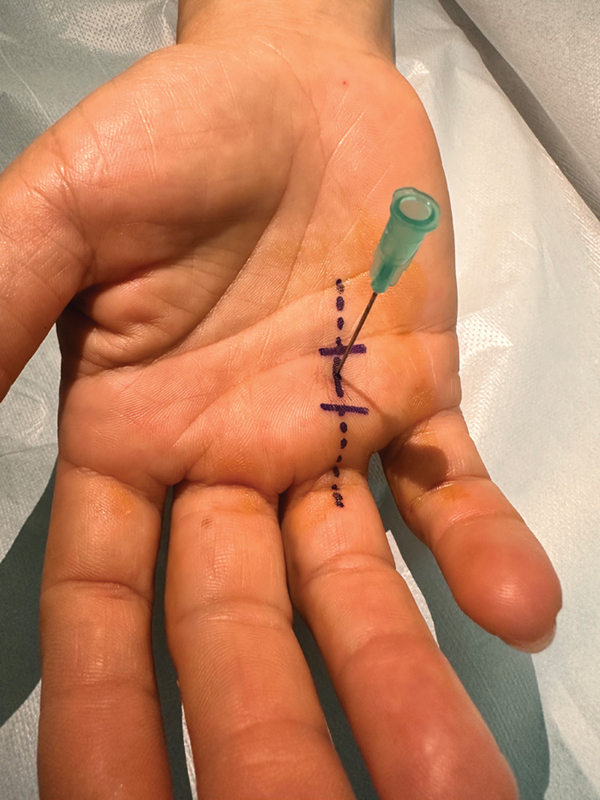 Figure 1
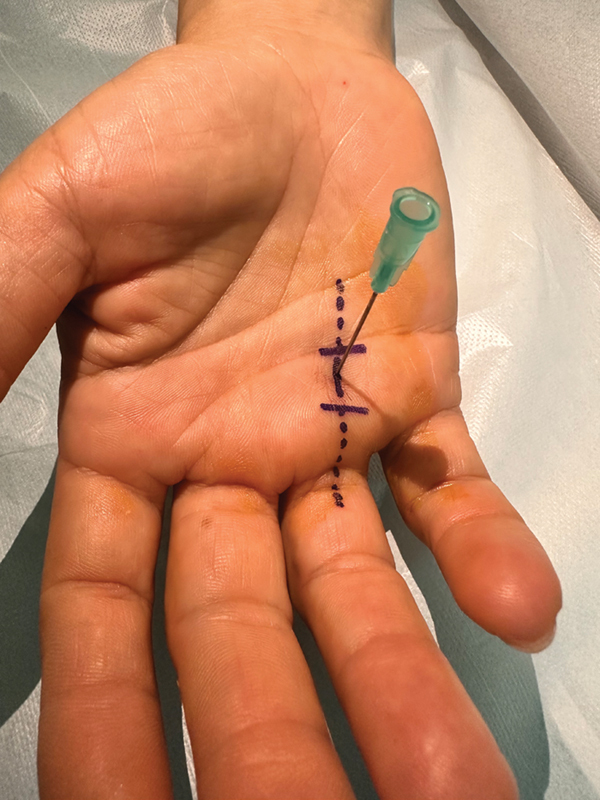 Figure 2
Peer Reviews
No public reviews on file for this paper yet. If you reviewed it on a platform where reviews are public (OpenReview, ICLR, NeurIPS, ICML), you can paste yours below so the community can read it here.
Videos
No videos yet. Explain this paper in a talk, walkthrough, or lecture? Add one.
Taxonomy
TopicsOrthopedic Surgery and Rehabilitation · Reconstructive Surgery and Microvascular Techniques · Foot and Ankle Surgery