Trachoma-associated morbidity and mortality in Brazil: an ecological study focusing on hospitalization and mortality data, 2000−2022
Adjoane Maurício Silva Maciel, Anderson Fuentes Ferreira, Nádia Maria Girão Saraiva de Almeida, Manuella Maurício Silva Maciel, Taynara Lais Silva, Mirele Coelho Araújo, Roberto da Justa Pires, Alberto Novaes Ramos

TL;DR
This study examines trachoma-related hospitalizations and deaths in Brazil from 2000 to 2022, highlighting regional and demographic patterns.
Contribution
The study provides the first comprehensive analysis of trachoma-associated morbidity and mortality in Brazil using national hospital and mortality data.
Findings
Trachoma was more common in males, older adults, and those with brown skin in Brazil.
Hospital admissions and deaths were more frequent in the North and Northeast regions.
Trachoma-related sequelae were reported in a notable percentage of cases.
Abstract
Trachoma is the leading infectious cause of blindness worldwide. It is a neglected tropical disease caused by Chlamydia trachomatis. The objective of this study was to analyze the trachoma-associated morbidity and mortality in Brazil from 2000 to 2022. This ecological time-series study was based on secondary data on trachoma obtained from hospital admissions (trachoma as the primary or secondary cause) and death certificates (trachoma as the underlying or associated cause). We calculated the sex- and age-standardized rates of hospital admissions and trachoma-specific mortality according to sociodemographic variables and analyzed the spatial distribution. We identified 141/263,292,807 hospital admissions (primary cause: 83.0%) and 126/27,596,830 death certificates (associated cause: 91.3%) related to trachoma. Trachoma-related sequelae were reported in 8.5% of hospital admissions and…
Genes, proteins, chemicals, diseases, species, mutations and cell lines named across the full text — each resolved to its canonical identifier and authoritative record.
Click any figure to enlarge with its caption.
 Figure 1
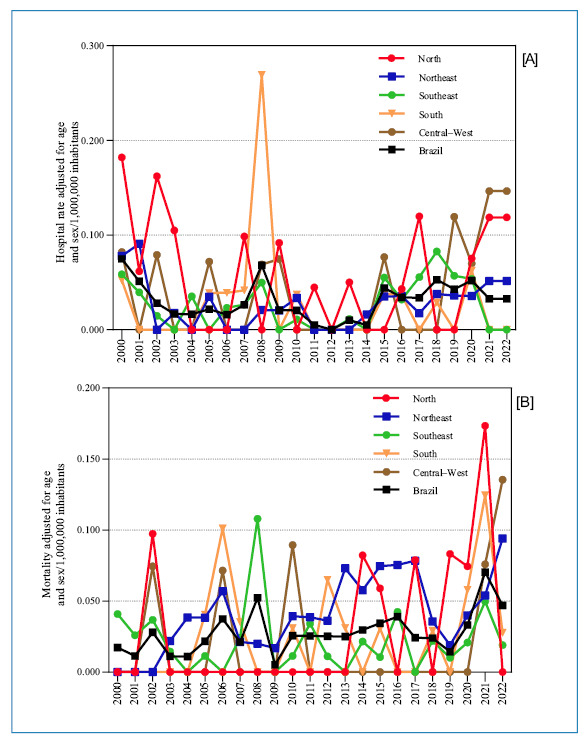 Figure 2
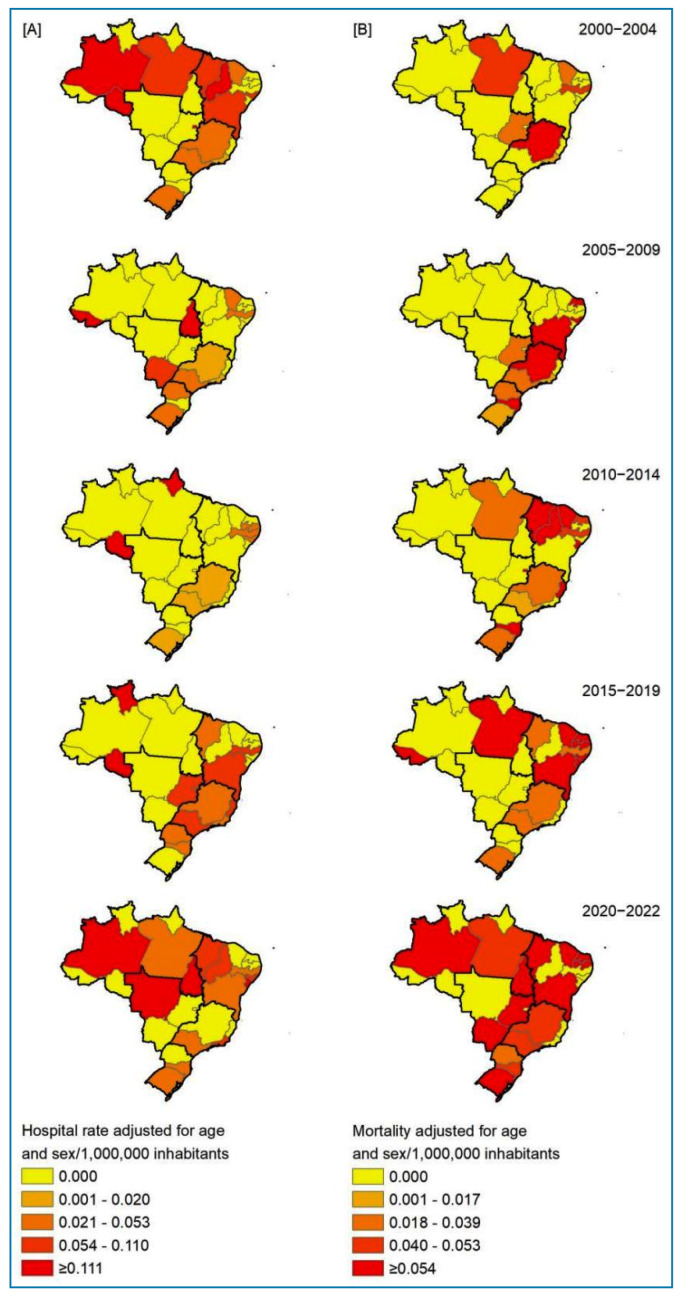 Figure 3
Peer Reviews
No public reviews on file for this paper yet. If you reviewed it on a platform where reviews are public (OpenReview, ICLR, NeurIPS, ICML), you can paste yours below so the community can read it here.
Videos
No videos yet. Explain this paper in a talk, walkthrough, or lecture? Add one.
Taxonomy
TopicsReproductive tract infections research · Virology and Viral Diseases · Maternal and Neonatal Healthcare