Predicting blood lead in Uruguayan children: Individual- vs neighborhood-level ensemble learners
Seth Frndak, Elena I. Queirolo, Nelly Mañay, Guan Yu, Zia Ahmed, Gabriel Barg, Craig Colder, Katarzyna Kordas, Giridhara R Babu, Meghnath Dhimal, Meghnath Dhimal

TL;DR
The study compares individual and neighborhood factors in predicting blood lead levels in Uruguayan children, finding that individual-level data performs best.
Contribution
The novel contribution is comparing individual- and neighborhood-level ensemble machine learning models for predicting blood lead levels in children.
Findings
Individual-level models (Ensemble-I) performed best with an AUC of 0.75.
Neighborhood-level models (Ensemble-N) severely underperformed with an AUC of 0.51.
Combining individual and neighborhood variables (Ensemble-All) improved precision but not overall performance.
Abstract
Predicting childhood blood lead levels (BLLs) has had mixed success, and it is unclear if individual- or neighborhood-level variables are most predictive. An ensemble machine learning (ML) approach to identify the most relevant predictors of BLL ≥2μg/dL in urban children was implemented. A cross-sectional sample of 603 children (~7 years of age) recruited between 2009–2019 from Montevideo, Uruguay participated in the study. 77 individual- and 32 neighborhood-level variables were used to predict BLLs ≥2μg/dL. Three ensemble learners were created: one with individual-level predictors (Ensemble-I), one with neighborhood-level predictors (Ensemble-N), and one with both (Ensemble-All). Each ensemble learner comprised four base classifiers with 50% training, 25% validation, and 25% test datasets. Predictive performance of the three ensemble models was compared using area under the curve (AUC)…
Genes, proteins, chemicals, diseases, species, mutations and cell lines named across the full text — each resolved to its canonical identifier and authoritative record.
Click any figure to enlarge with its caption.
 Figure 1
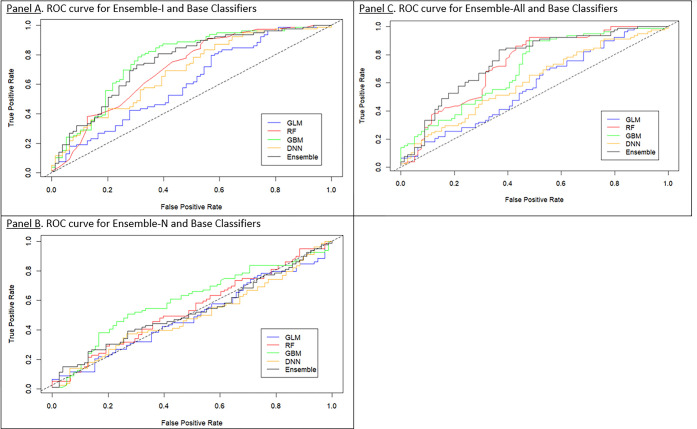 Figure 2
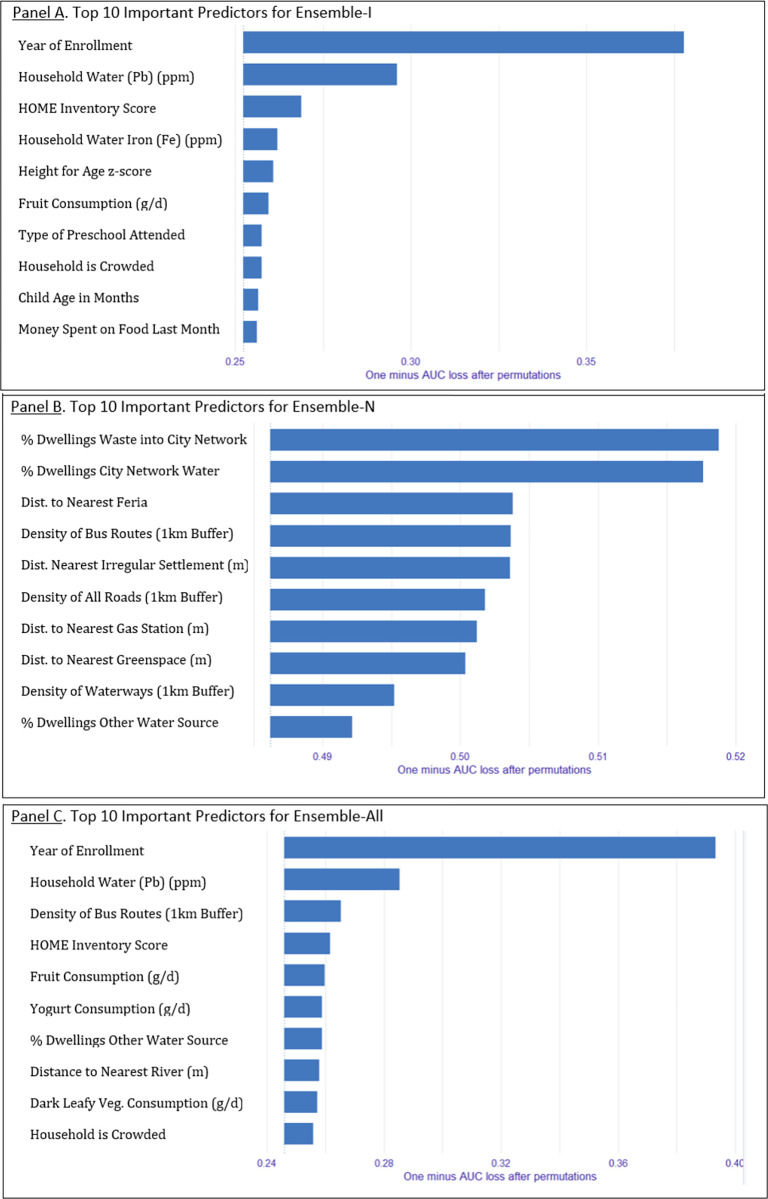 Figure 3
 Figure 4
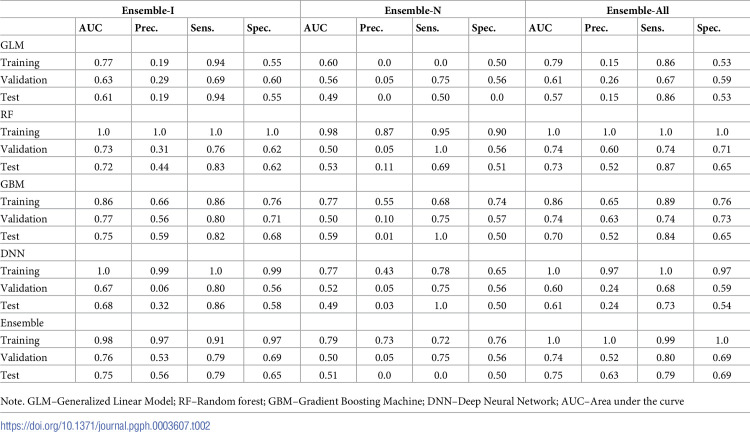 Figure 5
Peer Reviews
No public reviews on file for this paper yet. If you reviewed it on a platform where reviews are public (OpenReview, ICLR, NeurIPS, ICML), you can paste yours below so the community can read it here.
Videos
No videos yet. Explain this paper in a talk, walkthrough, or lecture? Add one.
Taxonomy
TopicsHeavy Metal Exposure and Toxicity · Heavy metals in environment · Mercury impact and mitigation studies