Operational research highlights ongoing challenges for comprehensive TB services in Papua New Guinea
A. Maha, T. Kelebi, A. Holmes, M. Kal, J. Greig, H. Nindil, S.M. Graham

TL;DR
This paper discusses the challenges in providing TB services in Papua New Guinea, highlighting research efforts to improve care.
Contribution
The paper presents findings from a training initiative that identifies current operational issues in PNG's TB program.
Findings
High rates of loss to follow-up among TB patients in PNG are a significant challenge.
Multidrug-resistant TB is increasingly being detected in the region.
Abstract
Papua New Guinea (PNG) is a high-burden country for TB, with an estimated annual TB incidence rate of 432 per 100,000 population. There are major challenges to the provision of quality care for TB patients with high rates of loss to follow-up, and multidrug-resistant TB is increasingly detected. In 2022–2023, the second Structured Operational Research Training IniTiative (SORT-IT) for TB was undertaken. Eight participants completed the course, and the outputs from these research projects highlight important current operational issues for the PNG TB programme in a range of settings. The first four articles in the series are published in this issue of Public Health Action, with the remainder to follow in subsequent issues.
Genes, proteins, chemicals, diseases, species, mutations and cell lines named across the full text — each resolved to its canonical identifier and authoritative record.
Click any figure to enlarge with its caption.
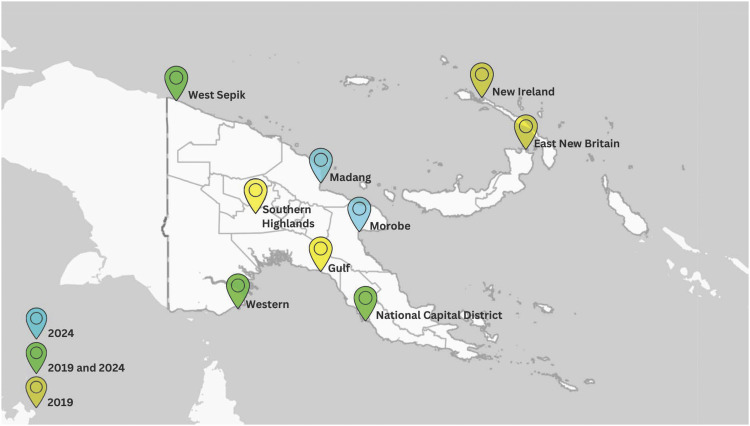 Figure 1
Peer Reviews
No public reviews on file for this paper yet. If you reviewed it on a platform where reviews are public (OpenReview, ICLR, NeurIPS, ICML), you can paste yours below so the community can read it here.
Videos
No videos yet. Explain this paper in a talk, walkthrough, or lecture? Add one.
Taxonomy
TopicsTuberculosis Research and Epidemiology · Pneumocystis jirovecii pneumonia detection and treatment · Antibiotic Resistance in Bacteria