Dominant suppressor genes of p53-induced apoptosis in Drosophila melanogaster
Tamás Szlanka, Tamás Lukacsovich, Éva Bálint, Erika Virágh, Kornélia Szabó, Ildikó Hajdu, Enikő Molnár, Yu-Hsien Lin, Ágnes Zvara, Ildikó Kelemen-Valkony, Orsolya Méhi, István Török, Zoltán Hegedűs, Brigitta Kiss, Beáta Ramasz, Laura M Magdalena, László Puskás, Bernard M Mechler

TL;DR
This study identifies genes in fruit flies that suppress apoptosis caused by p53, a key protein in preventing cancer.
Contribution
The study introduces a novel insertional mutagenesis method using a custom DEP transposon to identify p53 apoptosis suppressor genes in Drosophila.
Findings
Seven genes were identified that suppress p53-induced apoptosis when overexpressed.
Three of the identified genes are located near coexpressed gene clusters, suggesting a potential role in apoptosis suppression.
qPCR experiments showed elevated expression levels of genes near DEP insertions, indicating an additive effect.
Abstract
One of the major functions of programmed cell death (apoptosis) is the removal of cells that suffered oncogenic mutations, thereby preventing cancerous transformation. By making use of a Double-Headed-EP (DEP) transposon, a P element derivative made in our laboratory, we made an insertional mutagenesis screen in Drosophila melanogaster to identify genes that, when overexpressed, suppress the p53-activated apoptosis. The DEP element has Gal4-activatable, outward-directed UAS promoters at both ends, which can be deleted separately in vivo. In the DEP insertion mutants, we used the GMR-Gal4 driver to induce transcription from both UAS promoters and tested the suppression effect on the apoptotic rough eye phenotype generated by an activated UAS-p53 transgene. By DEP insertions, 7 genes were identified, which suppressed the p53-induced apoptosis. In 4 mutants, the suppression effect resulted…
Genes, proteins, chemicals, diseases, species, mutations and cell lines named across the full text — each resolved to its canonical identifier and authoritative record.
Click any figure to enlarge with its caption.
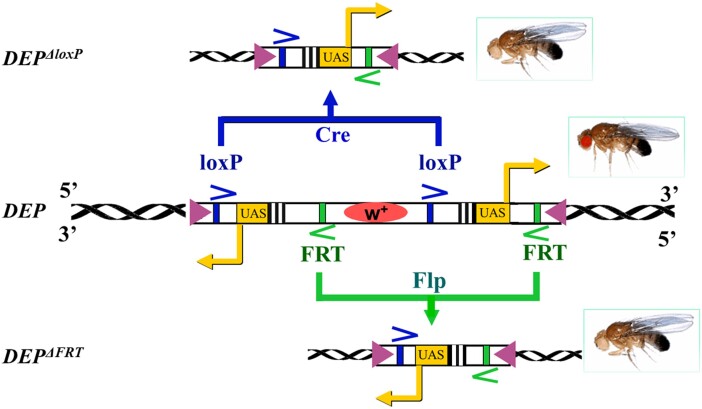 Figure 1
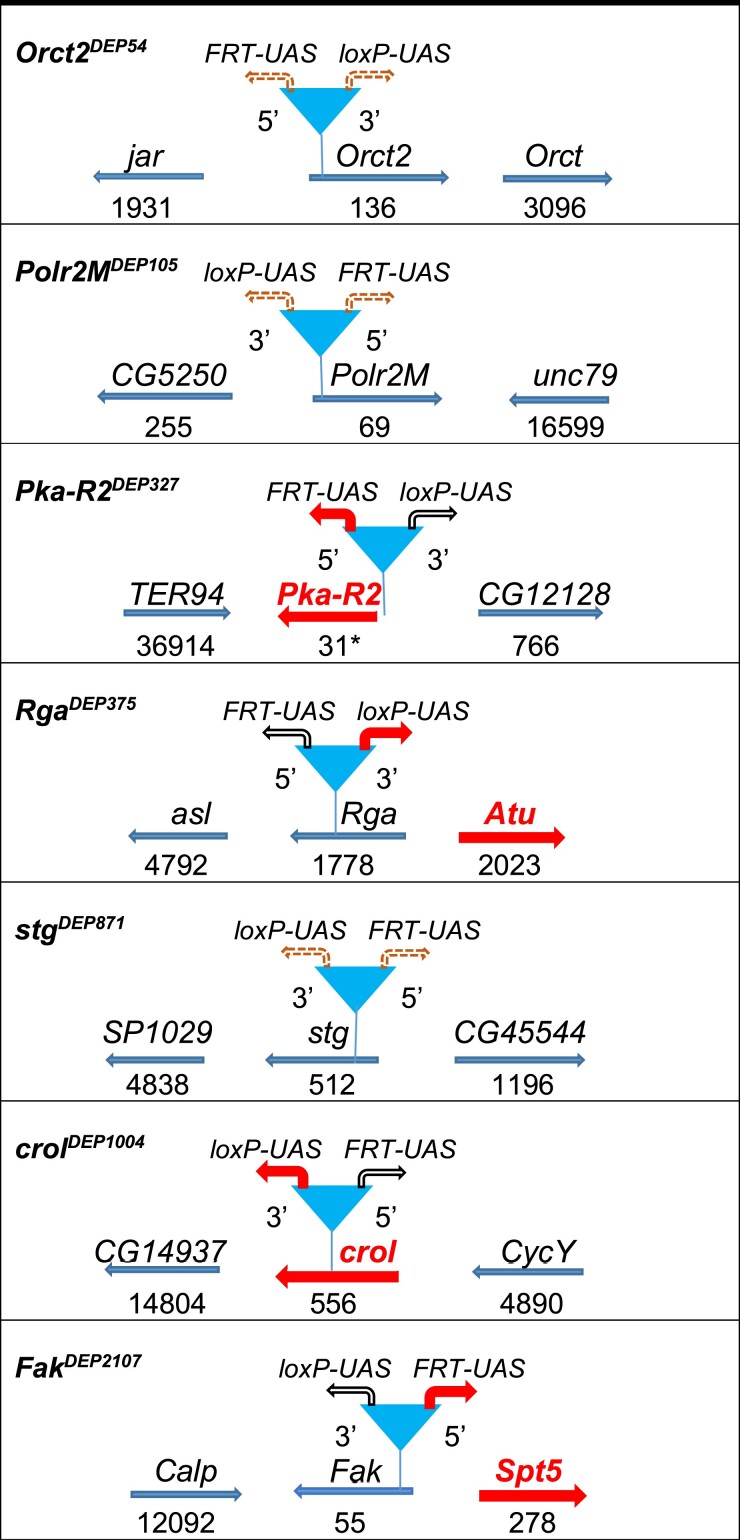 Figure 2
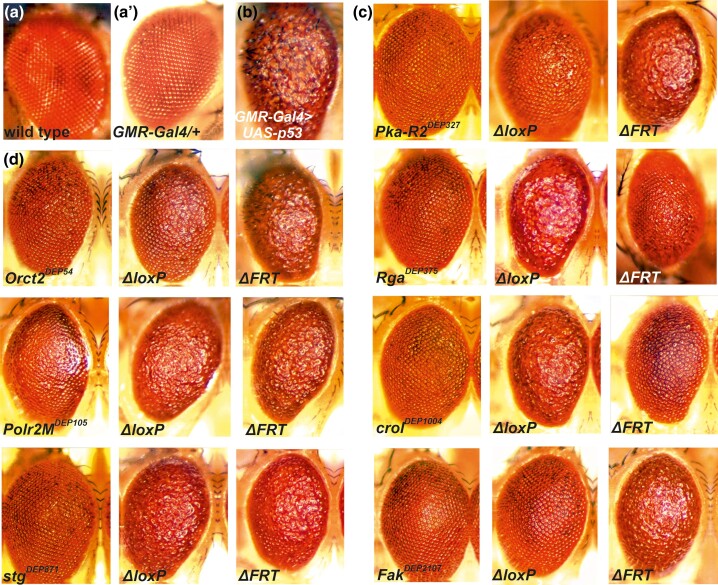 Figure 3
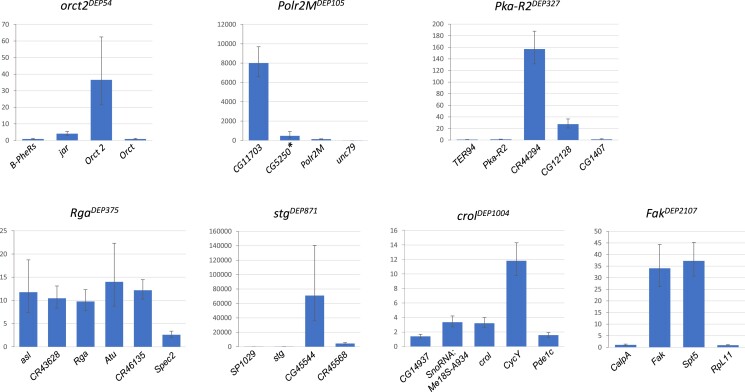 Figure 4
Peer Reviews
No public reviews on file for this paper yet. If you reviewed it on a platform where reviews are public (OpenReview, ICLR, NeurIPS, ICML), you can paste yours below so the community can read it here.
Videos
No videos yet. Explain this paper in a talk, walkthrough, or lecture? Add one.
Taxonomy
TopicsUbiquitin and proteasome pathways · Cancer-related Molecular Pathways · RNA Research and Splicing