Genomic insights into indole-3-acetic acid catabolism in the marine algae-associated bacterium, Marinomonas sp. NFXS50
Constança Bertrand, Rodrigo Martins, Francisco Nunes, Pedro Brandão, Francisco X. Nascimento

TL;DR
This paper explores how a marine bacterium breaks down a plant growth hormone called IAA, revealing new insights into its genetic adaptations and ecological role.
Contribution
The study identifies and analyzes a novel IAA catabolism gene cluster in Marinomonas sp. NFXS50, highlighting its potential ecological significance.
Findings
The Marinomonas sp. NFXS50 genome contains homologs of the Pseudomonas iac gene cluster involved in IAA catabolism.
The iac gene cluster in Marinomonas differs in content and organization compared to Pseudomonas putida 1290.
The presence of iac genes in multiple Marinomonas species suggests their ecological importance in marine environments.
Abstract
Auxins, mainly in the form of indole-3-acetic acid (IAA), regulate several aspects of plant and algal growth and development. Consequently, plant and algae-associated bacteria developed the ability to modulate IAA levels, including IAA catabolism. In this work, we present and analyse the genome sequence of the IAA-degrading and marine algae-associated bacterium, Marinomonas sp. NFXS50, analyse its IAA catabolism gene cluster and study the prevalence of IAA catabolism genes in other Marinomonas genomes. Our findings revealed the presence of homologs of the Pseudomonas iac gene cluster, implicated in IAA catabolism, in the genome of strain NFXS50; however, differences were observed in the content and organization of the Marinomonas iac gene cluster when compared to that of the model iac-containing Pseudomonas putida 1290. These variations suggest potential adaptations in the IAA…
Genes, proteins, chemicals, diseases, species, mutations and cell lines named across the full text — each resolved to its canonical identifier and authoritative record.
Click any figure to enlarge with its caption.
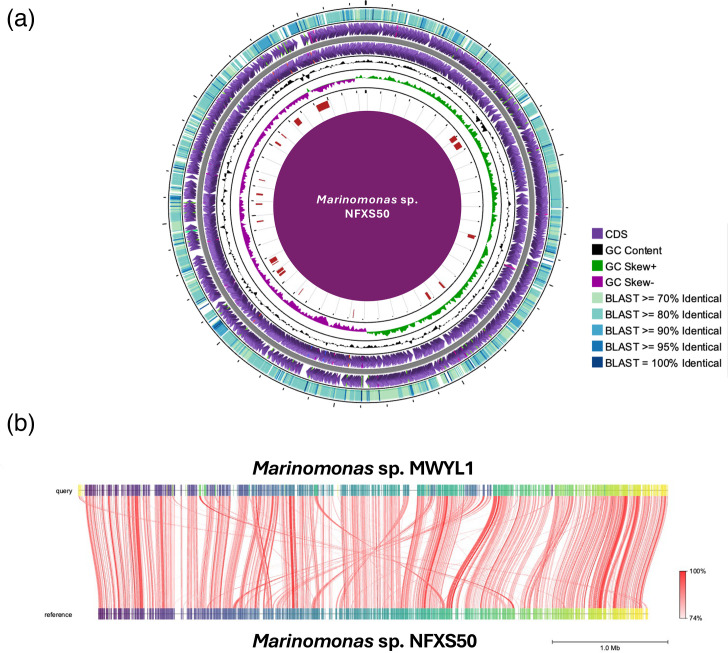 Figure 1
 Figure 2
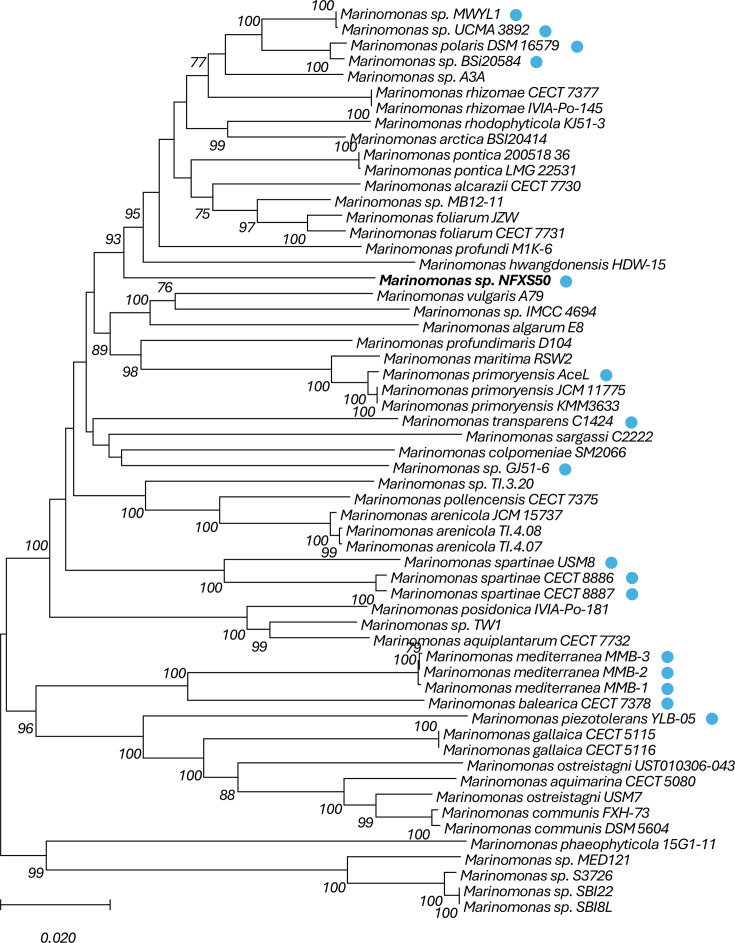 Figure 3
Peer Reviews
No public reviews on file for this paper yet. If you reviewed it on a platform where reviews are public (OpenReview, ICLR, NeurIPS, ICML), you can paste yours below so the community can read it here.
Videos
No videos yet. Explain this paper in a talk, walkthrough, or lecture? Add one.
Taxonomy
TopicsMicrobial Community Ecology and Physiology · Genomics and Phylogenetic Studies · Protist diversity and phylogeny