Effects of observing own/others hand movement in different perspectives on mu rhythm suppression: an EEG study
Nakyeong Shin, Yuki Ikeda, Yuki Motomura, Shigekazu Higuchi

TL;DR
This EEG study explores how observing hand movements from different perspectives affects brain activity linked to self-other discrimination.
Contribution
The study reveals perspective-dependent mu rhythm suppression differences during self and others' hand movement observation.
Findings
Mu suppression showed self-oriented responses in first-person perspective observation.
Third-person perspective observation did not show significant orientation in mu suppression.
Perspective differences influence mirror system activity related to self-other discrimination.
Abstract
Previous studies have reported that the sense of “self” is associated with specific brain regions and neural network activities. In addition, the mirror system, which functions when executing or observing an action, might contribute to differentiating the self from others and form the basis of the sense of self as a fundamental physical representation. This study investigated whether differences in mu suppression, an indicator of mirror system activity, reflect cognitions related to self-other discrimination. The participants were 30 of healthy college students. The participants observed short video clips of hand movements performed by themselves or actors from two perspectives (i.e., first-person and third-person). The electroencephalogram (EEG) mu rhythm (8–13 Hz) was measured during video observation as an index of mirror neuron system activity. EEG activity related to…
Genes, proteins, chemicals, diseases, species, mutations and cell lines named across the full text — each resolved to its canonical identifier and authoritative record.
Click any figure to enlarge with its caption.
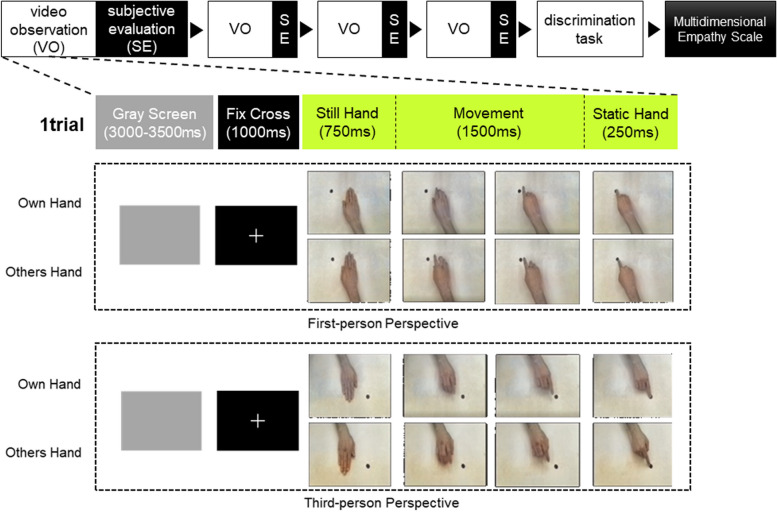 Figure 1
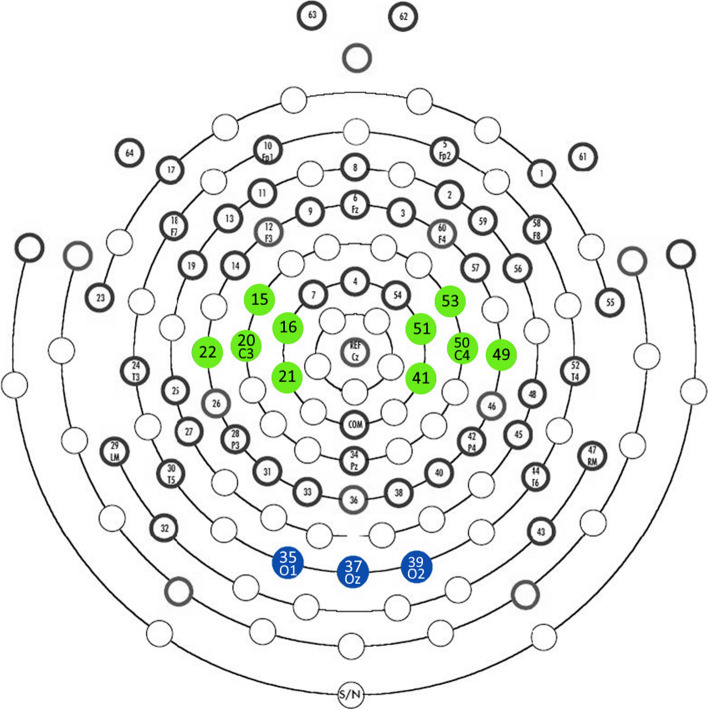 Figure 2
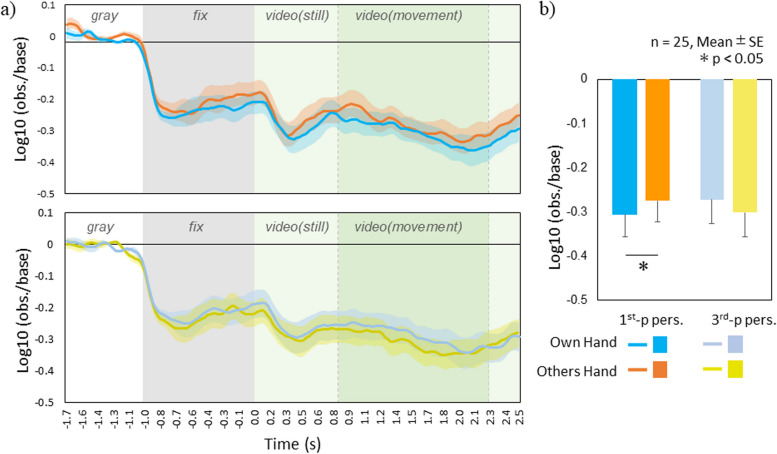 Figure 3
Peer Reviews
No public reviews on file for this paper yet. If you reviewed it on a platform where reviews are public (OpenReview, ICLR, NeurIPS, ICML), you can paste yours below so the community can read it here.
Videos
No videos yet. Explain this paper in a talk, walkthrough, or lecture? Add one.
Taxonomy
TopicsAction Observation and Synchronization · Psychosomatic Disorders and Their Treatments · Neural and Behavioral Psychology Studies