Structured diabetes care routines in cardiac rehabilitation are associated with increased diabetes detection and improved treatment after myocardial infarction: a nationwide observational study
Bashaaer Sharad, Nils Eckerdal, Martin Magnusson, Halldora Ögmundsdottir Michelsen, Amra Jujic, Matthias Lidin, Linda Mellbin, Nael Shaat, Ronnie Pingel, John Wallert, Emil Hagström, Margrét Leósdóttir

TL;DR
Structured diabetes care in cardiac rehab improves diabetes detection and treatment after heart attacks in a nationwide study.
Contribution
Structured diabetes care routines in cardiac rehabilitation increase diabetes detection and treatment rates after myocardial infarction.
Findings
Routine use of OGTT in cardiac rehab centers increased diabetes detection by 62%.
Adjusting glucose-lowering medication by rehab physicians increased treatment rates by 31%.
More implemented routines correlated with higher diabetes detection rates (2.7% to 6.3%).
Abstract
Despite the detrimental impact of abnormal glucose metabolism on cardiovascular prognosis after myocardial infarction (MI), diabetes is both underdiagnosed and undertreated. We investigated associations between structured diabetes care routines in cardiac rehabilitation (CR) and detection and treatment of diabetes at one-year post-MI. Center-level data was derived from the Perfect-CR survey, which evaluated work routines applied at Swedish CR centers (n = 76). Work routines involving diabetes care included: (1) routine assessment of fasting glucose and/or HbA1c, (2) routine use of oral glucose tolerance test (OGTT), (3) having regular case rounds with diabetologists, and (4) whether glucose-lowering medication was adjusted by CR physicians. Patient-level data was obtained from the national MI registry SWEDEHEART (n = 7601, 76% male, mean age 62.6 years) and included all post-MI…
Genes, proteins, chemicals, diseases, species, mutations and cell lines named across the full text — each resolved to its canonical identifier and authoritative record.
Click any figure to enlarge with its caption.
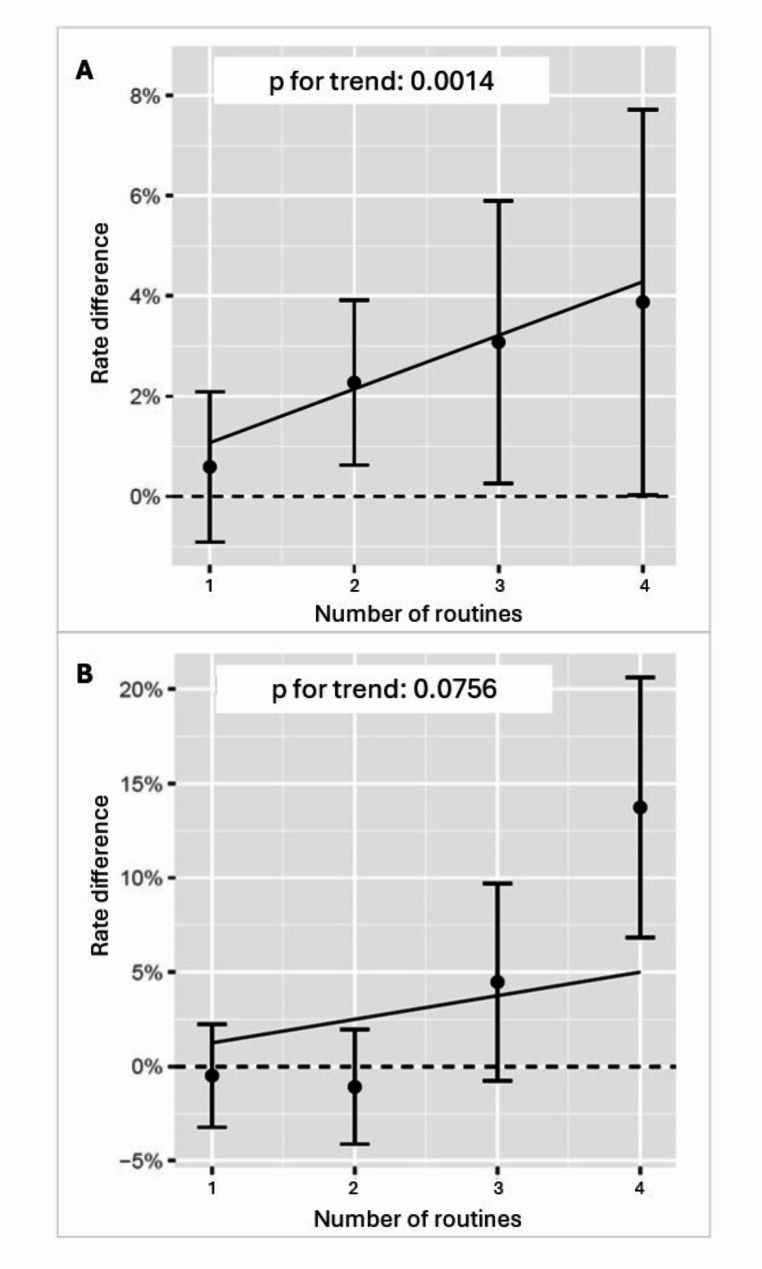 Figure 1
Peer Reviews
No public reviews on file for this paper yet. If you reviewed it on a platform where reviews are public (OpenReview, ICLR, NeurIPS, ICML), you can paste yours below so the community can read it here.
Videos
No videos yet. Explain this paper in a talk, walkthrough, or lecture? Add one.
Taxonomy
TopicsDiabetes Treatment and Management · Cardiovascular Function and Risk Factors · Hyperglycemia and glycemic control in critically ill and hospitalized patients