Giant impact on early Ganymede and its subsequent reorientation
Naoyuki Hirata

TL;DR
A massive ancient impact on Ganymede likely caused the moon to reorient itself, shifting its position relative to Jupiter's gravity.
Contribution
The paper links Ganymede's furrow system to true polar wander via a giant impact and mass redistribution.
Findings
An impactor with a 150 km radius and a steep angle best explains the furrow system's location.
The impact likely caused mass redistribution leading to Ganymede's reorientation toward its tidal axis.
Future missions may detect topographic or gravity anomalies from the impact and reorientation.
Abstract
Ganymede has an ancient impact structure called a furrow system. The furrow system is the largest impact structure in the outer solar system, and the impact should have significantly affected Ganymede’s early history; however, its effects are poorly understood. No attention has been given to the center of the furrow system coinciding with Ganymede's tidal axis, indicating that mass redistribution induced by the furrow-forming impact caused a reorientation (true polar wander) of Ganymede. We propose that the impact ejecta created a mass anomaly that reoriented the impact site toward the tidal axis. We found that an impactor with a radius of 150 km and an incidence angle between 60° and 90° most accurately reproduces the current location of the furrow system. We predict that future explorations would reveal remnant topographic profiles or gravity anomalies associated with the…
Genes, proteins, chemicals, diseases, species, mutations and cell lines named across the full text — each resolved to its canonical identifier and authoritative record.
Click any figure to enlarge with its caption.
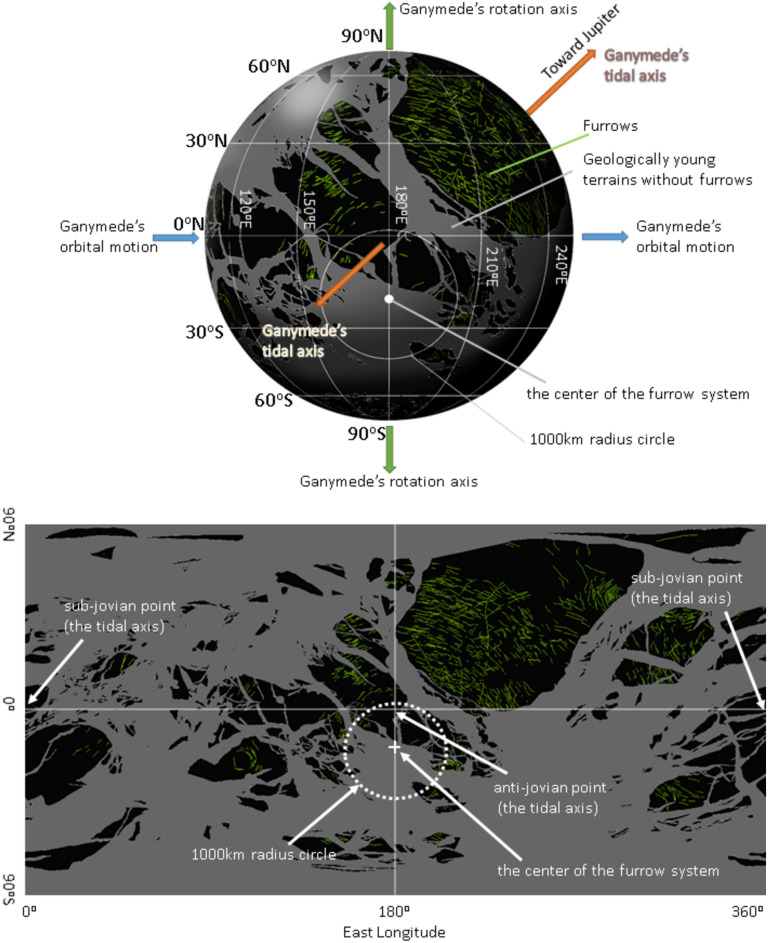 Figure 1
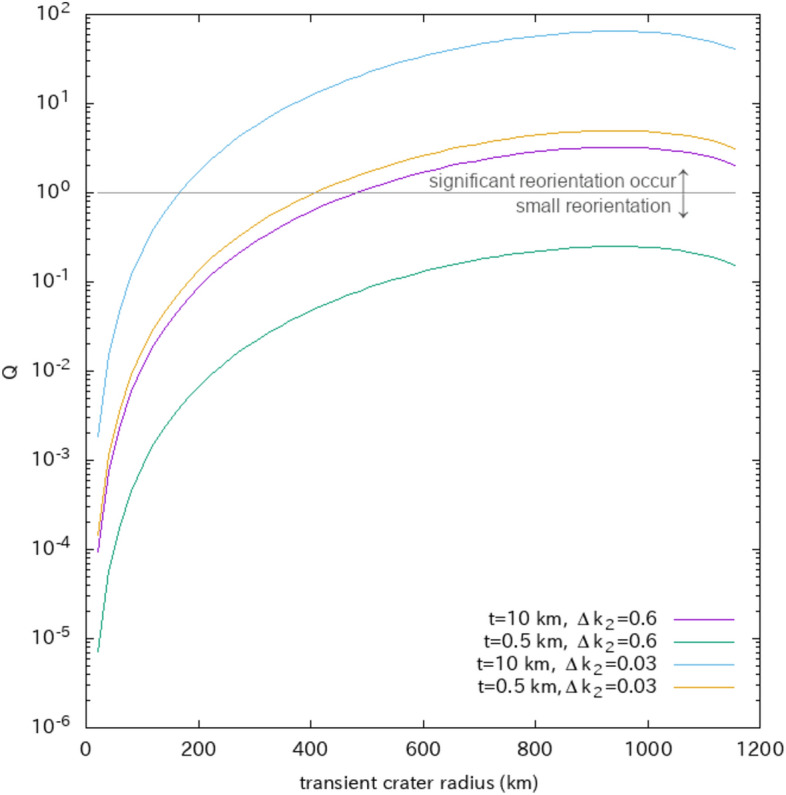 Figure 2
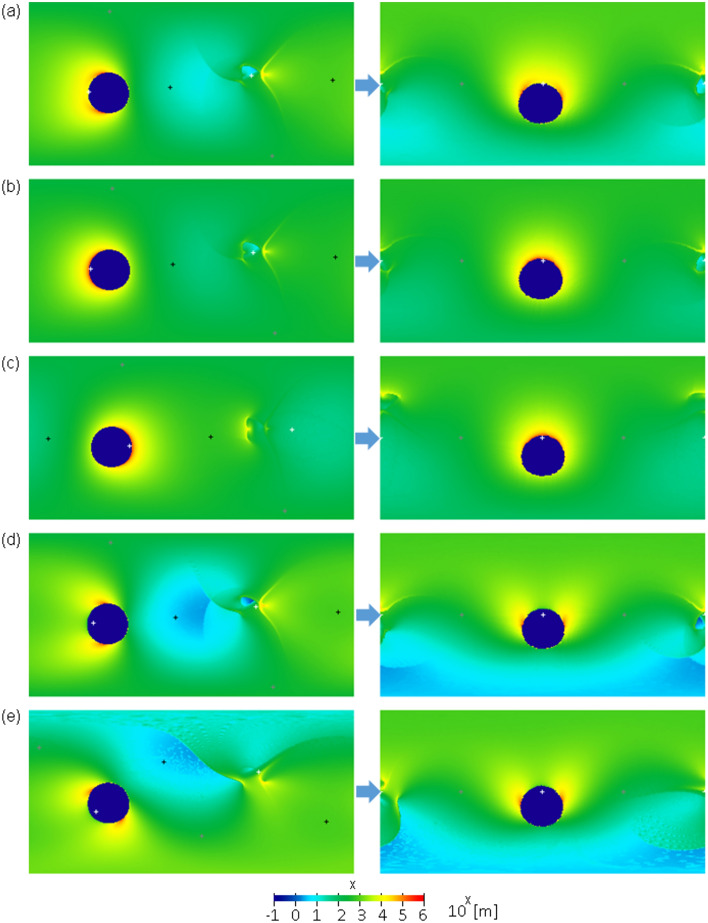 Figure 3
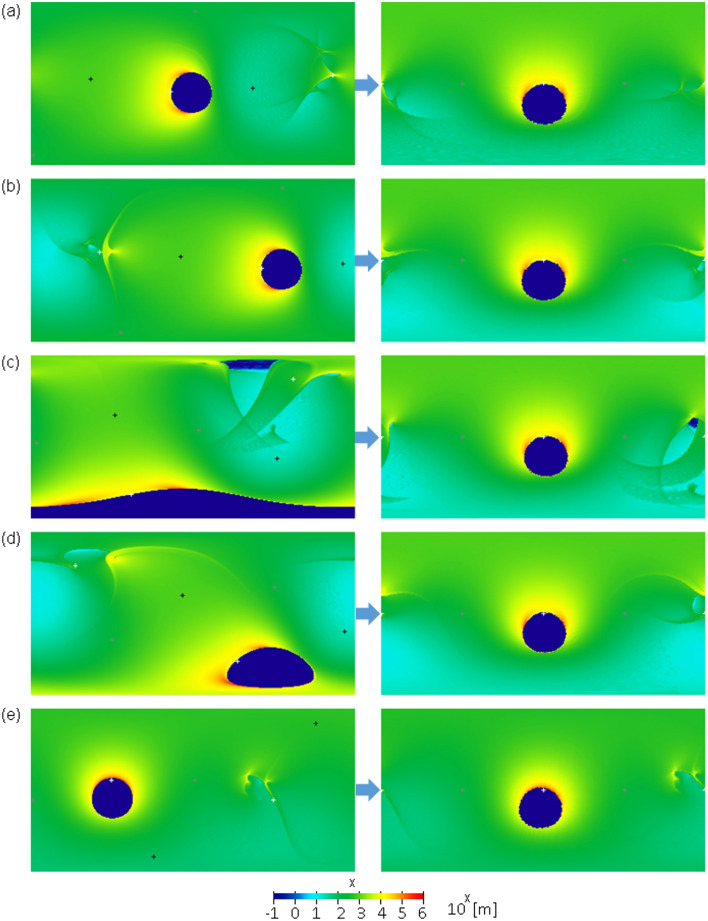 Figure 4
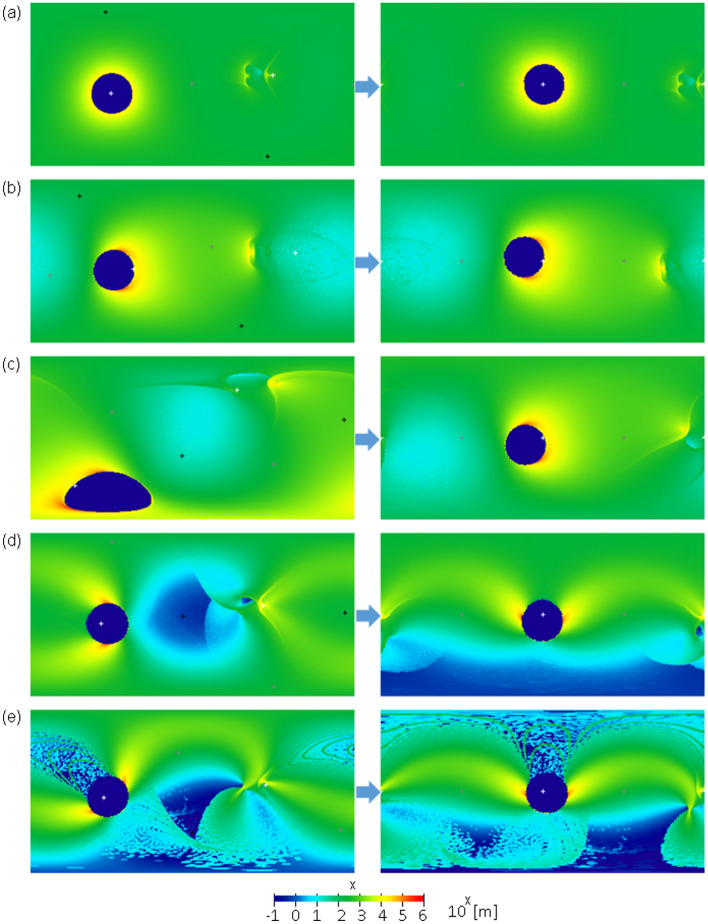 Figure 5
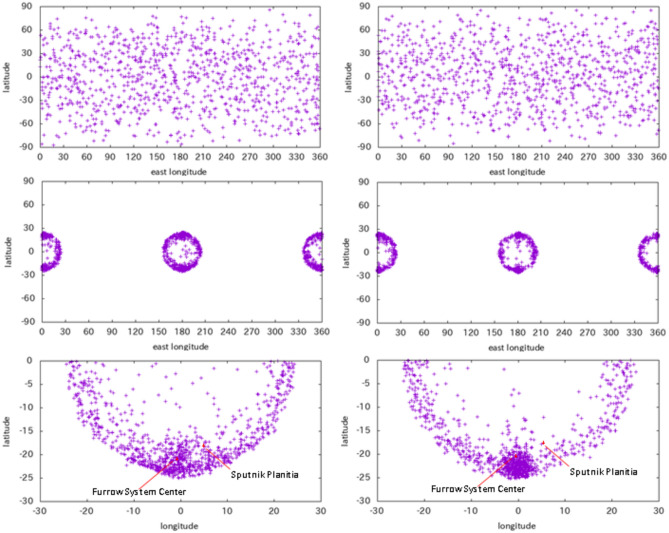 Figure 6
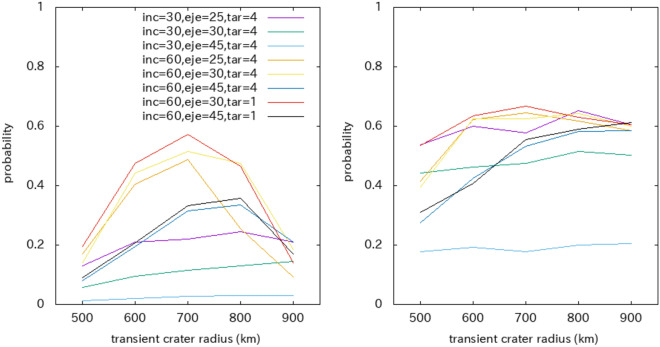 Figure 7
Peer Reviews
No public reviews on file for this paper yet. If you reviewed it on a platform where reviews are public (OpenReview, ICLR, NeurIPS, ICML), you can paste yours below so the community can read it here.
Videos
No videos yet. Explain this paper in a talk, walkthrough, or lecture? Add one.
Taxonomy
TopicsAstro and Planetary Science · Planetary Science and Exploration · Geology and Paleoclimatology Research