A comparison of individual force decline profiles during a fatiguing eccentric trunk flexion and extension protocol: a pilot study
Yasemin Paksoy, David Kpobi, Jakob Henschke, Lucie Risch, Tilman Engel

TL;DR
This pilot study examines how individuals experience muscle fatigue during a 2-minute eccentric trunk exercise, revealing differences in force decline patterns and potential factors influencing them.
Contribution
The study introduces a novel approach to assess individual fatigue profiles during eccentric trunk movements, highlighting inter-subject variability and its potential causes.
Findings
Participants reached a 20% force reduction within 62.4 seconds on average during a 2-minute task.
Inter-individual variability in reaching fatigue thresholds ranged from 23.4% to 103.8% for trunk flexor muscles.
Fatigue increased consistency in force output among participants by the end of the task.
Abstract
Muscle fatigue, characterized by diminished force production and contraction sustainability, can impair muscle coordination and increase joint instability. Differing force profiles used in fatiguing tasks, such as prolonged eccentric trunk protocols, might provide insights into individualized strategies and resulting spinal stability. Thus, this study assessed individual differences in fatigue characteristics during an eccentric trunk flexion-extension protocol in a population of asymptomatic individuals. Twelve participants (2 f/10 m, 29 ± 4 years, 78.4 ± 16.9 kg, 1.76 ± 0.10 m) performed an eccentric trunk flexion and extension protocol on an isokinetic dynamometer (45° flexion to 10° extension; 60°/s), with final analysis on 8 participants for trunk flexion and 11 for trunk extension due to data exclusions. Participants engaged in a maximal all-out (AO) task for 2 min. Each…
Genes, proteins, chemicals, diseases, species, mutations and cell lines named across the full text — each resolved to its canonical identifier and authoritative record.
Click any figure to enlarge with its caption.
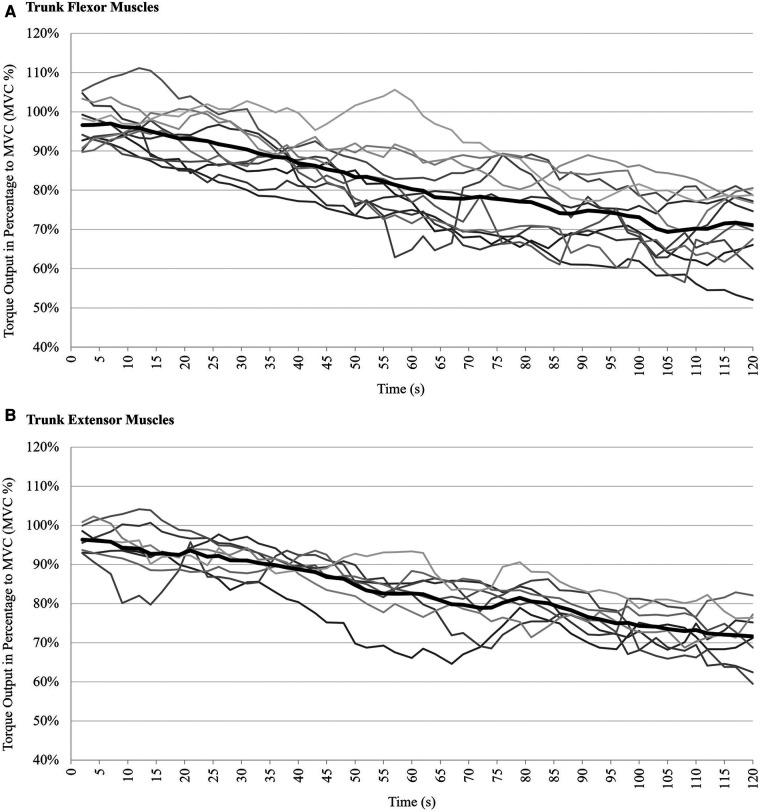 Figure 1
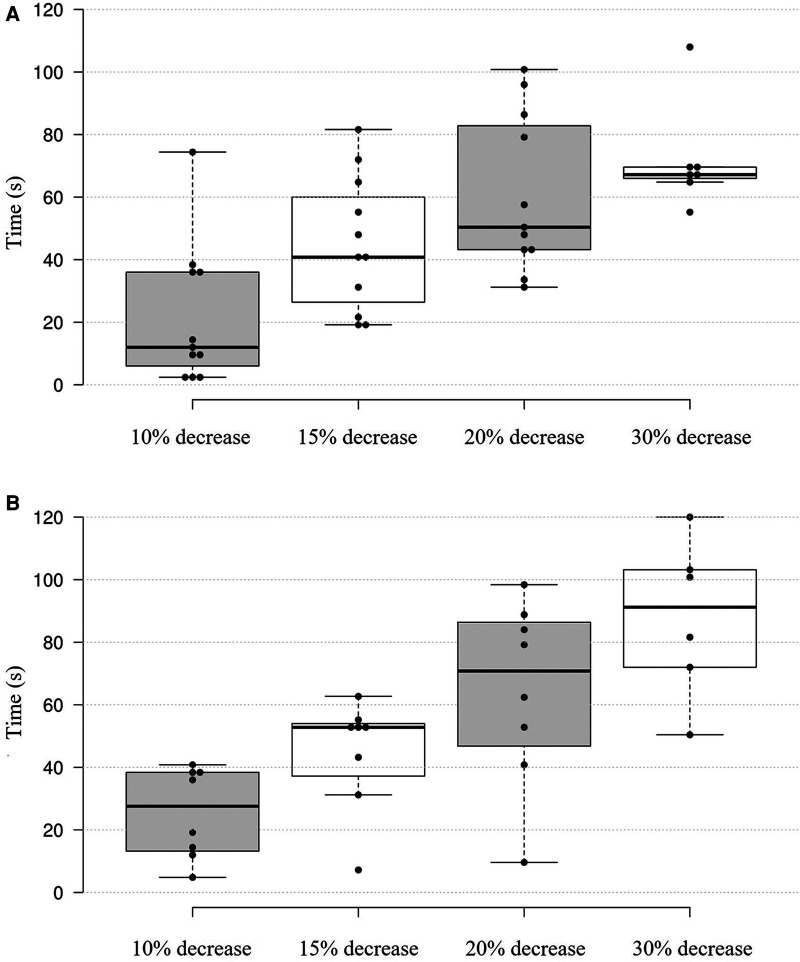 Figure 2
Peer Reviews
No public reviews on file for this paper yet. If you reviewed it on a platform where reviews are public (OpenReview, ICLR, NeurIPS, ICML), you can paste yours below so the community can read it here.
Videos
No videos yet. Explain this paper in a talk, walkthrough, or lecture? Add one.
Taxonomy
TopicsMusculoskeletal pain and rehabilitation · Muscle activation and electromyography studies · Sports injuries and prevention