
TL;DR
This paper explores how cucurbitacins, especially CuB, can prevent restenosis by stopping the overgrowth of vascular smooth muscle cells.
Contribution
The study identifies cucurbitacins as potential inhibitors of VSMC proliferation through cyclin A2 suppression.
Findings
Cucurbitacins extracted from Cucumis melo L. inhibit VSMC proliferation.
Cucurbitacin B (CuB) suppresses cyclin A2 expression, halting the cell cycle.
CuECs show potential as therapeutic agents for preventing restenosis.
Abstract
The cover image is based on the article ‘Cucurbitacins mitigate vascular neointimal hyperplasia by suppressing cyclin A2 expression and inhibiting VSMC proliferation’ (DOI: 10.1002/ame2.12457) reported by Ruqiang Yuan, Lei Qian, Hu Xu and Weijing Yun. Restenosis is characterized by the proliferation of vascular smooth muscle cells (VSMCs) and is commonly seen after percutaneous angioplasty, posing a serious threat to health. The continuous proliferation of VSMCs is like a high‐speed racing car, with the rotating gears of the cell cycle. Cucurbitacins extracted from Cucumis melo L. (CuECs) including cucurbitacin B (CuB), play the role of “whistleblowers” when danger is detected, and promptly “brake” to halt the cell cycle progression, thus avoiding greater danger. Therefore, CuECs, especially CuB, may have the potential to prevent restenosis.
Genes, proteins, chemicals, diseases, species, mutations and cell lines named across the full text — each resolved to its canonical identifier and authoritative record.
Click any figure to enlarge with its caption.
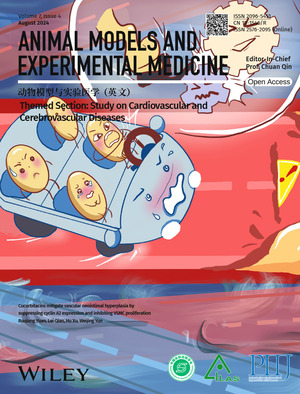 Figure 1
Peer Reviews
No public reviews on file for this paper yet. If you reviewed it on a platform where reviews are public (OpenReview, ICLR, NeurIPS, ICML), you can paste yours below so the community can read it here.
Videos
No videos yet. Explain this paper in a talk, walkthrough, or lecture? Add one.
Taxonomy
TopicsAdvances in Cucurbitaceae Research · Axon Guidance and Neuronal Signaling · Natural Compound Pharmacology Studies