Functional morphology of antennae and sensilla of the fungivore beetle, Triplax ainonia Lewis (Coleoptera: Erotylidae)
Xiao-Long Hou, Shi-Hui Huang, Ben Hong, Mao-Fa Yang, Chang-Qing Luo

TL;DR
This study examines the antennae and sensory structures of a mushroom-feeding beetle to understand their potential functions in behavior.
Contribution
The study identifies and compares the types and morphology of antennal sensilla in male and female Triplax ainonia beetles.
Findings
Five types of antennal sensilla were identified in both male and female T. ainonia adults.
The sensilla basiconica subtype SB 2 was the most abundant in both sexes.
Males and females showed differences in the number, length, and diameter of some sensilla, but not in types.
Abstract
The antennal sensilla play an important role in many behavioral activities of insects. The fungivorous beetle Triplax ainonia Lewis (Erotylidae) is an important pest which prefers to feed on Pleurotus mushrooms. In order to clarify the types, number, and distribution of the antennal sensilla of male and female T. ainonia, scanning electron microscopy was used. The results showed that there were five sensillum types on the antennae of adults male and female, including Böhm’s bristles (BB), sensilla chaetica (three subtypes: SC 1, SC 2, and SC 3), sensilla basiconica (three subtypes: SB 1, SB 2, and SB 3), sensilla trichodea (ST), and sensilla styloconica (SS). Among all the sensilla, the number of SB 2 was the most abundant in both sexes. We found that there was no sexually dimorphic in the sensillum types, but there were differences in the number, lengths, and diameters of some sensilla…
Genes, proteins, chemicals, diseases, species, mutations and cell lines named across the full text — each resolved to its canonical identifier and authoritative record.
Click any figure to enlarge with its caption.
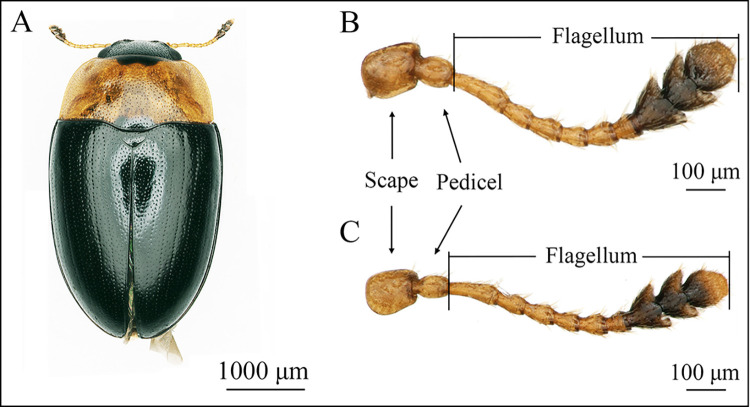 Figure 1
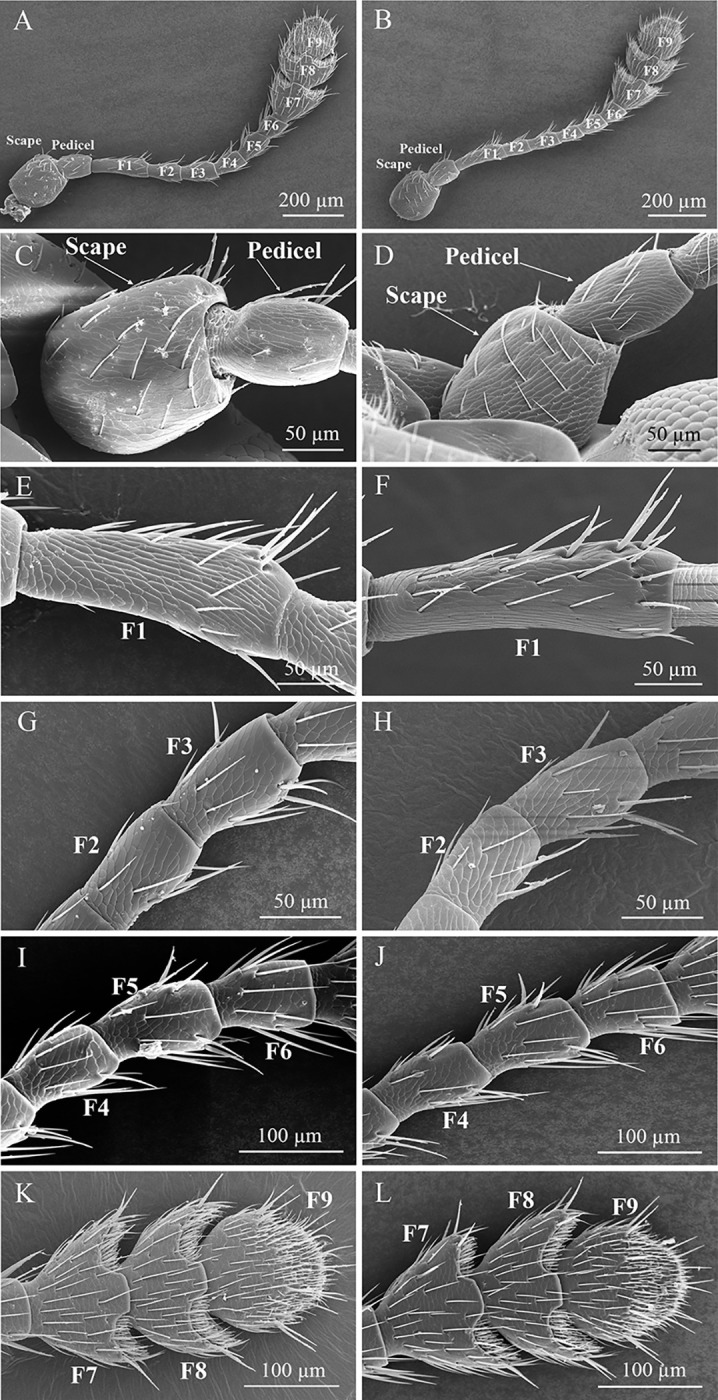 Figure 2
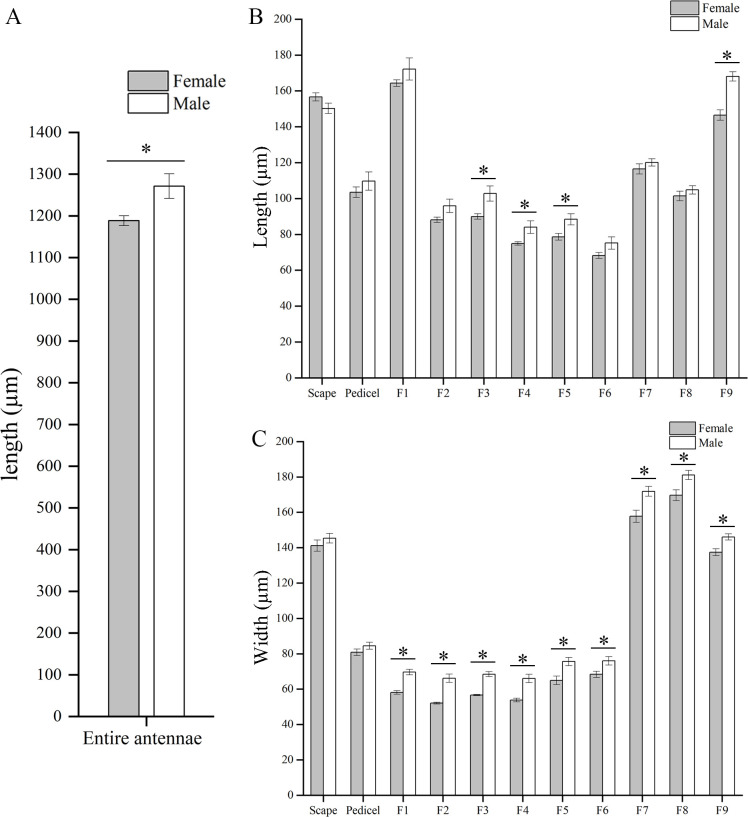 Figure 3
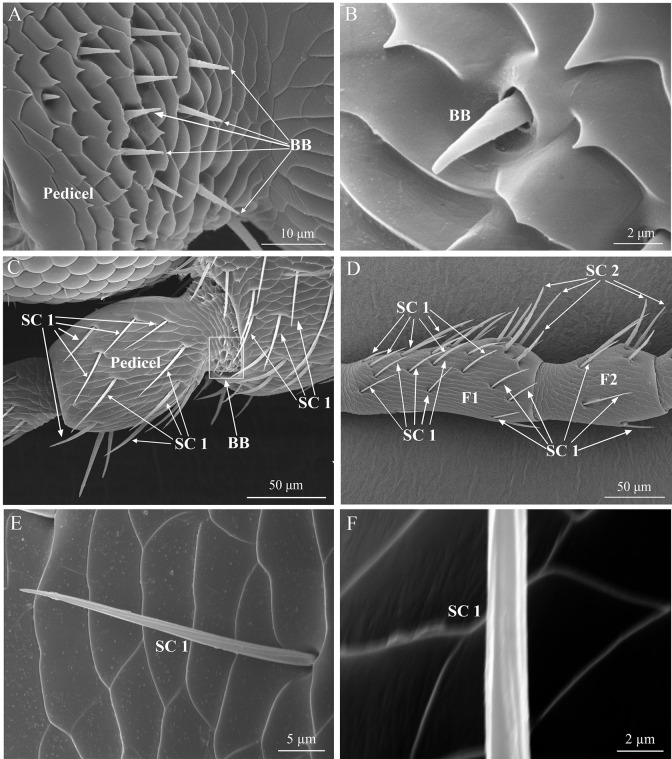 Figure 4
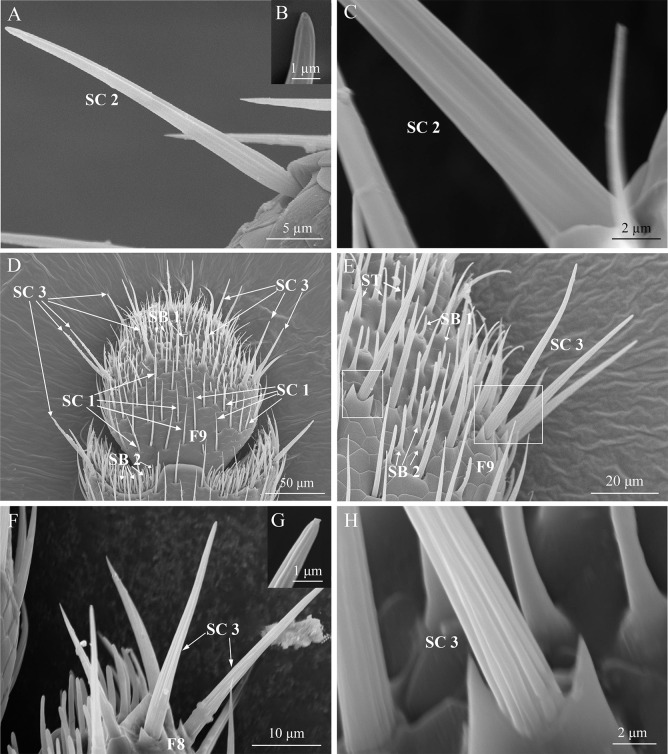 Figure 5
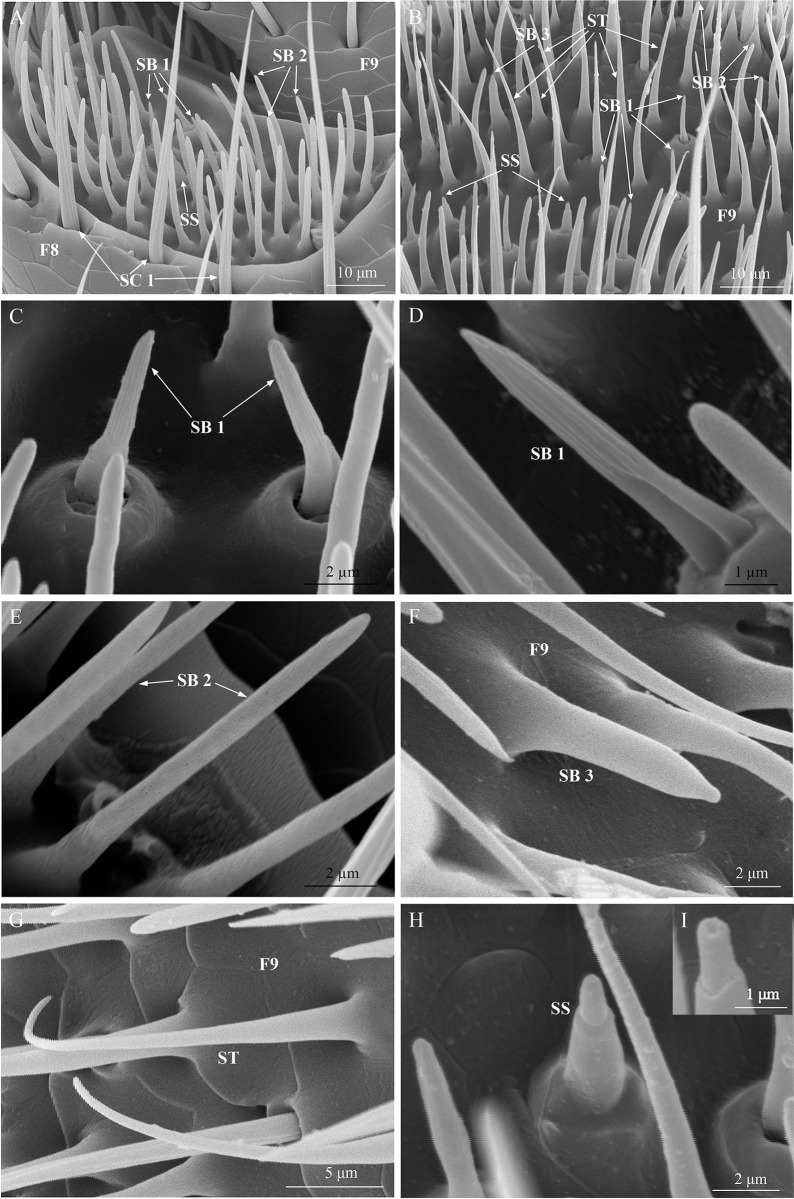 Figure 6
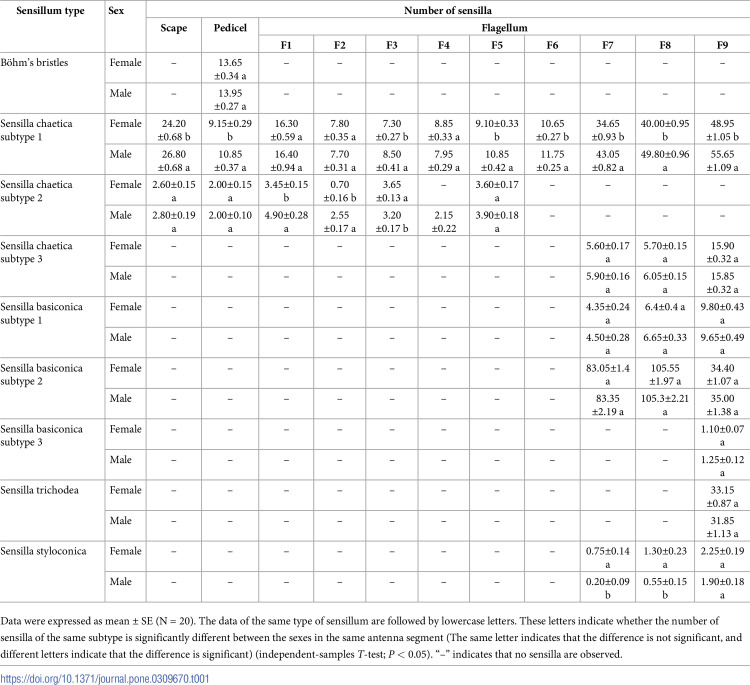 Figure 7
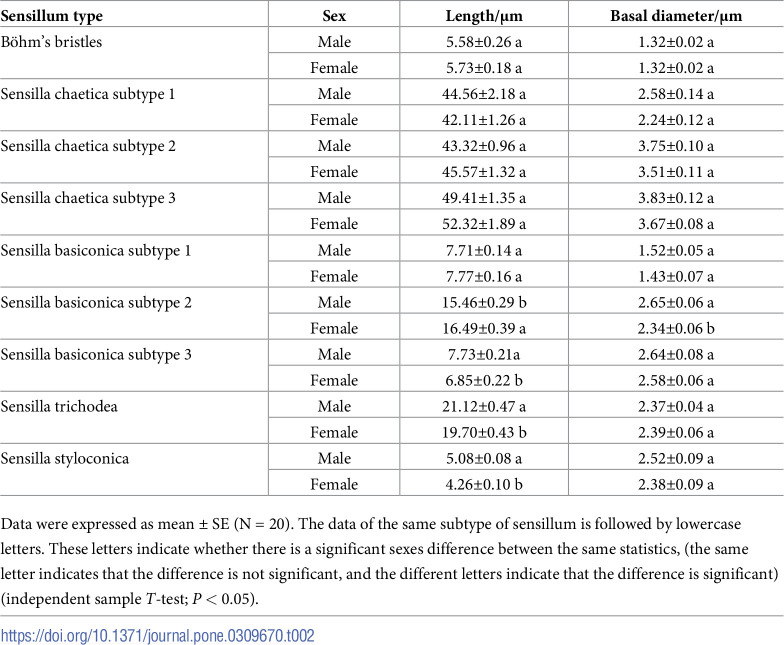 Figure 8
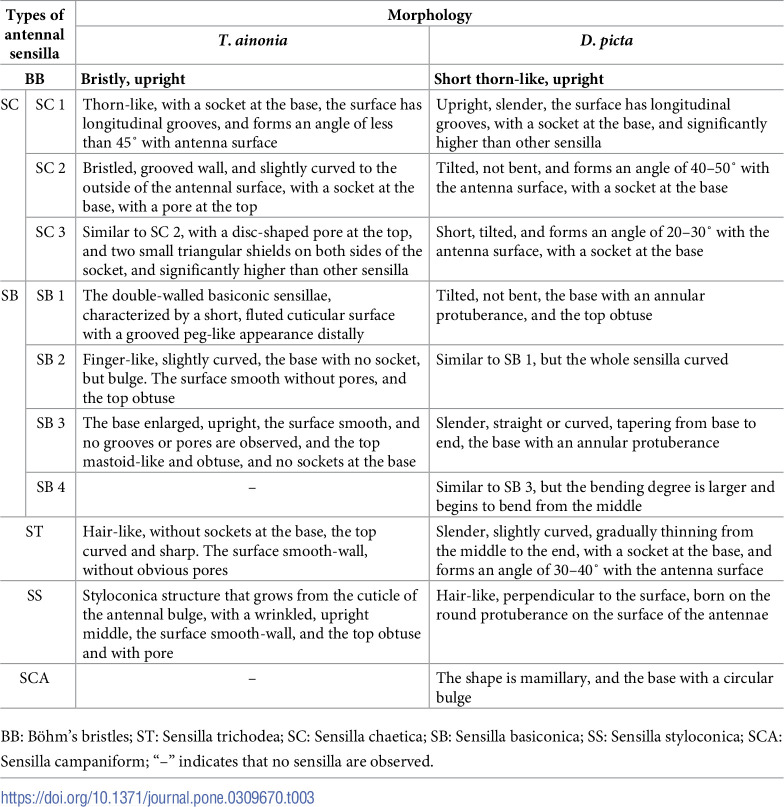 Figure 9
Peer Reviews
No public reviews on file for this paper yet. If you reviewed it on a platform where reviews are public (OpenReview, ICLR, NeurIPS, ICML), you can paste yours below so the community can read it here.
Videos
No videos yet. Explain this paper in a talk, walkthrough, or lecture? Add one.
Taxonomy
TopicsNeurobiology and Insect Physiology Research · Coleoptera Taxonomy and Distribution · Insect Utilization and Effects