A charged tail on anti-α-Synuclein antibodies does not enhance their affinity to α-Synuclein fibrils
Inga Petersen, Ana Godec, Farahnaz Ranjbarian, Anders Hofer, Claudio Mirabello, Greta Hultqvist

TL;DR
Adding a negatively charged tail to antibodies targeting α-Synuclein fibrils did not improve their binding and may have reduced it due to repulsion and interference.
Contribution
Demonstrates that a charged peptide tail does not enhance antibody binding to α-Synuclein aggregates and identifies potential reasons for the failure.
Findings
The negatively charged peptide tail reduced the binding strength of antibodies to α-Synuclein aggregates.
The tail may interfere with the antibody's binding site, preventing it from attaching to α-Synuclein fibrils.
Improving the peptide tail's design to avoid repulsion and mimic heparan sulphates could enhance future antibody therapies.
Abstract
The aggregation of α-Synuclein (αSyn) is strongly linked to neuronal death in Parkinson’s disease and other synucleinopathies. The spreading of aggregated αSyn between neurons is at least partly dependent on electrostatic interactions between positively charged stretches on αSyn fibrils and the negatively charged heparan sulphate proteoglycans on the cell surface. To date there is still no therapeutic option available that could halt the progression of Parkinson’s disease and one of the major limitations is likely the relatively low proportion of αSyn aggregates accessible to drugs in the extracellular space. Here, we investigated whether a negatively charged peptide tail fused to the αSyn aggregate-specific antibodies SynO2 and 9E4 could enhance the antibodies’ avidity to αSyn aggregates in order to improve their potential therapeutic effect through inhibiting cell-to-cell spreading…
Genes, proteins, chemicals, diseases, species, mutations and cell lines named across the full text — each resolved to its canonical identifier and authoritative record.
Click any figure to enlarge with its caption.
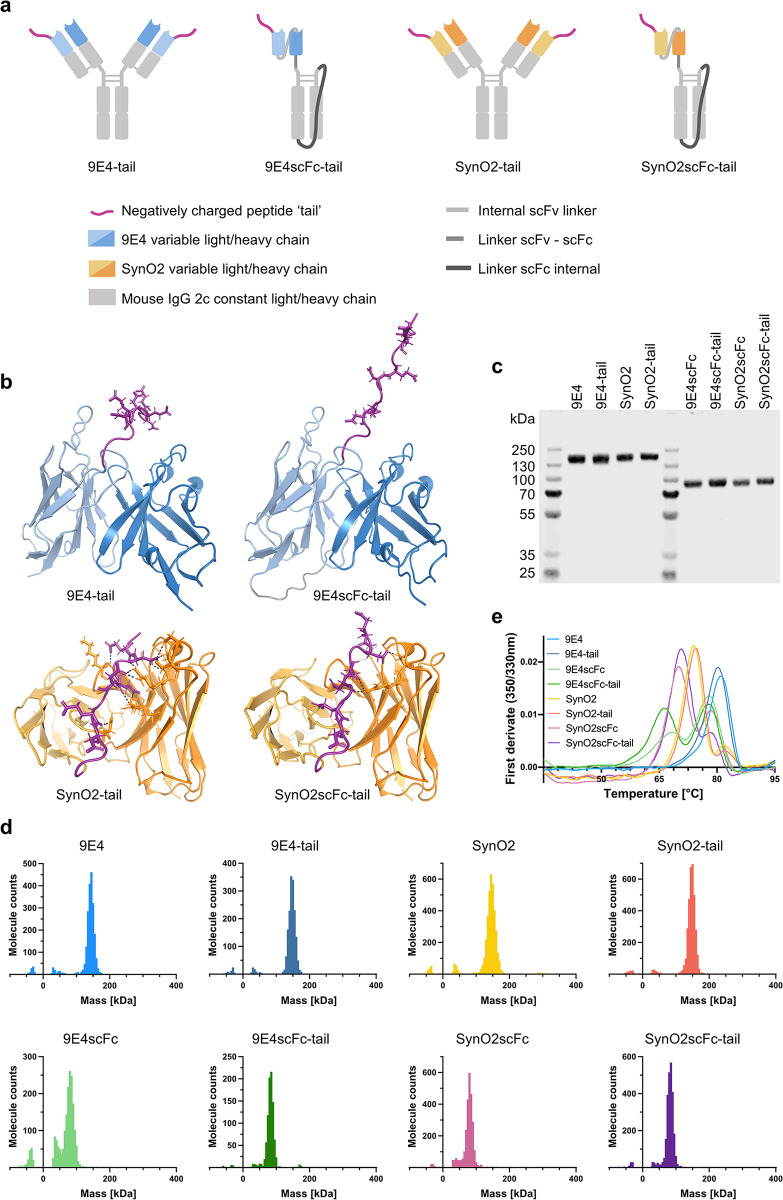 Figure 1
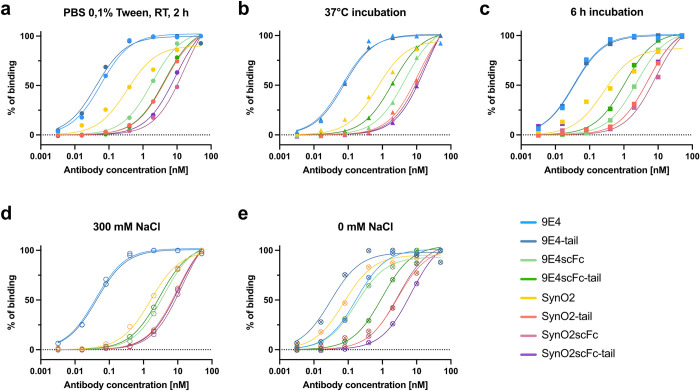 Figure 2
Peer Reviews
No public reviews on file for this paper yet. If you reviewed it on a platform where reviews are public (OpenReview, ICLR, NeurIPS, ICML), you can paste yours below so the community can read it here.
Videos
No videos yet. Explain this paper in a talk, walkthrough, or lecture? Add one.
Taxonomy
TopicsParkinson's Disease Mechanisms and Treatments · Neurological disorders and treatments · Alzheimer's disease research and treatments