A skin secretion metabolome analysis of the Greek Dodecanese Lycian salamanders: Preliminary evidence of dietary alkaloid sequestration in urodeles
Karolos Eleftherakos, Roza Maria Polymeni, Eleni V. Mikropoulou, Konstantina Vougogiannopoulou, Christos Georgiadis, Eleftherios A. Petrakis, Leandros A. Skaltsounis, Maria Halabalaki

TL;DR
This study analyzes skin secretions of Greek salamanders to reveal new alkaloids and possible dietary sequestration.
Contribution
The study reports new samandarine alkaloids and provides preliminary evidence of dietary alkaloid sequestration in Lyciasalamandra species.
Findings
Skin secretions showed statistically significant variation between Lyciasalamandra species and populations.
New samandarine alkaloids and possible dietary alkaloid sequestration were identified.
Metabolite analysis revealed differences in alkaloid content and animal size as key factors.
Abstract
Lyciasalamandra species, like most amphibians, secrete a wide array of compounds from their granular and mucous skin glands, including the internally synthesized samandarine alkaloids, making their skin a complex organ performing a variety of functions. Lyciasalamandra helverseni and L. luschani basoglui are insular endemics of the Dodecanese islands of SE Greece, bearing distinct isolated populations, with well-documented phylogenetic profiles. Here, we employ a metabolomics approach, utilizing UPLC–ESI-HRMS/MS data of the skin secretions sampled from a number of specimens found in the islands of Karpathos, Kasos and Kastellorizo, in an effort to reveal aspects of their chemistry and diversity across populations. The results indicated statistically significant variation between all taxa examined, based on various secreted compounds. The underlying factors of variation highlighted by…
Genes, proteins, chemicals, diseases, species, mutations and cell lines named across the full text — each resolved to its canonical identifier and authoritative record.
Click any figure to enlarge with its caption.
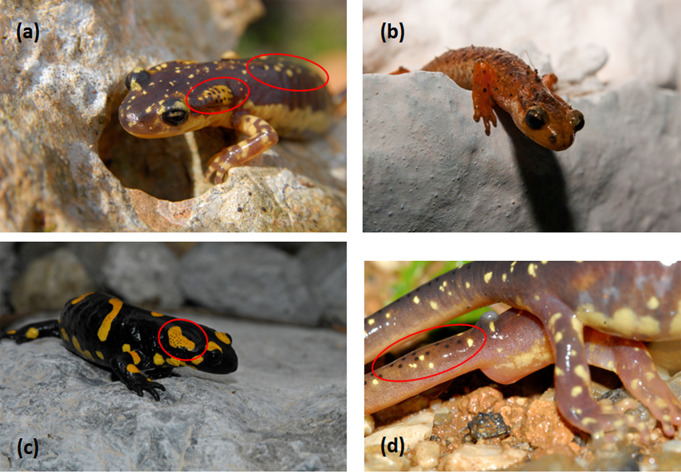 Figure 1
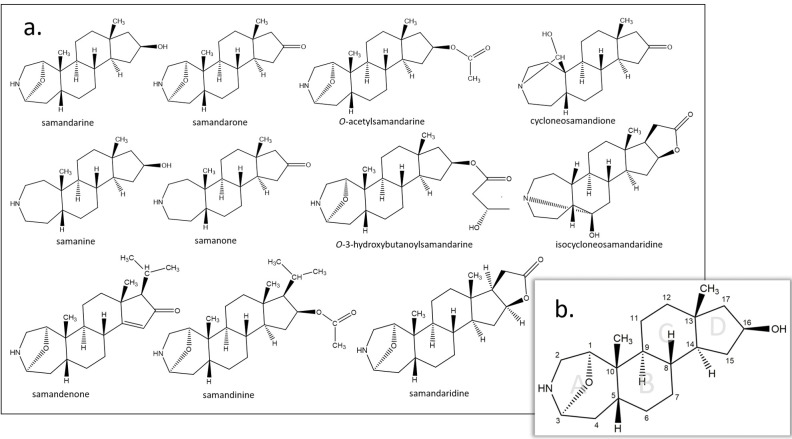 Figure 2
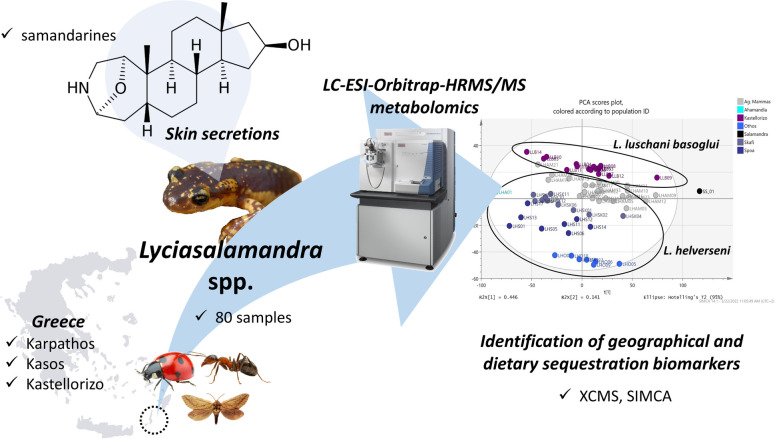 Figure 3
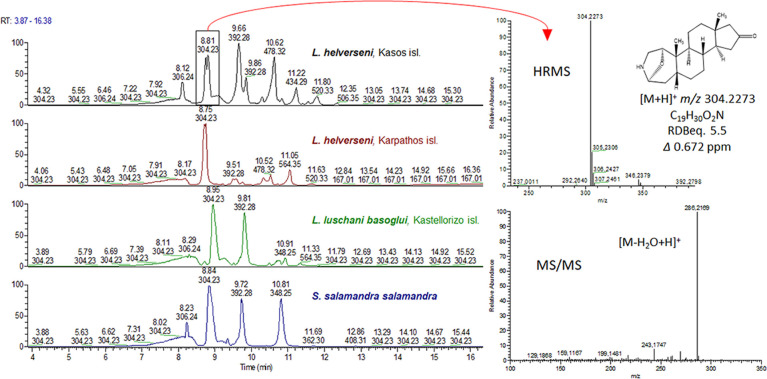 Figure 4
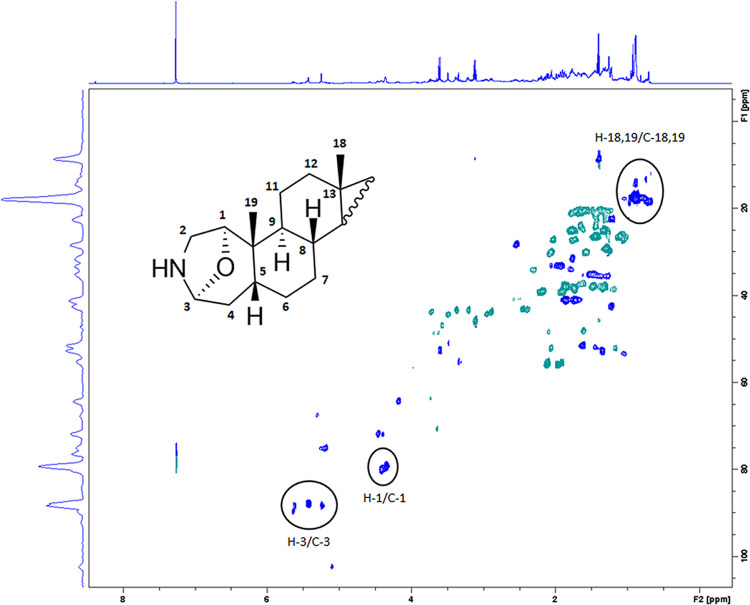 Figure 5
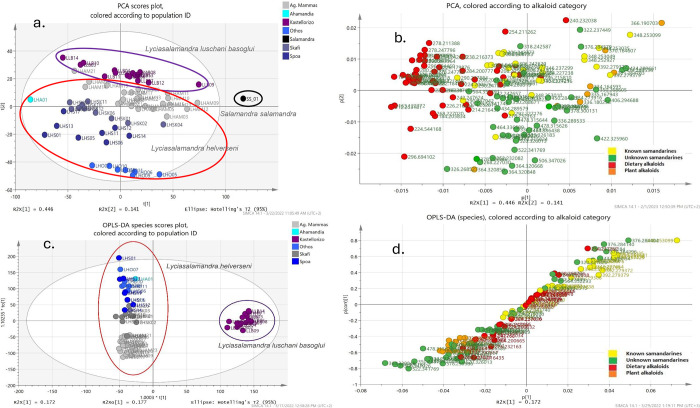 Figure 6
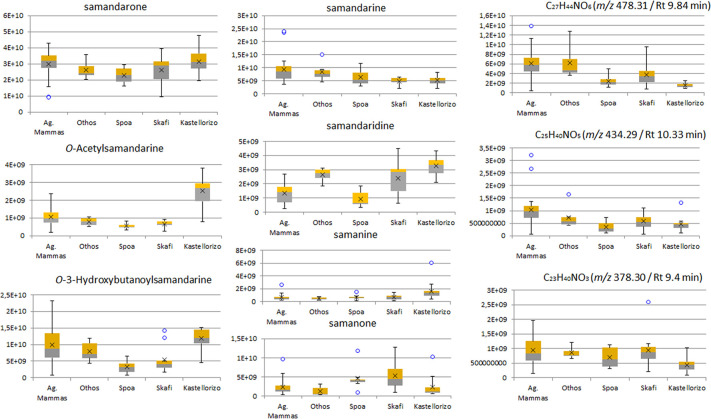 Figure 7
 Figure 8
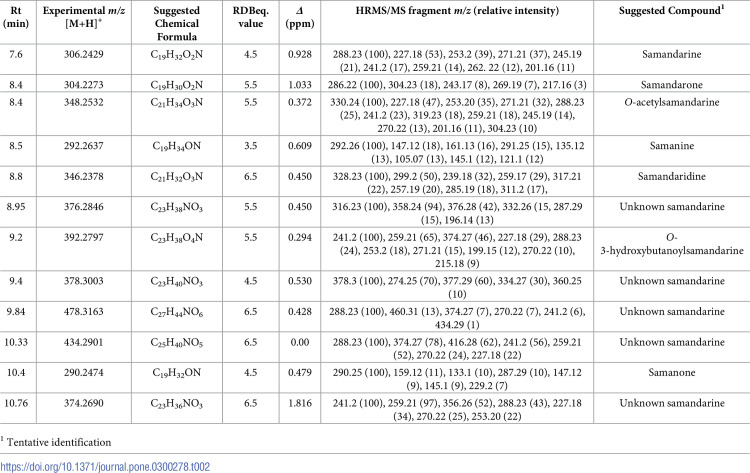 Figure 9
Peer Reviews
No public reviews on file for this paper yet. If you reviewed it on a platform where reviews are public (OpenReview, ICLR, NeurIPS, ICML), you can paste yours below so the community can read it here.
Videos
No videos yet. Explain this paper in a talk, walkthrough, or lecture? Add one.
Taxonomy
TopicsAmphibian and Reptile Biology · Antimicrobial Peptides and Activities · Insect Utilization and Effects