Attentional processes in response to emotional facial expressions in adults with retrospectively reported peer victimization of varying severity: Results from an ERP dot-probe study
Klara Blauth, Benjamin Iffland

TL;DR
This study shows that adults who experienced childhood peer victimization show altered brain responses when viewing emotional facial expressions, especially anger and disgust.
Contribution
The study provides new evidence that peer victimization in childhood affects adult neurophysiological attentional responses to emotional faces.
Findings
Higher peer victimization was linked to increased P200 amplitudes in response to angry and disgusted faces.
No significant effects were found on reaction times or P100 amplitudes.
Results suggest that victimization experiences influence attentional resource allocation to negative social stimuli in adulthood.
Abstract
Attentional processes are influenced by both stimulus characteristics and individual factors such as mood or personal experience. Research has suggested that attentional biases to socially relevant stimuli may occur in individuals with a history of peer victimization in childhood and adolescence. Based on this, the present study aimed to examine attentional processes in response to emotional faces at both the behavioral and neurophysiological levels in participants with experiences of peer victimization. In a sample of 60 adult participants with varying severity of retrospectively reported peer victimization in childhood and adolescence, the dot-probe task was administered with angry, disgusted, sad, and happy facial expressions. In addition to behavioral responses, physiological responses (i.e., event-related potentials) were analyzed. Analyses of mean P100 and P200 amplitudes…
Genes, proteins, chemicals, diseases, species, mutations and cell lines named across the full text — each resolved to its canonical identifier and authoritative record.
Click any figure to enlarge with its caption.
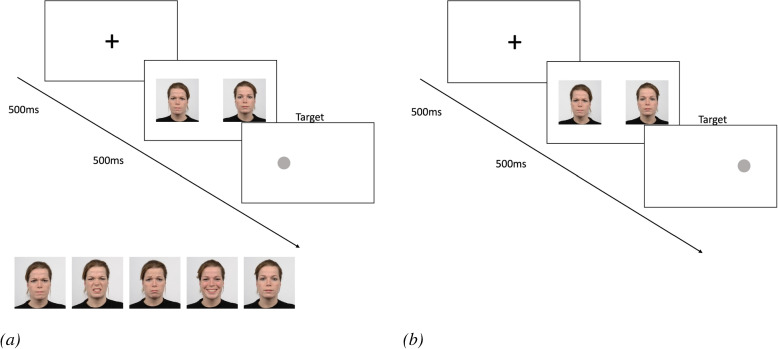 Figure 1
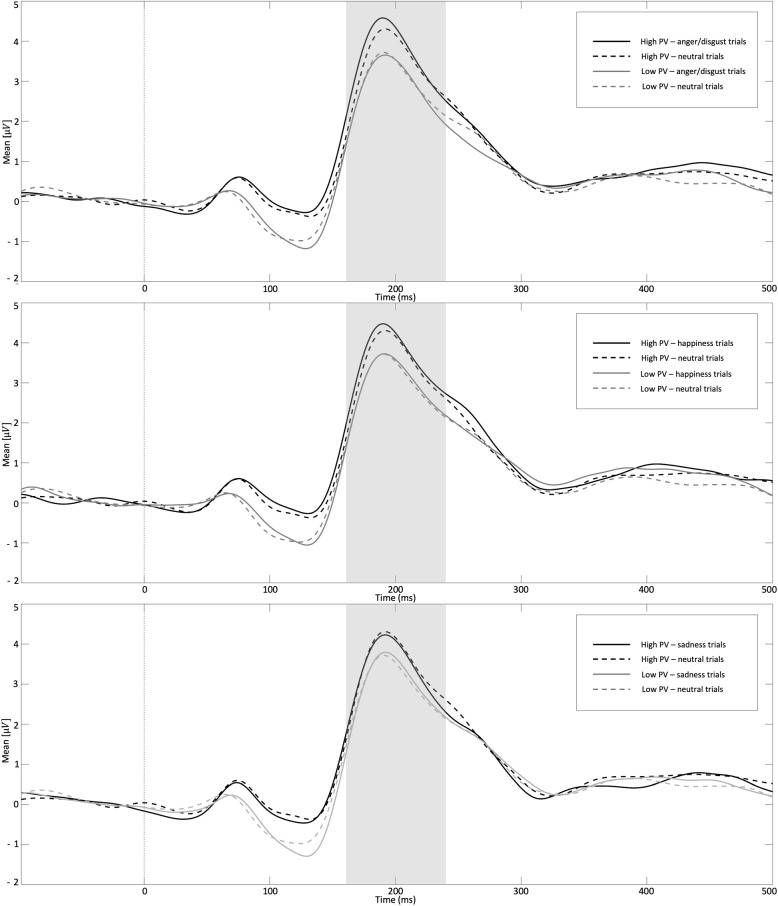 Figure 2
Peer Reviews
No public reviews on file for this paper yet. If you reviewed it on a platform where reviews are public (OpenReview, ICLR, NeurIPS, ICML), you can paste yours below so the community can read it here.
Videos
No videos yet. Explain this paper in a talk, walkthrough, or lecture? Add one.
Taxonomy
TopicsPsychology of Moral and Emotional Judgment · Bullying, Victimization, and Aggression · Anxiety, Depression, Psychometrics, Treatment, Cognitive Processes