Pseudo-Spectral Spatial Feature Extraction and Enhanced Fusion Image for Efficient Meter-Sized Lunar Impact Crater Automatic Detection in Digital Orthophoto Map
Huiwen Liu, Ying-Bo Lu, Li Zhang, Fangchao Liu, You Tian, Hailong Du, Junsheng Yao, Zi Yu, Duyi Li, Xuemai Lin

TL;DR
This paper introduces a new method for detecting small lunar impact craters using advanced image processing and machine learning techniques to improve accuracy and efficiency.
Contribution
The novel PSEF method combines pseudo-spectral spatial features with YOLO for enhanced detection of meter-sized lunar craters.
Findings
The PSEF model outperforms the Basal model in precision, recall, F1-score, mAP, and robustness.
Statistical analysis confirms the PSEF model's excellence in predicting crater size, shape, and location.
The method provides a more accurate and consistent way to detect meter-sized craters on planetary surfaces.
Abstract
Impact craters are crucial for our understanding of planetary resources, geological ages, and the history of evolution. We designed a novel pseudo-spectral spatial feature extraction and enhanced fusion (PSEF) method with the YOLO network to address the problems encountered during the detection of the numerous and densely distributed meter-sized impact craters on the lunar surface. The illumination incidence edge features, isotropic edge features, and eigen frequency features are extracted by Sobel filtering, LoG filtering, and frequency domain bandpass filtering, respectively. Then, the PSEF images are created by pseudo-spectral spatial techniques to preserve additional details from the original DOM data. Moreover, we conducted experiments using the DES method to optimize the post-processing parameters of the models, thereby determining the parameter ranges for practical deployment.…
Genes, proteins, chemicals, diseases, species, mutations and cell lines named across the full text — each resolved to its canonical identifier and authoritative record.
Click any figure to enlarge with its caption.
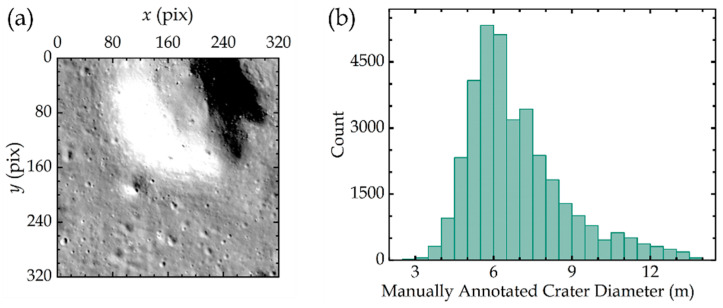 Figure 1
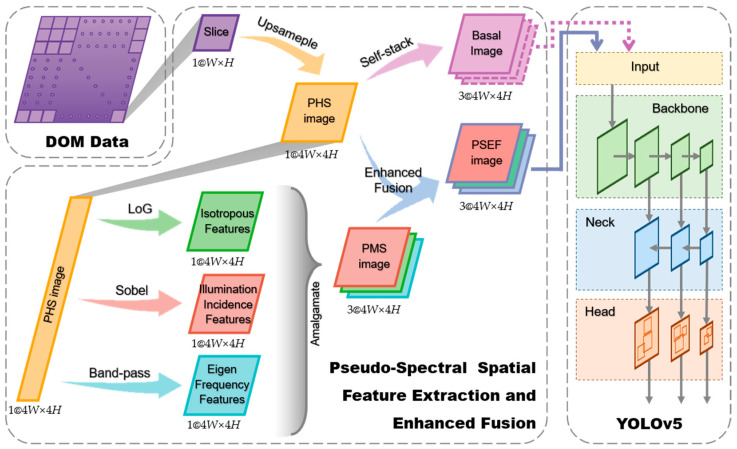 Figure 2
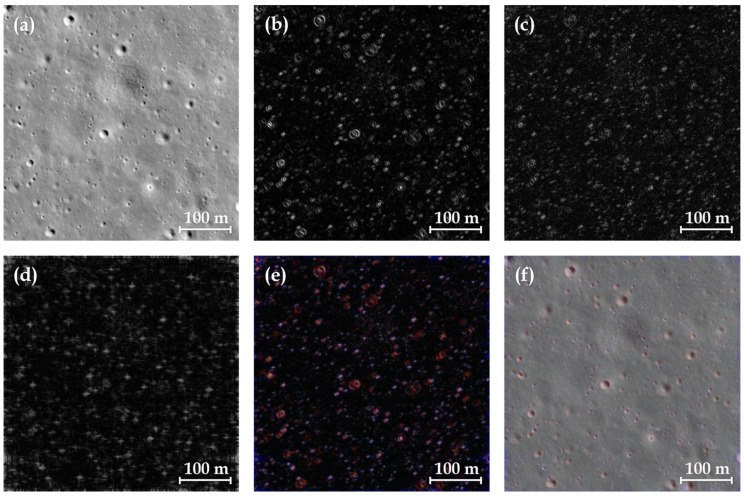 Figure 3
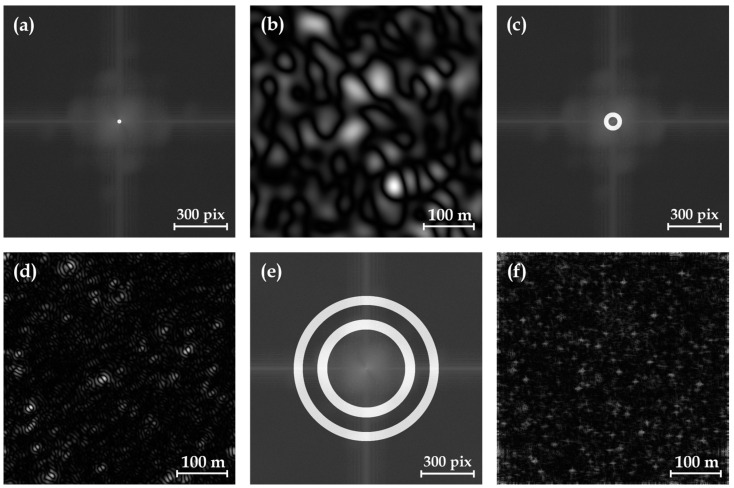 Figure 4
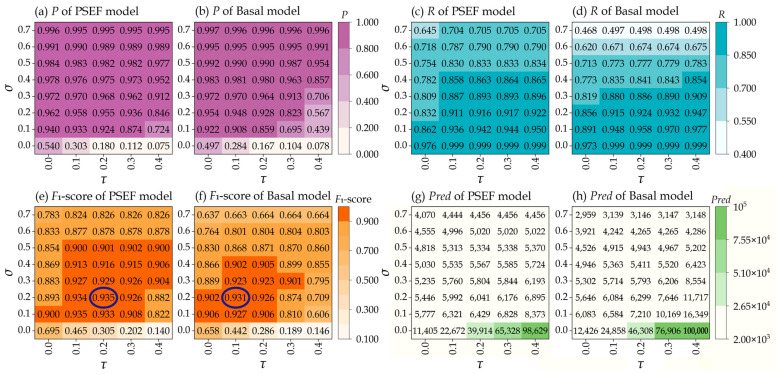 Figure 5
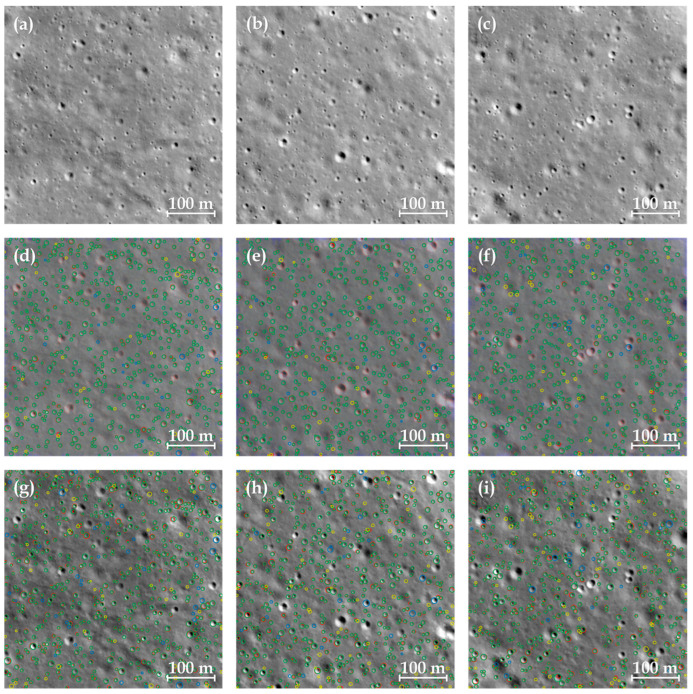 Figure 6
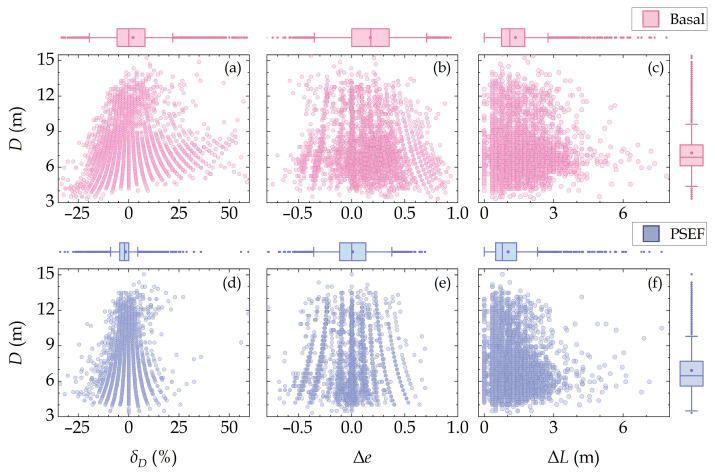 Figure 7
Peer Reviews
No public reviews on file for this paper yet. If you reviewed it on a platform where reviews are public (OpenReview, ICLR, NeurIPS, ICML), you can paste yours below so the community can read it here.
Videos
No videos yet. Explain this paper in a talk, walkthrough, or lecture? Add one.
Taxonomy
TopicsPlanetary Science and Exploration · Astro and Planetary Science · Isotope Analysis in Ecology