Clinical, Microbiological, and Microcomputed Tomography Evaluation of Silver Diamine Fluoride in Controlling Root Carious Lesions: An in Vivo Study
Natnicha Chitpitak, Paweena Wongwitwichot, Supitcha Talungchit, Supawadee Naorungroj

TL;DR
This study shows that silver diamine fluoride can effectively control root caries by reducing harmful bacteria and penetrating deep into dental lesions.
Contribution
The study demonstrates silver diamine fluoride's clinical and microbiological efficacy in arresting root caries with non-invasive application.
Findings
SDF application darkened lesions, increased hardness, and reduced sensitivity in most treated teeth.
SDF significantly reduced Streptococcus mutans levels after two weeks.
Silver penetrated dentinal tubules and increased lesion density as shown by micro-CT and FE-SEM/EDX.
Abstract
Silver diamine fluoride (SDF) application without removing necrotic tissue is an applicable non-invasive measure to primary care practice and may reduce the burden of untreated root caries. This study aims to examine clinical feature change, root caries-related bacteria, and silver penetration of SDF in arresting root caries. Ten study participants with 16 root carious teeth were included in this study. The clinical characteristics of root caries lesions (plaque deposit, color, hardness, and sensitivity symptom) were recorded. Then root caries samples were collected using a spoon excavator before and 2 weeks after treated with 38% SDF. The amounts of Streptococcus mutans (S.mutans), Actinomyces naeslundii (A. naeslundii), and Lactobacillus casei (L. casei) were determined using real-time PCR. Any tooth sample scheduled for extraction was further analyzed using micro-CT, stereoscopic…
Genes, proteins, chemicals, diseases, species, mutations and cell lines named across the full text — each resolved to its canonical identifier and authoritative record.
Click any figure to enlarge with its caption.
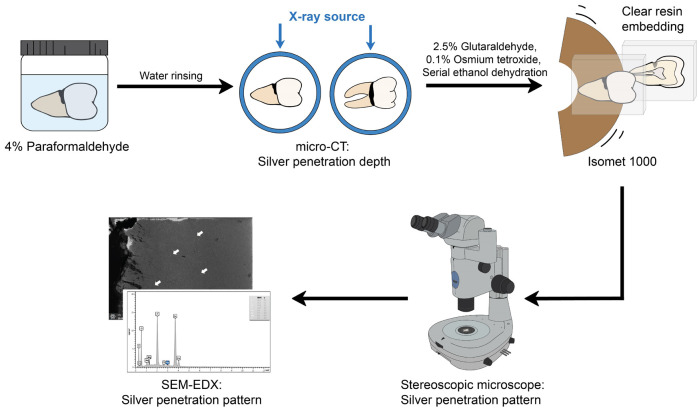 Figure 1
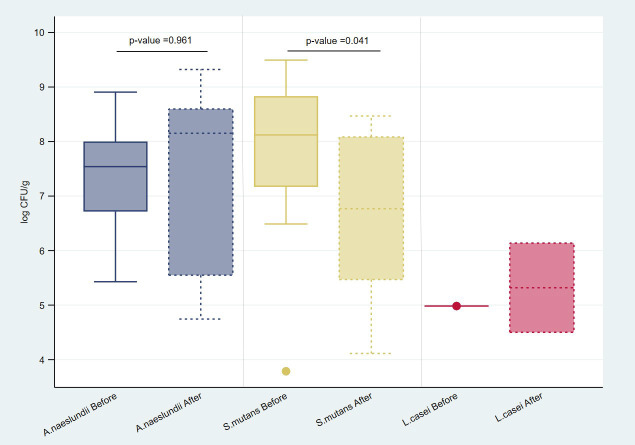 Figure 2
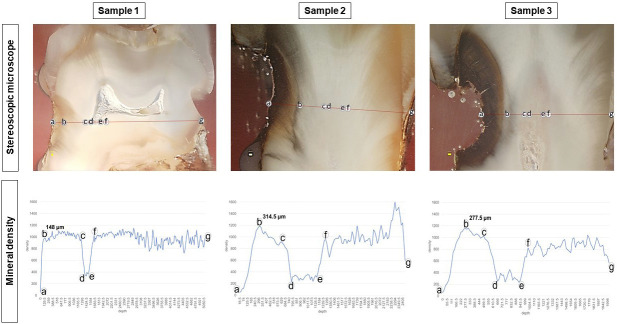 Figure 3
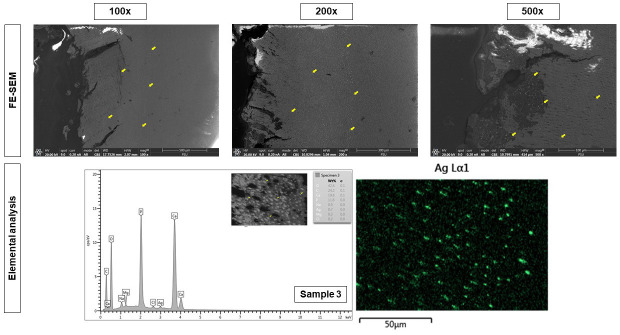 Figure 4
Peer Reviews
No public reviews on file for this paper yet. If you reviewed it on a platform where reviews are public (OpenReview, ICLR, NeurIPS, ICML), you can paste yours below so the community can read it here.
Videos
No videos yet. Explain this paper in a talk, walkthrough, or lecture? Add one.
Taxonomy
TopicsVitamin D Research Studies