Effect of Interindividual Variability in Metabolic Clearance and Relative Bioavailability on Rifampicin Exposure in Tuberculosis Patients with and without HIV Co-Infection: Does Formulation Quality Matter?
Glauco Henrique Balthazar Nardotto, Elin M. Svenson, Valdes Roberto Bollela, Adriana Rocha, Svetoslav Nanev Slavov, João Paulo Bianchi Ximenez, Oscar Della Pasqua, Vera Lucia Lanchote

TL;DR
This study examines how factors like HIV co-infection and drug formulation affect the body's response to rifampicin in tuberculosis patients.
Contribution
The study identifies body weight and formulation quality as key factors affecting rifampicin exposure, independent of HIV co-infection.
Findings
HIV co-infection does not alter plasma exposure to rifampicin.
Relative bioavailability and RIF plasma exposure were significantly lower than previously reported for the standard FDC regimen.
Participants weighing less than 50 kg have lower RIF plasma exposure compared to those over 50 kg.
Abstract
The present study aims to characterise the pharmacokinetics of rifampicin (RIF) in tuberculosis (TB) patients with and without HIV co-infection, considering the formation of 25-O-desacetyl-rifampicin (desRIF). It is hypothesised that the metabolite formation, HIV co-infection and drug formulation may further explain the interindividual variation in the exposure to RIF. Pharmacokinetic, clinical, and demographic data from TB patients with (TB-HIV+ group; n = 18) or without HIV (TB-HIV− group; n = 15) who were receiving RIF as part of a four-drug fixed-dose combination (FDC) regimen (RIF, isoniazid, pyrazinamide, and ethambutol) were analysed, along with the published literature data on the relative bioavailability of different formulations. A population pharmacokinetic model, including the formation of desRIF, was developed and compared to a model based solely on the parent drug. HIV…
Genes, proteins, chemicals, diseases, species, mutations and cell lines named across the full text — each resolved to its canonical identifier and authoritative record.
Click any figure to enlarge with its caption.
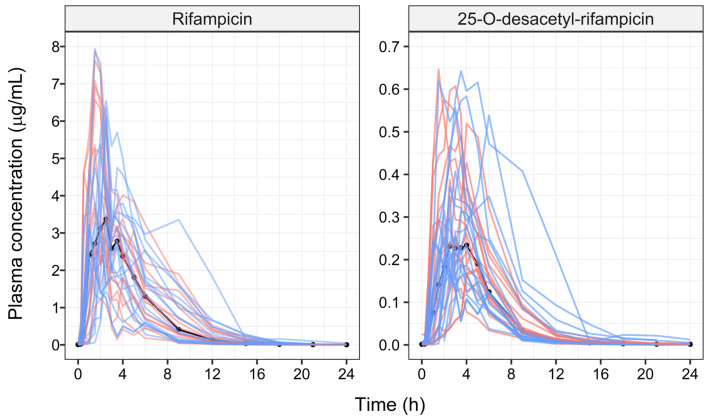 Figure 1
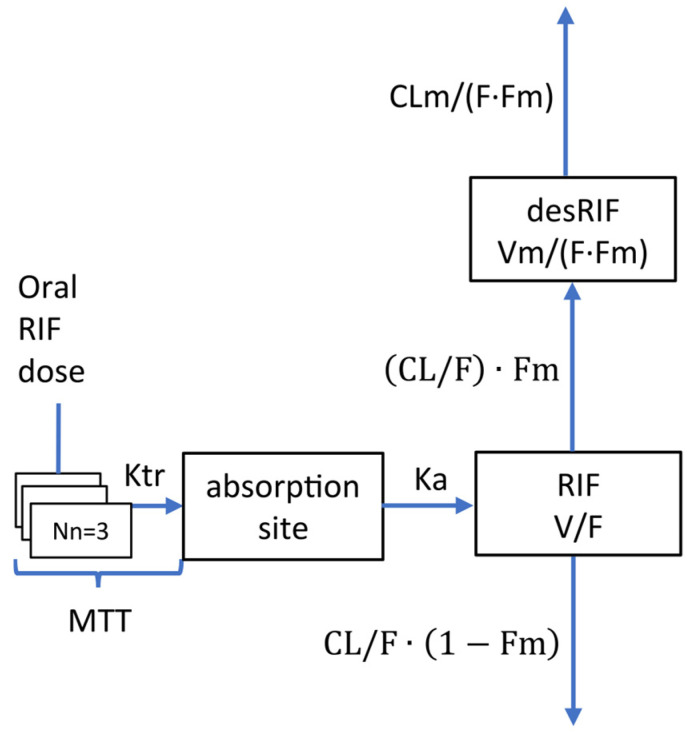 Figure 2
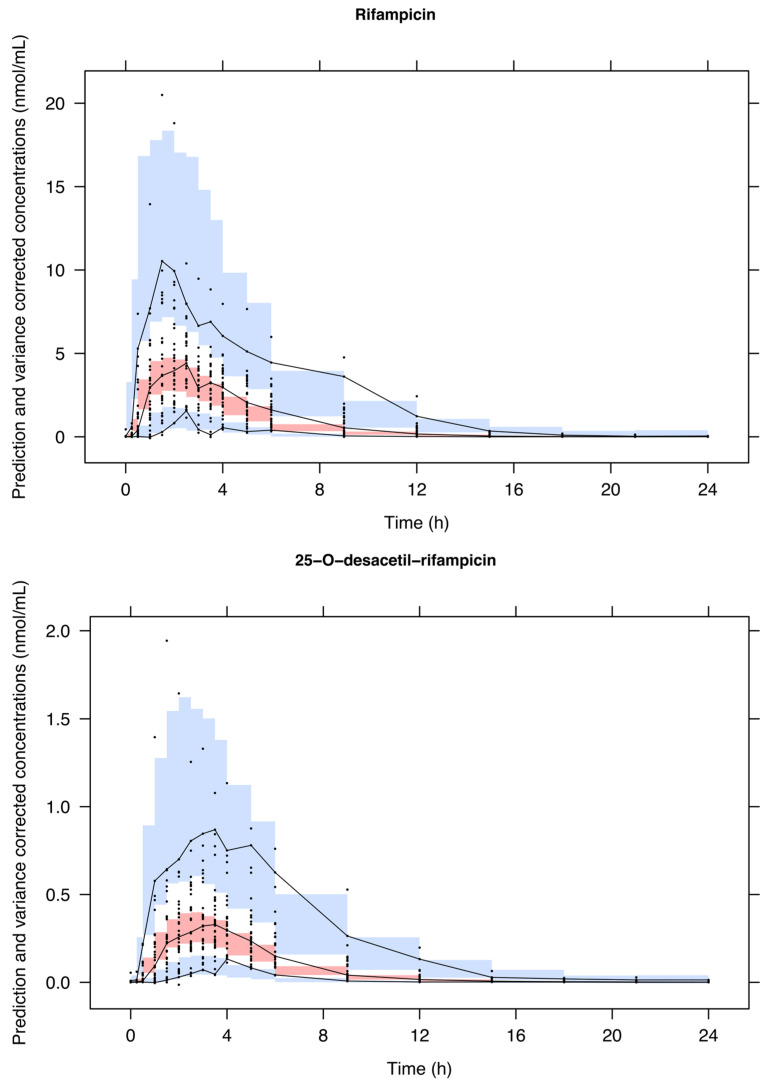 Figure 3
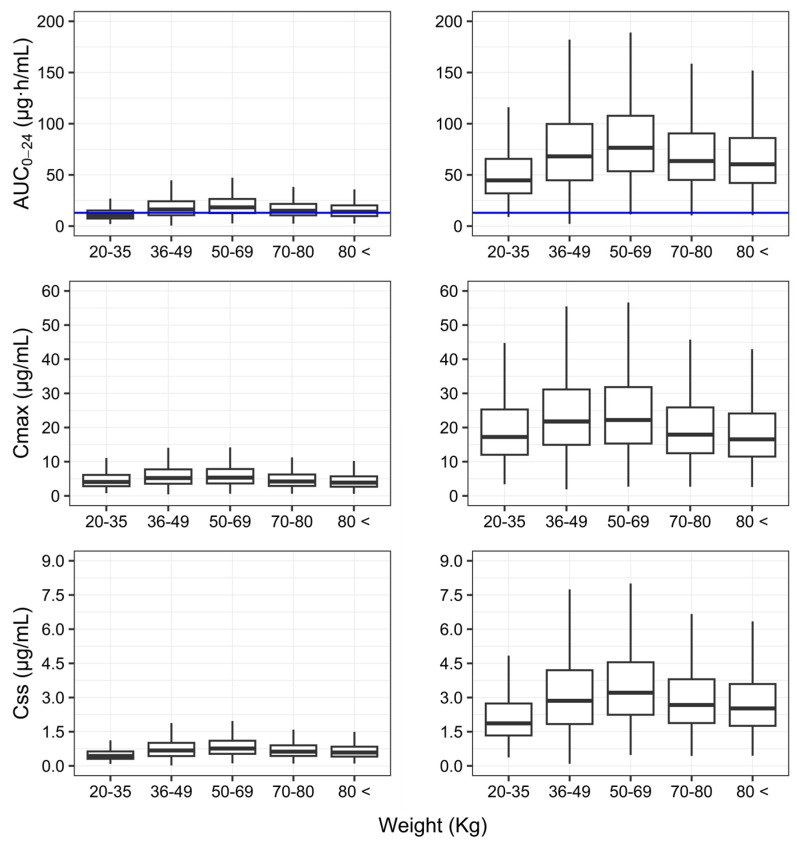 Figure 4
- —São Paulo Research Foundation
- —Brazilian National Council for Scientific and Technological Development
Peer Reviews
No public reviews on file for this paper yet. If you reviewed it on a platform where reviews are public (OpenReview, ICLR, NeurIPS, ICML), you can paste yours below so the community can read it here.
Videos
No videos yet. Explain this paper in a talk, walkthrough, or lecture? Add one.
Taxonomy
TopicsHIV/AIDS drug development and treatment · Pharmaceutical Quality and Counterfeiting · Biosimilars and Bioanalytical Methods
1. Introduction
Tuberculosis (TB) remains the world’s second leading cause of death from a single infectious agent after COVID-19, and it causes almost twice as many deaths when compared to HIV [1]. However, the immunodeficiency associated with HIV appears to contribute to co-infection, which results in a significant proportion of HIV-positive subjects developing active TB. In addition, epidemiological data also show that treatment failure and poorer outcomes are higher in HIV-positive subjects [2,3,4].
Even though such findings must be considered within a much broader context, limited attention has been paid to the variability in drug exposure in subjects who are being treated with antiretrovirals and antitubercular drugs, which are known to have no or minor metabolic interaction. Consequently, an important question to be addressed is the correlation between TB treatment failure and pharmacokinetic variability in subjects with HIV/TB co-infection. Rifampicin (RIF) is an essential component of the first-line anti-tuberculosis drug therapy. Given the significant effect of body weight on RIF disposition, the World Health Organization recommends the use of weight-banded dosing [5,6]. RIF is usually administered daily as part of a four-drug fixed-dose combination (FDC) regimen for TB treatment (RIF, isoniazid, pyrazinamide, and ethambutol). Whilst weight-banded dosing facilitates interventions and an FDC reduces the pill burden, improving adherence to treatment, high intra- and interindividual variability in RIF exposure is observed following therapeutically recommended doses [7,8,9,10,11,12]. There are many reports on the interindividual variability (IIV) of RIF pharmacokinetics, which attribute it to the formulation type [13], age [14], sex [13,15], HIV co-infection [16], weight (or other body size descriptor) [14,17,18,19,20], and comedications [17]. Despite adequate information on the summary of product characteristics regarding the effect of such factors, interindividual variability in the systemic exposure to RIF remains high [16,17,18,19,20,21,22,23,24,25,26,27], leading to a growing consensus that higher RIF doses are required to ensure efficacy [8,10,12]. However, there is disagreement on whether HIV co-infection, i.e., the potential effect of HIV-related inflammation and changes in the immune response, affects the pharmacokinetics of RIF, and consequently, whether dose adjustment should be considered for TB patients living with HIV [7,16,28].
According to the Biopharmaceutical Classification System, RIF is a class II drug presenting low water solubility and high permeability [29]. Its variable bioavailability is mainly related to the formulation dissolution and disintegration properties [15]. In addition, considering that HIV affects mucosal surfaces with inflammation independently of the viral load [30], it is conceivable that RIF’s absorption characteristics related to both the rate and extent of the absorption may be affected in subjects with HIV/TB co-infection.
RIF is eliminated primarily by hepatic mechanisms, but 13–24% of unchanged drug is eliminated renally [31,32]. RIF is metabolised via β-esterase or other esterases in liver microsomes [31,33] to 25-desacetylrifampicin (desRIF, a major contributor) and excreted in bile. At therapeutic doses, RIF’s pharmacokinetics is nonlinear (10–40 mg/kg daily), probably due to the saturable active secretion into the bile. However, the transporter involved in this process is unknown [20]. In addition, autoinduction of enzymes and/or transporters leads to a significant decrease in RIF exposure over time. Previous studies have shown that 90% of the maximum induction is reached after two weeks of RIF daily treatment [34]. Thus, RIF pharmacokinetics shows concentration and time-dependent elimination and dose-dependent bioavailability [20]. Moreover, possibly, RIF is a substrate of the efflux transporter P-glycoprotein (P-gp), encoded by the ABCB1 gene [35], and of the organic anion-transporting polypeptide 1B1 (OATP1B1), encoded by the SLCO1B1 gene [36,37].
Considering that desRIF shows between 50 and 100% of the antimicrobial activity of RIF against Mycobacterium tuberculosis [34], it would be of interest to understand whether differences in the metabolite formation contribute to the overall variability in the systemic exposure to RIF, and consequently, whether different metabolic phenotypes may be associated with poorer outcome in patients with HIV/TB co-infection.
Here, we attempt to quantify the effect of interindividual differences in the desRIF formation and HIV-co-infection on the variability in exposure to RIF, taking into consideration the potential contribution of formulation-related differences in the relative bioavailability. A model-based approach is proposed, in which the parent drug and metabolite are evaluated together and separately [34]. Previously, two population pharmacokinetic studies of RIF were developed with the inclusion of desRIF, one in healthy Asian subjects following rifampicin (600 mg) daily treatment for 14 days [17] and another in patients co-infected with TB and HIV [38]. However, these authors have not considered the potential confounding factor of geographical ancestry and the analysis has been limited to Asian and African, or Latin American, populations [13,39,40].
The present study aims to evaluate the pharmacokinetics of RIF in TB patients from Southeast Brazil with and without HIV co-infection, considering the formation of the metabolite desRIF. It is hypothesised that the metabolite formation, HIV co-infection and drug formulation may further explain the interindividual variation in RIF plasma exposure.
2. Materials and Methods
2.1. Clinical Study
The study protocol was approved by the local Hospital Research Ethics Committee (CEP/FCFRP n°: 405, Process number: 032398/2016), and all the patients signed the informed consent form. This investigation was conducted in accordance with the Declaration of Helsinki and national and institutional standards.
HIV-negative and HIV-positive subjects who were diagnosed with TB (TB-HIV− group, n = 15; TB-HIV+ group, n = 18) were enrolled after they had started the second month of the standard of care therapy. The TB-HIV− and TB-HIV+ groups consisted of 4 female/11 male and 1 female/17 male subjects, respectively. Their age ranged between 18 to 60 years, whereas the body weight of the TB-HIV+ group (range: 38.5 to 65 kg) was lower than the TB-HIV− group (range: 43 to 85.5 kg) (p < 0.05; t-test). None of the participants were considered obese. Further details on the participants’ demographic data can be found elsewhere [41]. All the subjects were treated with FDC tablets containing rifampicin (150 mg), isoniazid (75 mg), pyrazinamide (400 mg), and ethambutol (250 mg) (Lupin LTD A-28/1, MIDC, Chikalthana, Aurangabad, India and imported by Fundação Osvaldo Cruz-Farmanguinhos, Rio de Janeiro, Brazil). The FDC tablets were administered under fasting conditions based on weight bands: 2 tablets (20–35 kg), 3 tablets (36–50 kg), or 4 tablets (>50 kg) according to the World Health Organization guidelines [5,6]. In addition, the TB-HIV+ subjects were receiving lamivudine, tenofovir (or zidovudine), and raltegravir (or efavirenz). Serial blood samples were collected over the 24 h dose interval at times zero, 0.25, 0.5, 1, 1.5, 2, 2.5, 3, 3.5, 4, 5, 6, 9, 12, 15, 18, 21, and 24 h after antibiotics administration. The plasma aliquots were stored at −80 °C until analysis and then analysed by UPLC-MS/MS as previously described [41].
2.2. Population Pharmacokinetic Models
The population pharmacokinetics of RIF and desRIF was evaluated by nonlinear mixed-effects modelling. To account for the effect of differences in the mass balance, the concentration data of the parent drug and its metabolite were converted into molar units. Evaluation of desRIF as a contributor to the interindividual differences in the pharmacokinetics of RIF was implemented assuming that the parent–metabolite model (RIF-desRIF) is a nested model, including the effect of body weight based on an allometrically function with fixed exponents (0.75 for CL/F and 1 for Vd/F).
Fixed and random effects were included in a stepwise manner. Parameters were estimated using the first-order conditional estimation with interaction method (FOCE-I). One- and two-compartment structural models were considered with first-order or saturable elimination, including autoinduction [18,19]. RIF absorption was modelled considering zero- or first-order absorption, whilst the lag-time was parameterised using a transit compartment [42,43]. Interindividual variability (IIV) was evaluated assuming a log-normal distribution. The residual variability was described by a proportional model with an additive error term [44,45]. As inclusion of covariates and stochastic parameters describing interindividual variability did not fully explain the observed interindividual variation in drug concentrations, random variables were used to characterise the random deviations from the variance of ε, which is assumed to be the same for all subjects. This term allowed different individuals to have residual variability of varying magnitude. Further details on the model parameterisation are included in the control stream file (Supplementary Materials).
The model-building criteria included the following: (i) successful minimisation and covariance step, (ii) acceptable values of relative standard error (RSE) and shrinkage of each estimate, (iii) number of significant digits, and (iv) acceptable gradients at the last iteration [45,46]. The comparison between hierarchical models was based on graphic and statistical methods that included (1) reduction of the objective function value (OFV) and AIC (Akaike information criteria) [47], (2) goodness of fitting plot (GOF) [45,48] and (3) visual predictive checks (VPCs) [45,48,49], posterior predictive checks (PPC) [50], normalised predictive distribution errors (NPDE) [51] and mirror plots.
The influence of continuous (age and C reactive protein) and categorical (HIV co-infection, antiretroviral treatment and SLCO1B1 genotype) covariates other than body size on the pharmacokinetic parameters of RIF and desRIF was explored by the stepwise forward inclusion (p = 0.05) backward elimination (p = 0.01) approach according to the likelihood ratio, with that being that the difference of the -2 log-likelihood value (OFV) between two models is approximately χ^2^ distributed with degrees of freedom equal to the difference in the number of parameters between the hierarchical models [52,53]. Attention was also paid to the correlation between the stochastic parameters describing the metabolite formation rate and variability in individual RIF concentrations. Further details on the model evaluation procedures are described in the Supplementary Materials.
The maximum plasma concentration (C_max_), AUC_0–24_ (trapezoidal rule), and steady state plasma concentration ( ) were derived from the plasma concentrations over time.
Finally, to assess the effect of formulation-related differences on systemic RIF exposure, we compared the AUC_0-24_ and bioavailability obtained with the final model with those reported previously in the literature [13,14,15,17]. This was performed by including the parameter estimates of previous RIF models as priors, as implemented in the $PRIOR NWPRI subroutine. The priors were non-informative, with the exception of RIF CL/F and V/F values, which were kept as informative priors.
All the analyses were implemented in NONMEM v. 7.5.0 (ICON Development Solutions, Ellicott City, MD, USA) [46], using PsN v. 5.3.0 [54,55]. Data formatting and the graphical and statistical summaries were performed using R v 4.2.2 [56]. A copy of the control stream files and a summary of the model building process are presented in the Supplementary Materials.
3. Results
Figure 1 presents the observed individual concentration vs. time profiles of RIF and desRIF, as stratified by HIV co-infection. Of note was the finding that the ratio between the area under the concentration vs. time (AUC) curves between desRIF and RIF was comparable across the two groups and did not differ between individuals receiving different doses (i.e., 450 vs. 600 mg RIF).
The RIF and desRIF pharmacokinetics were characterized by a one-compartment model with first-order elimination. The RIF absorption was best described by the transit compartment (Nn = 3) model (Figure 2 and Table 1). The effect of body weight on the clearance and volume of distribution was implemented similarly to that outlined in previous reports, i.e., it was described by an allometric function with fixed exponents for both moieties. None of the other demographic, clinical and genotypical factors included in the covariate analysis were found to be significant.
The population estimates of the apparent clearance and volume of distribution were, respectively, 35.2 L/h and 108.0 L for RIF and 368 L/h and 226 L for desRIF (Table 1). All the parameters have been estimated with good precision; however, there was no significant reduction in the interindividual or residual variability, as indicated by the stochastic model parameters describing the pharmacokinetics of RIF. Notably, the interindividual variability in bioavailability was essential to accurately describe the individual concentration vs. time profiles of RIF and desRIF.
The VPCs of RIF and desRIF are depicted in Figure 3. As can be seen from the data scattering, the model adequately describes both moieties. Similarly, the model performance was deemed appropriate based on different diagnostic criteria, including the GOF (Figure S1). Posterior predictive checks (PPC) based on the AUC_0–24_ and C_max_ showed the accurate prediction of exposure to RIF and desRIF (Figure S2). The NPDE revealed acceptable, normally distributed errors (Figure S3). In addition, the mirror plots suggest that the variance–covariance structure was well characterised, as the simulated datasets reproduced the dispersion pattern observed in the original data (Figure S4).
Given the identification of interindividual variability in the oral bioavailability and the relatively low exposure as compared with previous studies, an assessment of the average relative bioavailability revealed marked differences across studies (Table 2 and Tables S2–S5), making it evident that the RIF concentrations achieved with the current formulation were significantly lower than those reported elsewhere [13,14,15,17].
Figure 4 shows how the different metrics of exposure (AUC_0–24_, C_max_, and Css) vary with body weight, and how our results compare to those of published studies including TB patients with and without HIV co-infection.
4. Discussion
Despite mounting evidence showing the implications of HIV/TB co-infection for treatment outcomes, there has been limited attention paid to the role of interindividual differences in exposure to anti-tubercular drugs in this group of patients. A previous report by our research group [42] showed that HIV did not influence the pharmacokinetics of RIF in TB patients. Here, we have used a model-based approach to characterise the pharmacokinetics of RIF and its active metabolite, desRIF. First, it is important to highlight that the use of a joint model including the metabolite formation and disposition did not explain the observed interindividual variability in systemic exposure to RIF. In addition, variable exposure cannot be assigned to variable adherence to treatment, as drug administration was ensured through directly observed therapy (DOT). Fasting conditions were also strictly maintained, considering that all the participants were hospitalised (inward period), excluding variability due to potential drug–food interaction. Thanks to the selected group of subjects with HIV/TB co-infection, it was possible to disentangle the potential confounding due to antiretroviral therapy from the intrinsic effect of disease (i.e., the underlying controlled viral infection, with viral load below 50 copies/mL). It is noteworthy that the TB-HIV+ patients had no gastrointestinal disorders such as diarrhoea, vomiting, opportunistic bowel infection, gastric hypoacidity, enteropathy, or comorbidities that may predispose to malabsorption [7,28,41]. None of the antiretroviral drugs showed the potential to impact systemic exposure to RIF.
The median AUC_0–24_ desRIF/RIF ratio was approximately 0.1, a value that is very close to previously reported data [58,59]. It is also worth mentioning that given the differences in the pharmacological activity of the metabolite, the increased metabolite formation in HIV/TB co-infected subjects could have clinically relevant implications. On the other hand, it became evident that the relatively low concentration vs. plasma profiles of desRIF do not contribute appreciably to explaining the interindividual variability in RIF disposition. Even though these results may not be generalised to other metabolites, such as rifampicin glucuronide and N-demethyl rifampicin, it is unlikely that differences in metabolic clearance explicate the residual, random variability in the systemic exposure to RIF.
By contrast, our study reveals that the observed variation in systemic exposure between subjects is unlikely to be caused by first-pass mechanisms. Rather, it may be associated with the dosage form, with significant interindividual differences in the extent of the absorption. These differences do not seem to correlate with the baseline characteristics of the patient population, including geographical ancestry.
Clinical studies in tuberculosis often use distinct RIF formulations from different manufactures [17,18,60,61], either as a single tablet or as an FDC [13,14,15,19,39,62]. The variation in exposure due to differences across formulations has not been evaluated, as to date no meta-analysis has been performed to assess the impact of the variation between generic formulations on systemic exposure. In addition, as bioequivalence studies are performed in healthy subjects, the interaction with other covariates has been disregarded. Unsurprisingly, disposition parameter estimates show large variation across studies and population pharmacokinetic models, including those observed in the current study. As shown in Table 1, the estimates of apparent clearance (CL/F = 35.2 L/h) and volume of distribution (V/F = 108.0 L) are significantly higher than previously reported. The CL/F was found to vary between 4.0 and 23.9 L/h, whereas the V/F between 13.8 and 77.4 L [13,14,15,20,34,41].
It is important to emphasise that a previous pharmacokinetic analysis by Schipani et al., 2016 [14], whose subjects received the same FDC tablet brand as that used in our study (Lupin Pharmaceutical Ltd., India), found relatively lower exposure and clearance estimates (CL/F = 23.9 L/h) that were already beyond the upper range reported to date (i.e., CL/F between 4.0 and 22.8 L/h) [34]. Interestingly, Milán-Segovia et al., 2013 [13] also reported that the bioavailability of RIF in Mexican subjects receiving a generic FDC tablet was only 46.8% as compared to those receiving the reference (Rifater, Sanofi-Aventis, Mexico). Previously, Milán-Segovia et al., 2010 [63] had also shown that the AUC_0−∞_ test/reference ratio of a generic FDC tablet vs. the reference formulation (Rifater, Sanofi-Aventis, Mexico) was as low as 22.08%. More recently, Medellin-Garibay et al., 2020 [39] reported that a generic FDC formulation showed bioavailability below the range required for bioequivalence (i.e., 0.85–1.25). This pattern seems to persist across different studies, which suggests that FDC formulations have lower bioavailability than RIF single tablets. It also implies that the formulation quality does not seem to be continuously monitored [15].
The issue of variable bioavailability represents a serious concern, as major efforts are being undertaken to optimise dosing regimens and reduce treatment failure in more vulnerable patients, such as those living with HIV. Yet, such an objective cannot be achieved without quality control of the standard of care medicines that are used so widely [64].
The relative bioavailability estimates (Table 2) in the current study were 32.2%, 50.1%, 70.8%, 50.3%, and 76.8% lower than that those, respectively, reported by Schipani et al., 2016 [14] (Malawian subjects taking the same FDC tablets brand as in this study; Table S2), Wilkins et al., 2008 [15] (South African subjects taking FDC tablets; Table S3), Seng et al., 2015 [17] (Asian (mainly Chinese; Table S1) subjects taking RIF + isoniazid FDC tablets), and Milán-Segovia et al., 2013 [13] (Mexican subjects taking a generic and the reference (Rifater, Sanofi-Aventis, Mexico) FDC tablets; Table S4). These differences in bioavailability have direct implications for systemic exposure, including the AUC_0–24_, C_max_ and Css (Figure 4). For instance, median estimates of the AUC_0–24_ (10.39 mg∙h/mL) in individuals with body weight <50 kg are likely to result in poor long-term outcomes, according to Pasipanodya et al. [57], who showed that RIF exposure in patients following retreatment weas ≤13 mg∙h/mL.
From a clinical pharmacology perspective, it becomes clear that any attempt to optimise regimens, so as to ensure achievement of the target exposure across the overall patient population, irrespective of differences in body weight, is pointless if the formulation quality is not warranted. For the sake of completeness, as shown in Figure 4, the effect of body weight on systemic exposure following the currently recommended weight-banded dosing regimen is minor compared to the discrepancies between formulations.
Whilst microbiological and clinical evidence points to the importance of administering higher doses of RIF (e.g., 600 mg) to subjects who have low body weight [27], our study undoubtedly shows that a bigger issue exists, namely the consistency in bioequivalence claims supporting the commercialisation of essential medicines. In the worldwide fight against the threat of TB, and given the vulnerability of subjects living with HIV, there seems to be a gap in policy making, which offsets the advances clinical research has achieved. Accessible, cheaper medicines are crucial in the fight against TB, but medicinal products must comply with regulatory and quality standards. This requirement seems to be overlooked when considering RIF.
5. Conclusions
HIV co-infection does not impact plasma exposure to RIF and the desRIF formation does not contribute to the observed variability in RIF disposition. Surprisingly, our analysis allowed further investigation of the differences in the relative bioavailability, which appeared to be variable across different studies and populations, highlighting a potential quality issue for the most important component of the standard of care therapy for TB. These findings deserve further attention, as interindividual variability in exposure due to what appears to be a formulation quality issue is clinically unacceptable.
The reference list from the paper itself. Each links out to its DOI / PubMed record.
- 1Global Tuberculosis Report 2023 World Health Organization Geneva, Switzerland 2023
- 2Gayoso R. Dalcolmo M. Braga J.U. Barreira D. Predictors of mortality in multidrug-resistant tuberculosis patients from Brazilian reference centers, 2005 to 2012 Braz. J. Infect. Dis.20182230531010.1016/j.bjid.2018.07.00230086258 PMC 9427984 · doi ↗ · pubmed ↗
- 3Ejeh F.E. Undiandeye A. Okon K. Moshood K.H. Prevalence of rifampicin resistance tuberculosis among HIV/TB coinfected patients in Benue State, Nigeria Pan Afr. Med. J.20213820310.11604/pamj.2021.38.203.1903433995809 PMC 8106797 · doi ↗ · pubmed ↗
- 4Romaino S.M.N. Naing N.N. Mat Zuki M.J. Factors associated with tuberculosis treatment success among tuberculosis and human immunodeficiency virus co-infected patients in Kelantan Med. J. Malaysia 20227769670336448387 · pubmed ↗
- 5Ministério da Saúde Manual de Recomendações Para o Controle da Tuberculose no Brasil Ministério da Saúde, Secretaria de Vigilância em Saúde, Departamento de Vigilância Epidemiológica Brasília, Brasil 20191288
- 6TB CARE I International Standards for Tuberculosis Care International standards for Tuberculosis Care University of California San Francisco, CA, USA 2014192
- 7Alsultan A. Peloquin C.A. Therapeutic drug monitoring in the treatment of tuberculosis: An update Drugs 20147483985410.1007/s 40265-014-0222-824846578 · doi ↗ · pubmed ↗
- 8Kimerling M.E. Phillips P. Patterson P. Hall M. Robinson C.A. Dunlap N.E. Low serum antimycobacterial drug levels in non-HIV-infected tuberculosis patients Chest 19981131178118310.1378/chest.113.5.11789596291 · doi ↗ · pubmed ↗