Wild Species from the Family Apiaceae, Traditionally Used as Food in Some Mediterranean Countries
Ekaterina Kozuharova, Giuseppe Antonio Malfa, Rosaria Acquaviva, Benito Valdes, Alla Aleksanyan, Daniela Batovska, Christina Stoycheva, Moh Rejdali, Abdel Rahman Al-Tawaha, Pasquale Marino, Vivienne Spadaro

TL;DR
This paper reviews wild Apiaceae plants used as food in Mediterranean countries, highlighting how local climate affects their distribution and consumption more than cultural ties.
Contribution
The study identifies unique patterns of plant use and distribution across 13 Mediterranean regions, emphasizing the role of climate over cultural exchange.
Findings
81 wild umbellifers are traditionally used as food across 13 Mediterranean study sites.
50 of these plants are consumed in only one country despite being distributed in multiple.
Local climate, rather than cultural proximity, strongly influences plant consumption patterns.
Abstract
Mediterranean countries are a cauldron of cultural exchange, with a strong emphasis on wild plants in cuisine traditions. Many of these plants belong to the family Apiaceae. The common climate determines the common range of distribution. While many plants have wide distribution, the range of distribution of others is restricted to Western Mediterranean or North Africa. This review investigates wild plants from the family Apiaceae traditionally used as food in 13 study sites—11 countries in the Mediterranean and adjacent territories—the mainland and 3 islands. The aim is to trace patterns of native distribution versus consumption. As a result, 81 wild umbellifers are listed, traditionally used as food. Their consumption and distribution patterns are described and discussed. Interestingly in 8 of the 13 study sites (61.5%) are recorded 50 plant taxa (66.7% of all wild umbellifers,…
Genes, proteins, chemicals, diseases, species, mutations and cell lines named across the full text — each resolved to its canonical identifier and authoritative record.
Click any figure to enlarge with its caption.
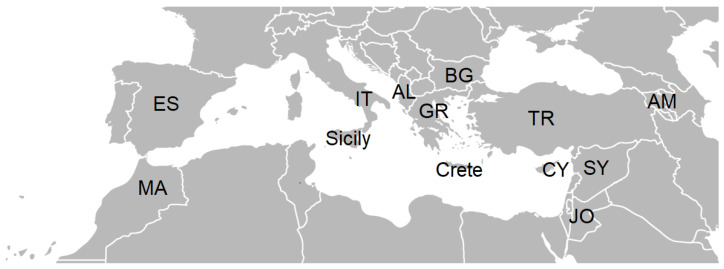 Figure 1
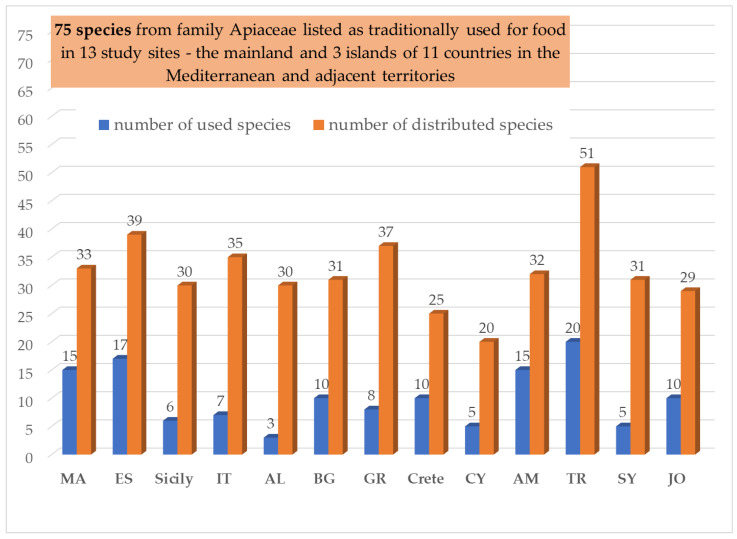 Figure 2
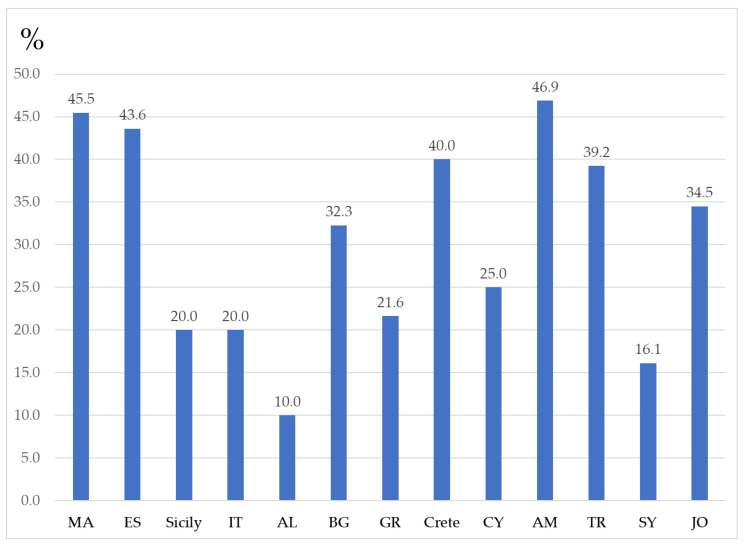 Figure 3
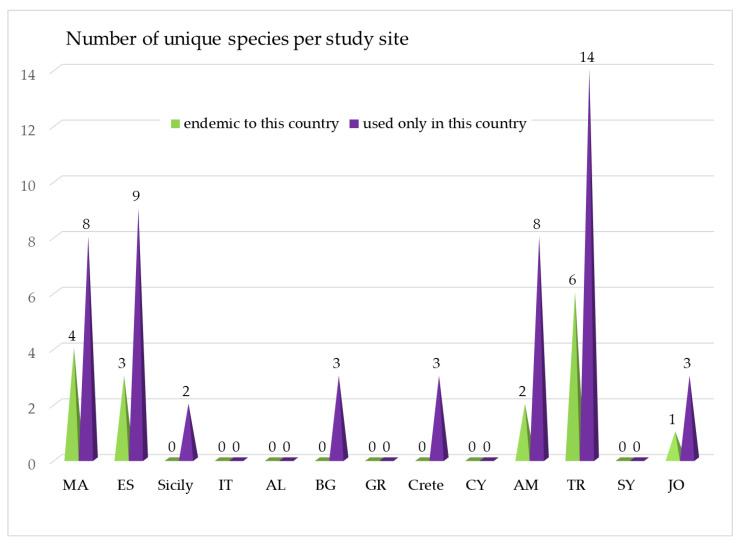 Figure 4
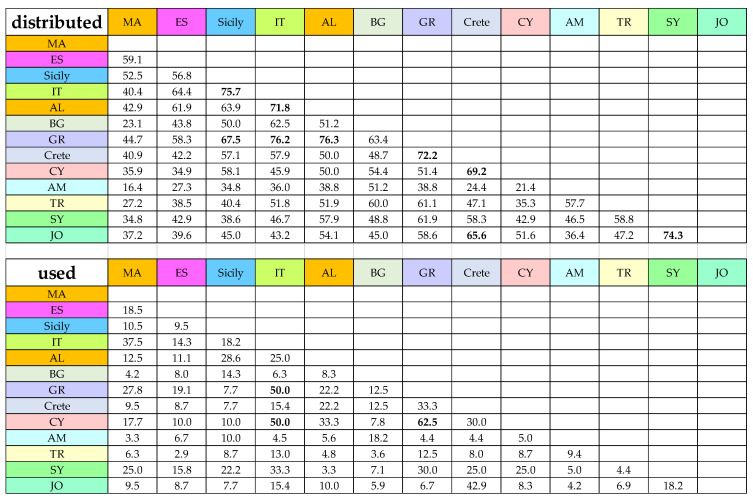 Figure 5
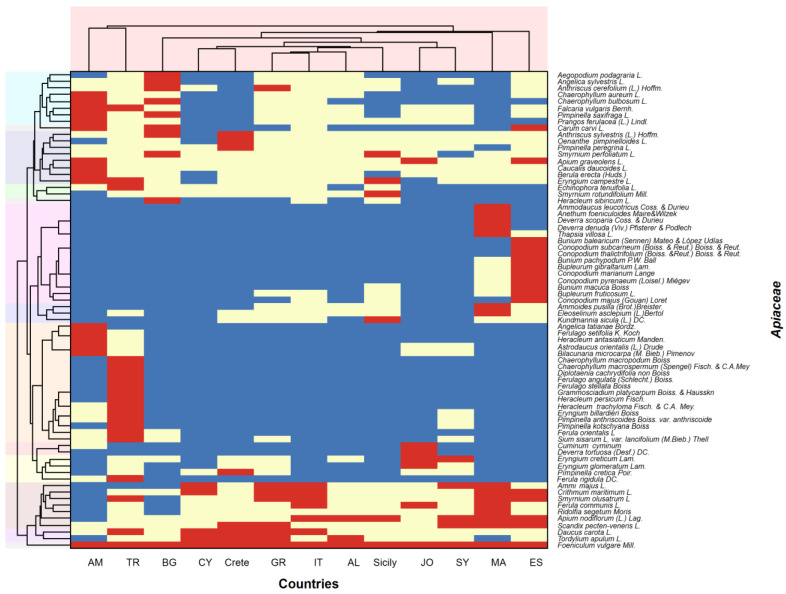 Figure 6
Peer Reviews
No public reviews on file for this paper yet. If you reviewed it on a platform where reviews are public (OpenReview, ICLR, NeurIPS, ICML), you can paste yours below so the community can read it here.
Videos
No videos yet. Explain this paper in a talk, walkthrough, or lecture? Add one.
Taxonomy
TopicsEssential Oils and Antimicrobial Activity · Plant chemical constituents analysis · Phytochemistry and Biological Activities