Navigating Complexities: Successful Pericystectomy in a South Asian Female With Hepatic and Peritoneal Hydatid Disease
Srinivasa Reddy, Rajesh G Gattani, Harshal Tayade, Pankaj Gharde, Darshana Tote, Nitesh Badwaik, Dheeraj P Surya, Mihir Patil, Chahat Singh

TL;DR
A South Asian woman successfully underwent surgery for hydatid disease affecting her liver and abdomen after initial drug treatment failed.
Contribution
This case study highlights the complexities of diagnosing and managing concurrent hepatic and peritoneal hydatid disease through a multidisciplinary approach.
Findings
The patient showed inadequate response to albendazole, necessitating surgical intervention.
Postoperative albendazole was used to prevent disease recurrence.
A multidisciplinary approach combining medical and surgical strategies was crucial for successful management.
Abstract
Hydatid cyst disease, caused by the larval stage of Echinococcus granulosus, is a parasitic infection endemic in many regions, including South Asia. We present a case of a 36-year-old South Asian female with concurrent liver and peritoneal hydatid cysts, emphasizing the diagnostic challenges and management complexities associated with this condition. The patient presented with abdominal pain, nausea, and decreased appetite, and imaging studies revealed characteristic cystic lesions in the liver and peritoneum. Initial medical management with albendazole was followed by surgical excision due to inadequate response to therapy. Postoperative care included prophylactic albendazole to prevent recurrence. This case highlights the importance of a multidisciplinary approach involving medical therapy and surgical intervention tailored to the individual patient's needs and disease presentation.
Genes, proteins, chemicals, diseases, species, mutations and cell lines named across the full text — each resolved to its canonical identifier and authoritative record.
Click any figure to enlarge with its caption.
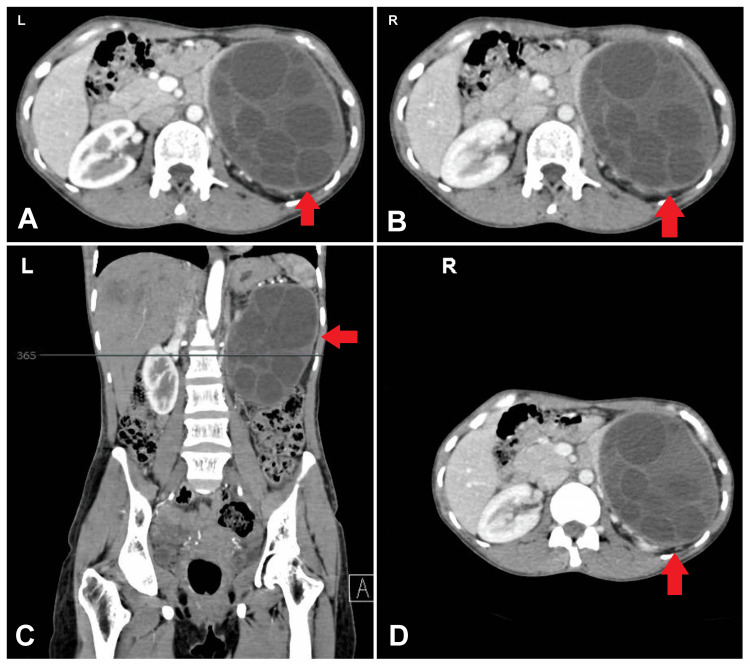 Figure 1
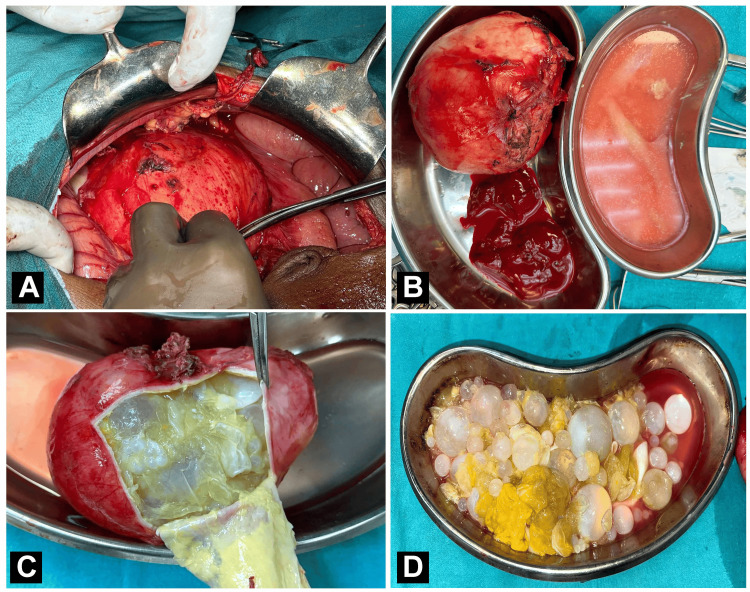 Figure 2
Peer Reviews
No public reviews on file for this paper yet. If you reviewed it on a platform where reviews are public (OpenReview, ICLR, NeurIPS, ICML), you can paste yours below so the community can read it here.
Videos
No videos yet. Explain this paper in a talk, walkthrough, or lecture? Add one.
Taxonomy
TopicsParasitic infections in humans and animals · Congenital Anomalies and Fetal Surgery · Parasites and Host Interactions