A modified decontamination and storage method for sputum from patients with tuberculosis
Nguyen Le Quang, Do Dang Anh Thu, Le Pham Tien Trieu, Nguyen Hong Hanh, Nguyen Huu Lan, Dang Thi Minh Ha, Guy Thwaites, Nguyen Thuy Thuong Thuong, Timothy M. Walker, Irina Kontsevaya, Bhushan J. Toley, Quang Nguyen Le

TL;DR
The paper introduces a modified method for handling sputum samples that improves storage and recovery of tuberculosis bacteria while reducing contamination risks.
Contribution
A novel sputum digestion and decontamination method is proposed, enabling efficient long-term storage and reliable tuberculosis recovery.
Findings
The modified method resulted in longer Time to Positivity but similar Growth Units compared to the standard method.
The modified method achieved a 90.5% positive culture rate with low contamination (1.7%) after long-term storage.
There was no significant difference in culture results based on storage duration or smear grade.
Abstract
Background: Collecting and storing large number of sputum samples with a view to culturing these in the future requires an efficient initial handling method. We devised a modified sputum digestion and decontamination method that maximised storage capacity and Mycobacterium tuberculosis (M.tb) recovery from culture while minimising laboratory workload and risk of contamination. Methods: We collected smear microscopy positive sputum samples from patients with pulmonary tuberculosis (TB). The sputum samples were split and processed using both the standard N-Acetyl-L-cysteine and sodium hydroxide (NALC-NaOH) method and our modified method before freezing and later culturing in BD BACTEC 960 Mycobacterium Growth Indicator Tubes (MGIT) system. We assessed the Time to Positivity (TPP) and Growth Unit (GU) data. Results: We selected 22 sputum samples to compare two digestion and…
Genes, proteins, chemicals, diseases, species, mutations and cell lines named across the full text — each resolved to its canonical identifier and authoritative record.
Click any figure to enlarge with its caption.
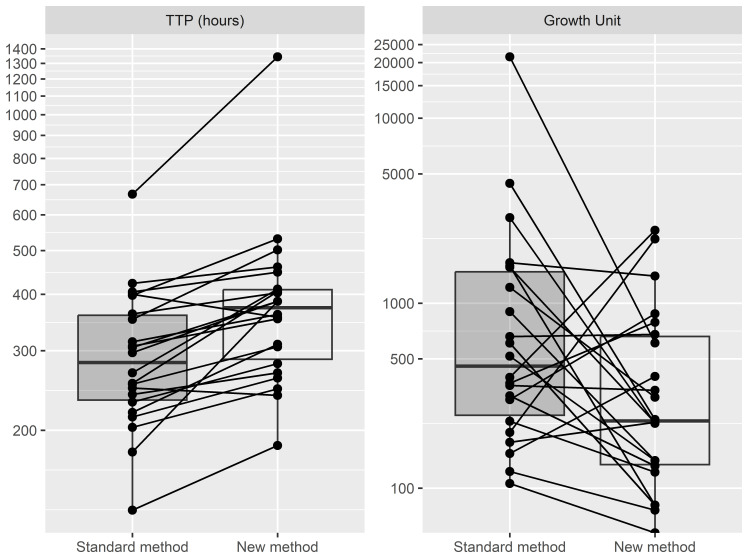 Figure 1
Peer Reviews
No public reviews on file for this paper yet. If you reviewed it on a platform where reviews are public (OpenReview, ICLR, NeurIPS, ICML), you can paste yours below so the community can read it here.
Videos
No videos yet. Explain this paper in a talk, walkthrough, or lecture? Add one.
Taxonomy
TopicsTuberculosis Research and Epidemiology · Mycobacterium research and diagnosis · Diagnosis and treatment of tuberculosis