Superior detection of low-allele burden Janus kinase 2 V617F mutation and monitoring clonal evolution in myeloproliferative neoplasms using chip-based digital PCR
Yiyi Lu, Lin Lin, Jiafei Lin, Beiying Wu, Gang Cai, Xuefeng Wang, Xuefei Ma

TL;DR
This study shows that chip-based digital PCR is more sensitive and accurate for detecting low levels of the JAK2 V617F mutation in blood cancers, aiding early diagnosis and tracking disease changes.
Contribution
The study demonstrates the superior sensitivity of chip-based digital PCR for detecting low-allele burden JAK2 V617F mutations compared to qPCR and NGS.
Findings
cdPCR detected JAK2 V617F with a limit of detection of 0.08% and quantification of 0.2%.
cdPCR showed higher mutant allele burdens than qPCR and NGS in MPN samples.
cdPCR detected a hidden JAK2 V617F subclone in a CML patient during TKI treatment.
Abstract
The JAK2 V617F is a prevalent driver mutation in Philadelphia chromosome-negative myeloproliferative neoplasms (Ph−MPNs), significantly affecting disease progression, immunophenotype, and patient outcomes. The World Health Organization (WHO) guidelines highlight the JAK2 V617F mutation as one of the key diagnostic criterions for Ph−MPNs. In this study, we analyzed 283 MPN samples with the JAK2 V617F mutation to assess the effectiveness of three detection technologies: chip-based digital PCR (cdPCR), real-time quantitative PCR (qPCR), and next-generation sequencing (NGS). Additionally, we investigated the relationship between JAK2 V617F mutant allele burden (% JAK2 V617F) and various laboratory characteristics to elucidate potential implications in MPN diagnosis. Our findings demonstrated high conformance of cdPCR with qPCR/NGS for detecting % JAK2 V617F, but the mutant allele burdens…
Genes, proteins, chemicals, diseases, species, mutations and cell lines named across the full text — each resolved to its canonical identifier and authoritative record.
Click any figure to enlarge with its caption.
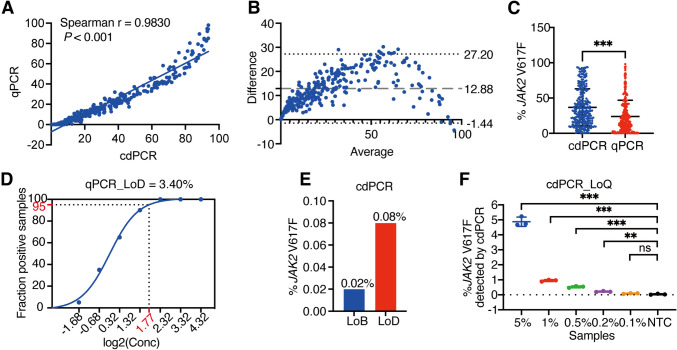 Figure 1
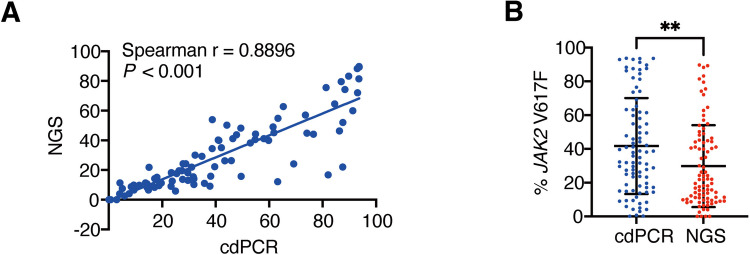 Figure 2
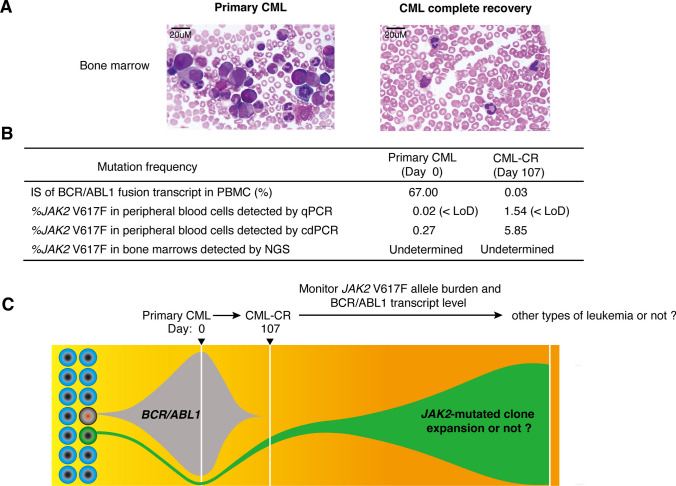 Figure 3
Peer Reviews
No public reviews on file for this paper yet. If you reviewed it on a platform where reviews are public (OpenReview, ICLR, NeurIPS, ICML), you can paste yours below so the community can read it here.
Videos
No videos yet. Explain this paper in a talk, walkthrough, or lecture? Add one.
Taxonomy
TopicsMyeloproliferative Neoplasms: Diagnosis and Treatment · Chronic Myeloid Leukemia Treatments · Eosinophilic Disorders and Syndromes