Facial asymmetry outcome of orthognathic surgery in mild craniofacial microsomia compared to non-syndromic class II asymmetry
Yun-Fang Chen, Frank Baan, Stefaan Bergé, Yu-Fang Liao, Thomas Maal, Tong Xi

TL;DR
This study compares facial asymmetry outcomes after orthognathic surgery in mild craniofacial microsomia and non-syndromic class II asymmetry patients.
Contribution
It identifies that vertical contour asymmetry is significantly worse in mild CFM compared to non-CFM class II after surgery.
Findings
Mild CFM and Class II groups showed similar hemi-facial and hemi-jaw area asymmetry post-surgery.
Vertical contour asymmetry was significantly larger in CFM compared to Class II group.
Correcting vertical asymmetry in CFM remains challenging despite similar outcomes in other asymmetry measures.
Abstract
To compare the facial asymmetry after bimaxillary surgery between mild craniofacial microsomia (CFM) and non-syndromic class II asymmetry. Cone-beam computed tomography scans of adults with Pruzansky-Kaban types I and IIA CFM (CFM groups, n = 20), non-syndromic skeletal class II asymmetry (Class II group, n = 20), and normal controls (control group, n = 20) were compared. The area asymmetry of lower face and jaw bones was quantified. Landmark-based method was used to evaluate the lower facial asymmetry regarding midline, cants, and contour. There were no significant postoperative differences in the hemi-facial and hemi-jaw area asymmetry between CFM and Class II groups, both of which were significantly larger than the control group. No significant difference was found in the midline deviation and lip and occlusal cants between CFM and Class II groups. The vertical contour asymmetry in…
Genes, proteins, chemicals, diseases, species, mutations and cell lines named across the full text — each resolved to its canonical identifier and authoritative record.
Click any figure to enlarge with its caption.
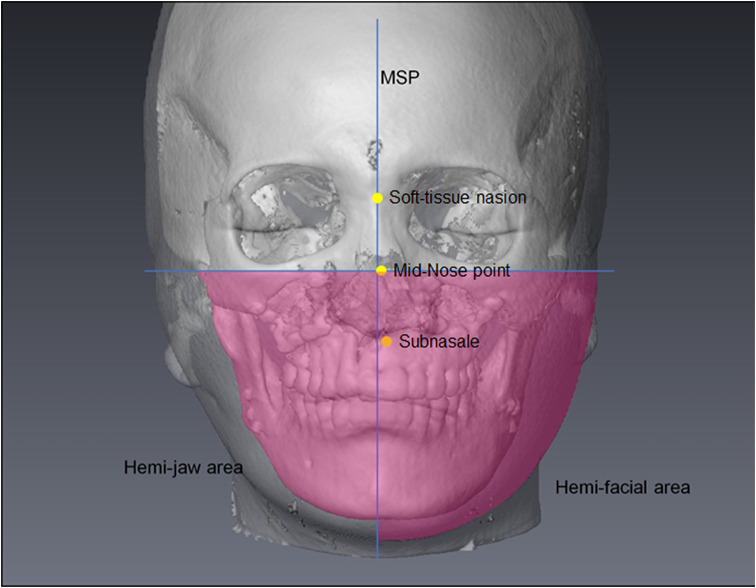 Figure 1
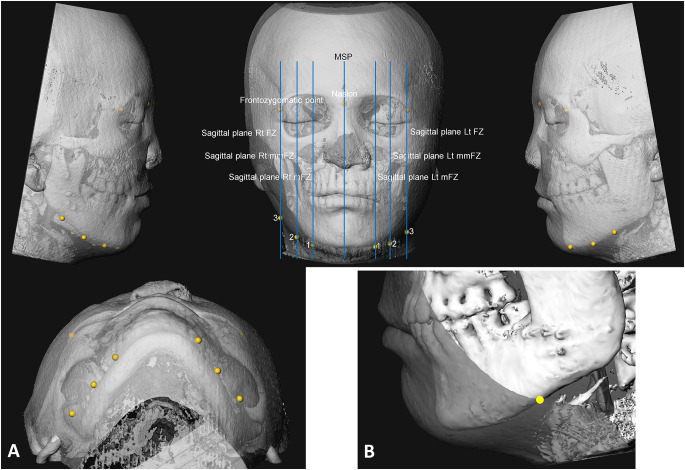 Figure 2
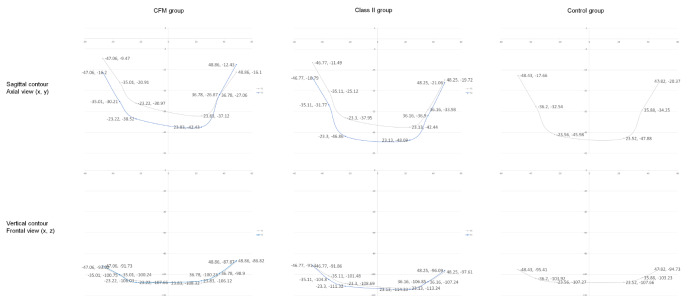 Figure 3
Peer Reviews
No public reviews on file for this paper yet. If you reviewed it on a platform where reviews are public (OpenReview, ICLR, NeurIPS, ICML), you can paste yours below so the community can read it here.
Videos
No videos yet. Explain this paper in a talk, walkthrough, or lecture? Add one.
Taxonomy
TopicsCraniofacial Disorders and Treatments · Cleft Lip and Palate Research · Orthodontics and Dentofacial Orthopedics