The Correlation Between the Lactate/Albumin Ratio and Sequential Organ Failure Assessment (SOFA) Score in Patients With Sepsis and Septic Shock
Madhulika L Mahashabde, Yash R Bhimani, Harin M Bhavsar

TL;DR
This study shows that a high lactate/albumin ratio and a high SOFA score in sepsis patients are linked to worse outcomes and can help predict prognosis.
Contribution
The study introduces the lactate/albumin ratio as a novel prognostic indicator for sepsis patients, demonstrating its added value over lactate alone.
Findings
Non-survivors had significantly higher lactate/albumin ratios and SOFA scores compared to survivors.
The lactate/albumin ratio correlated significantly with the SOFA score at multiple time points during ICU admission.
Combining lactate and albumin into the lactate/albumin ratio improves prognostic accuracy in sepsis patients.
Abstract
Background Sepsis is defined as a life-threatening organ dysfunction caused by a dysregulated host response to infection, often resulting in severe outcomes such as septic shock and death. Globally, sepsis ranks among the most common causes of illness and death. The Sequential Organ Failure Assessment (SOFA) score is an established marker used to assess and predict the extent of organ failure in septic patients. The introduction of novel markers, such as the lactate/albumin (L/A) ratio, serves as a prognostic indicator in critical care settings, particularly for patients with sepsis. In this context, a higher L/A ratio upon admission aids in assessing disease severity and improving clinical decision-making to reduce mortality and adverse outcomes, which we aim to correlate through our study. Materials and methods This was an observational cross-sectional analysis conducted on 100…
Genes, proteins, chemicals, diseases, species, mutations and cell lines named across the full text — each resolved to its canonical identifier and authoritative record.
Click any figure to enlarge with its caption.
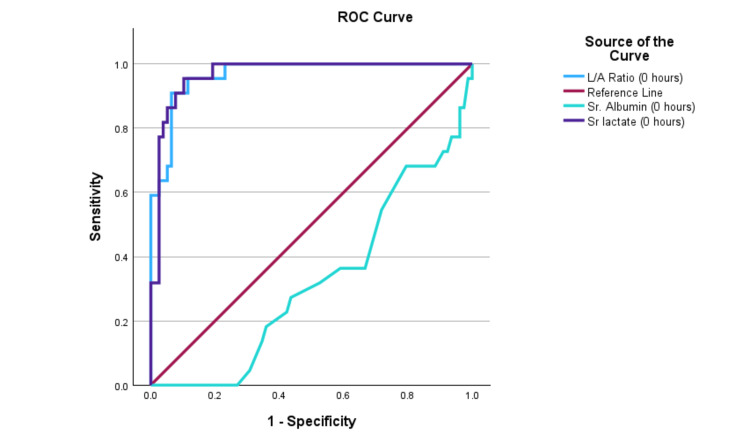 Figure 1
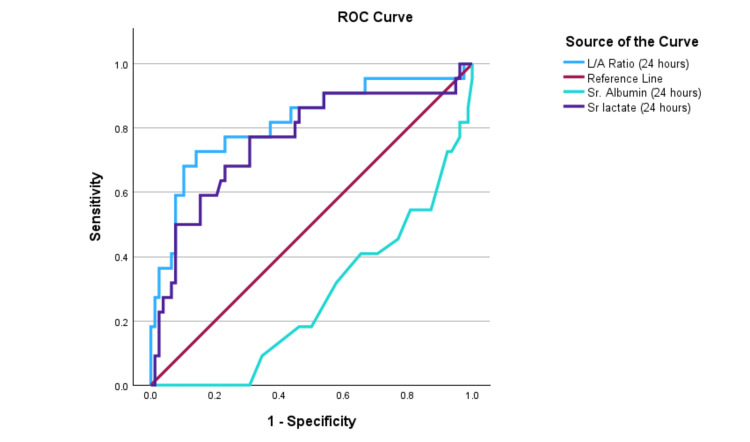 Figure 2
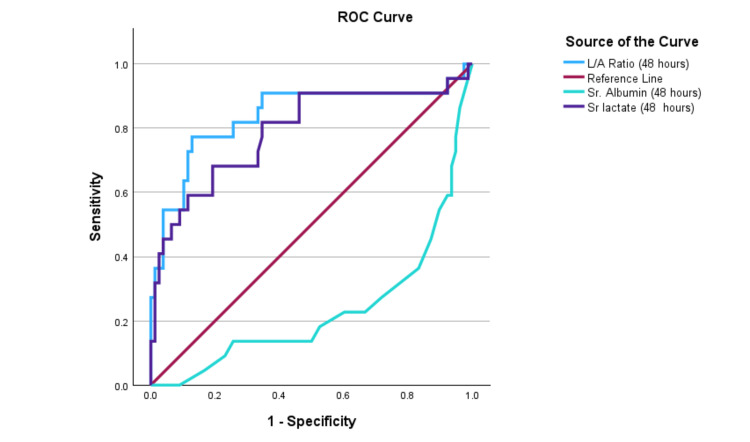 Figure 3
Peer Reviews
No public reviews on file for this paper yet. If you reviewed it on a platform where reviews are public (OpenReview, ICLR, NeurIPS, ICML), you can paste yours below so the community can read it here.
Videos
No videos yet. Explain this paper in a talk, walkthrough, or lecture? Add one.
Taxonomy
TopicsSepsis Diagnosis and Treatment · Hemodynamic Monitoring and Therapy · Renal function and acid-base balance