A Theoretical Exploration of the Photoinduced Breaking Mechanism of the Glycosidic Bond in Thymine Nucleotide
Xiao Huang, Yuuichi Orimoto, Yuriko Aoki

TL;DR
This paper explores how UV light can break DNA's glycosidic bond, which may lead to cancer, using quantum chemical methods to identify different possible pathways.
Contribution
The study proposes a direct UV excitation pathway for glycosidic bond cleavage, offering new insights into DNA damage mechanisms and drug design.
Findings
Direct UV excitation via the singlet excited state path has a low energy barrier (~16 kcal/mol) and is kinetically favorable.
The triplet excited state path has a moderate energy barrier (~27 kcal/mol) and is also feasible.
The doublet excited state path has a high energy barrier (~49 kcal/mol) and is kinetically unfavorable.
Abstract
DNA glycosidic bond cleavage may induce cancer under the ultraviolet (UV) effect. Yet, the mechanism of glycosidic bond cleavage remains unclear and requires more detailed clarification. Herein, quantum chemical studies on its photoinduced mechanism are performed using a 5′-thymidine monophosphate (5′-dTMPH) model. In this study, four possible paths were examined to study the glycosidic bond cleavage. The results showed that, upon excitation, the electronic transition from the π bonding to π antibonding orbitals of the thymine ring leads to the damage of the thymine ring. Afterwards, the glycosidic bond is cleaved. At first, the doublet ground state (GS) path of glycosidic bond cleavage widely studied by other groups is caused by free electron generated by photoirradiation, with a kinetically feasible energy barrier of ~23 kcal/mol. Additionally, then, the other three paths were…
Genes, proteins, chemicals, diseases, species, mutations and cell lines named across the full text — each resolved to its canonical identifier and authoritative record.
Click any figure to enlarge with its caption.
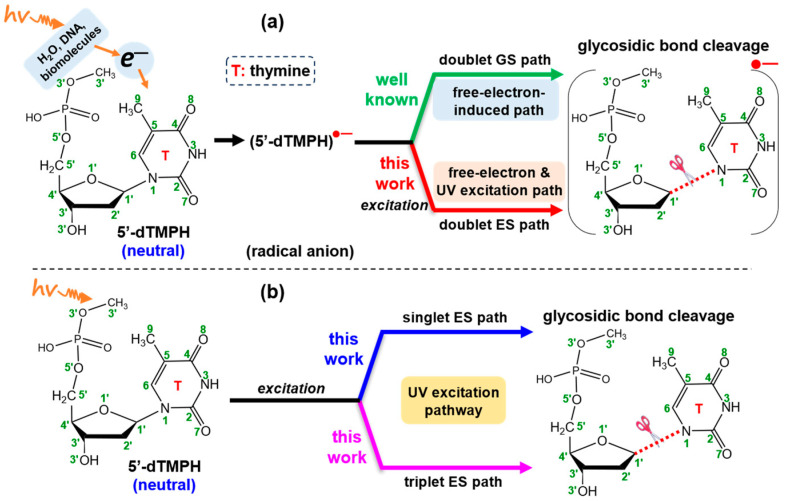 Figure 1
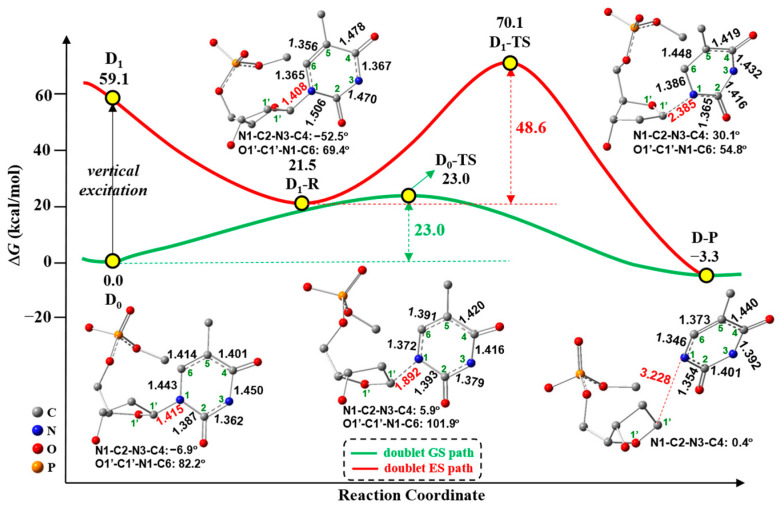 Figure 2
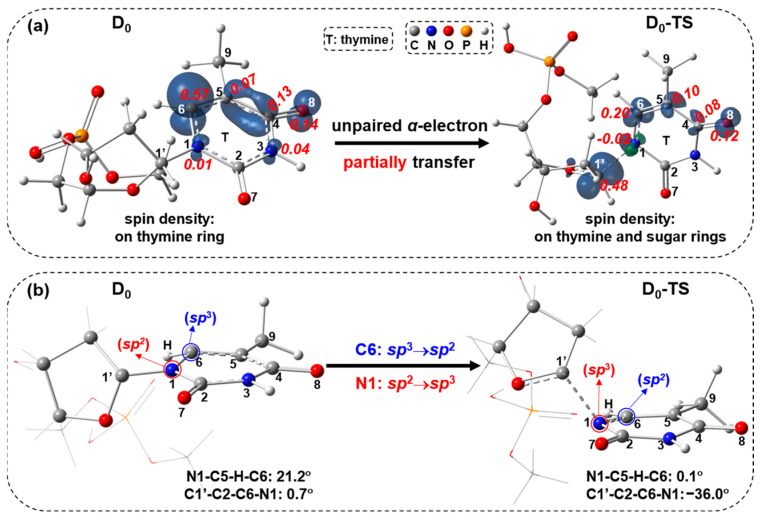 Figure 3
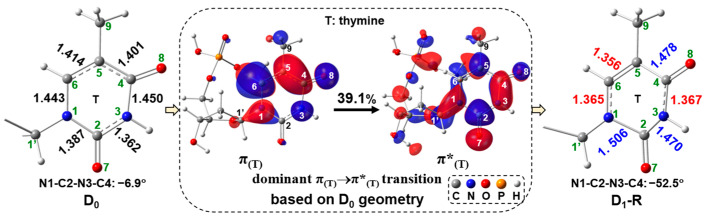 Figure 4
 Figure 5
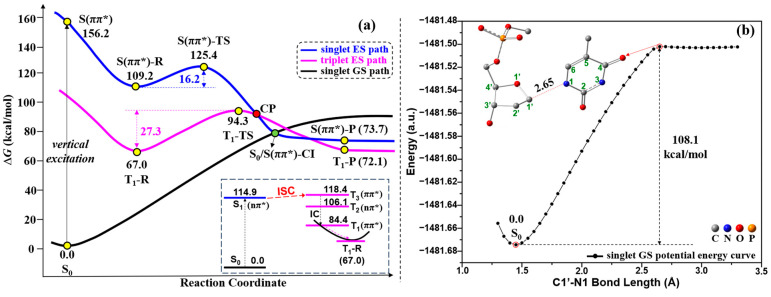 Figure 6
 Figure 7
 Figure 8
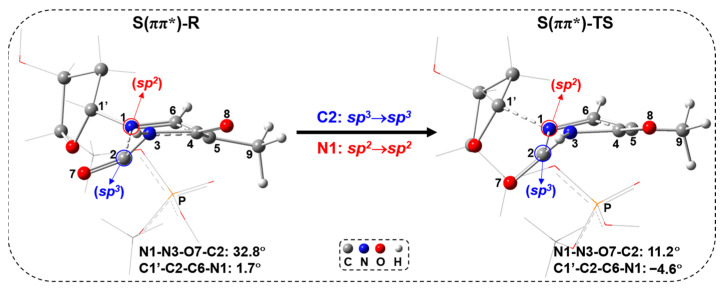 Figure 9
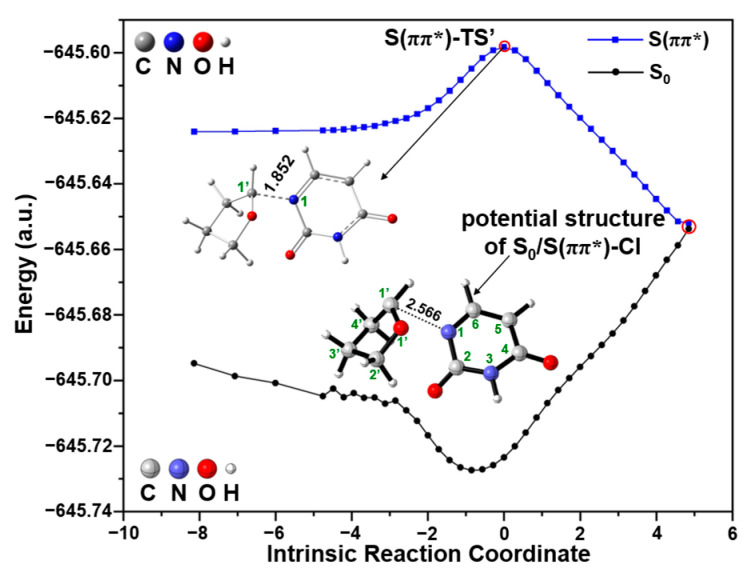 Figure 10
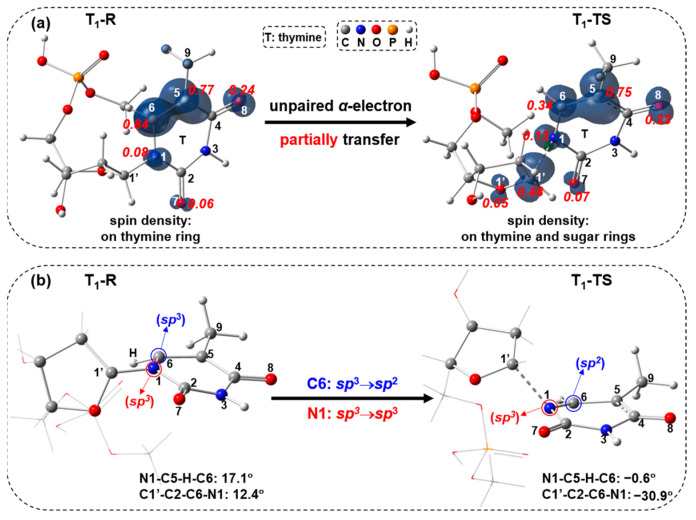 Figure 11
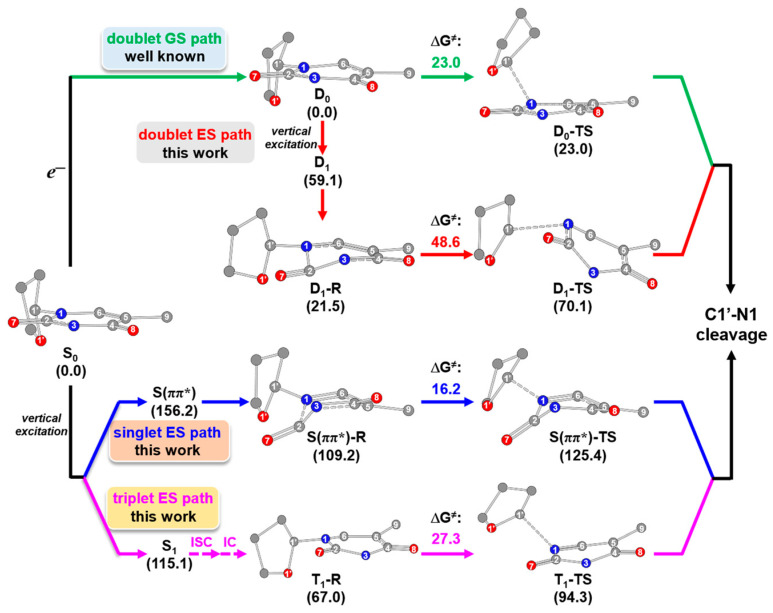 Figure 12
Peer Reviews
No public reviews on file for this paper yet. If you reviewed it on a platform where reviews are public (OpenReview, ICLR, NeurIPS, ICML), you can paste yours below so the community can read it here.
Videos
No videos yet. Explain this paper in a talk, walkthrough, or lecture? Add one.
Taxonomy
TopicsDNA and Nucleic Acid Chemistry · Photochromic and Fluorescence Chemistry · Photochemistry and Electron Transfer Studies