Genomic Analysis of a Novel Torradovirus “Rehmannia Torradovirus Virus”: Two Distinct Variants Infecting Rehmannia glutinosa
Yanhong Qin, Shuhao Lu, Yi Wen, Shaojian Li, Suxia Gao, Desheng Zhang, Xuemeng Li, Jin Yang, Li Gu, Mingjie Li, Fei Wang, Chuantao Lu

TL;DR
A new virus called Rehmannia torradovirus virus was discovered infecting a medicinal plant, with two distinct variants identified through genomic analysis.
Contribution
Discovery and classification of a novel Torradovirus species infecting Rehmannia glutinosa with two distinct genomic variants.
Findings
ReTV strains were classified into two distinct variants based on genomic and sequence analysis.
ReTV detection rate was 100% in all tested Rehmannia glutinosa samples.
Phylogenetic analysis showed ReTV is closely related to squash chlorotic leaf spot virus.
Abstract
Rehmannia glutinosa, a crucial medicinal plant native to China, is extensively cultivated across East Asia. We used high-throughput sequencing to identify viruses infecting R. glutinosa with mosaic, leaf yellowing, and necrotic symptoms. A novel Torradovirus, which we tentatively named “Rehmannia torradovirus virus” (ReTV), was identified. The complete sequences were obtained through reverse-transcription polymerase chain reaction (RT-PCR), 5′ and 3′ rapid amplification of cDNA ends, and Sanger sequencing. The amino acid sequence alignment between the ReTV-52 isolate and known Torradovirus species in the Pro-Pol and coat protein regions were 51.3–73.3% and 37.1–68.1%, respectively. Meanwhile, the amino acid sequence alignment between the ReTV-8 isolate and known Torradovirus species in the Pro-Pol and coat protein regions were 52.7–72.8% and 36.8–67.5%, respectively. The sequence…
Genes, proteins, chemicals, diseases, species, mutations and cell lines named across the full text — each resolved to its canonical identifier and authoritative record.
Click any figure to enlarge with its caption.
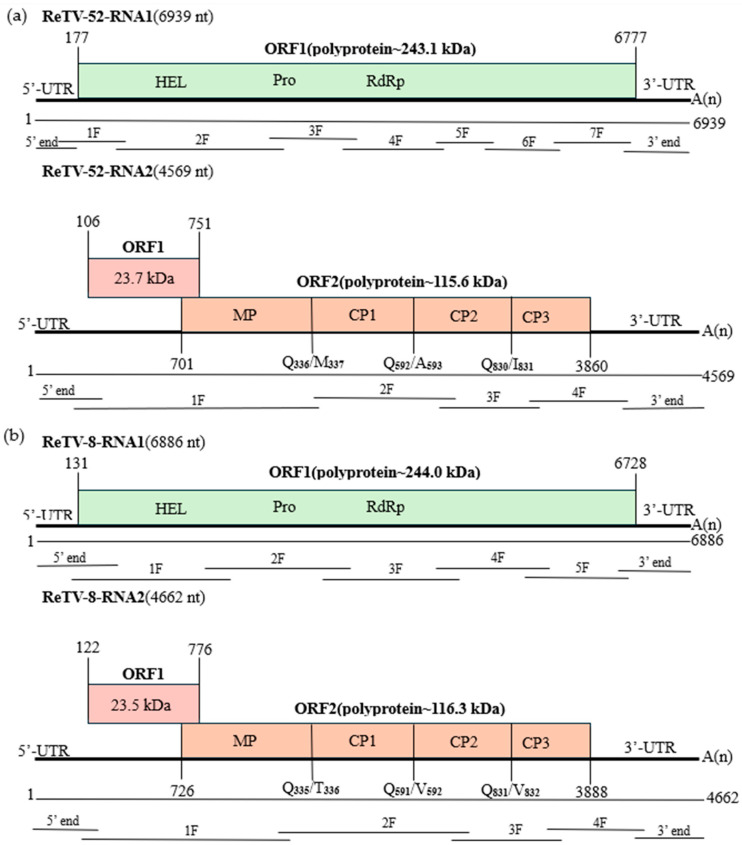 Figure 1
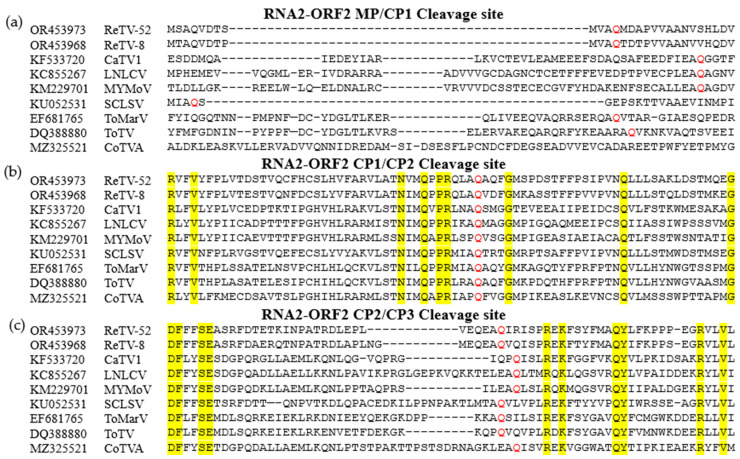 Figure 2
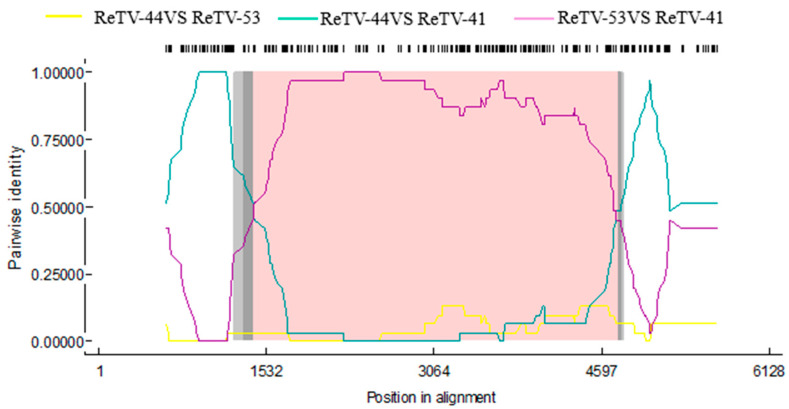 Figure 3
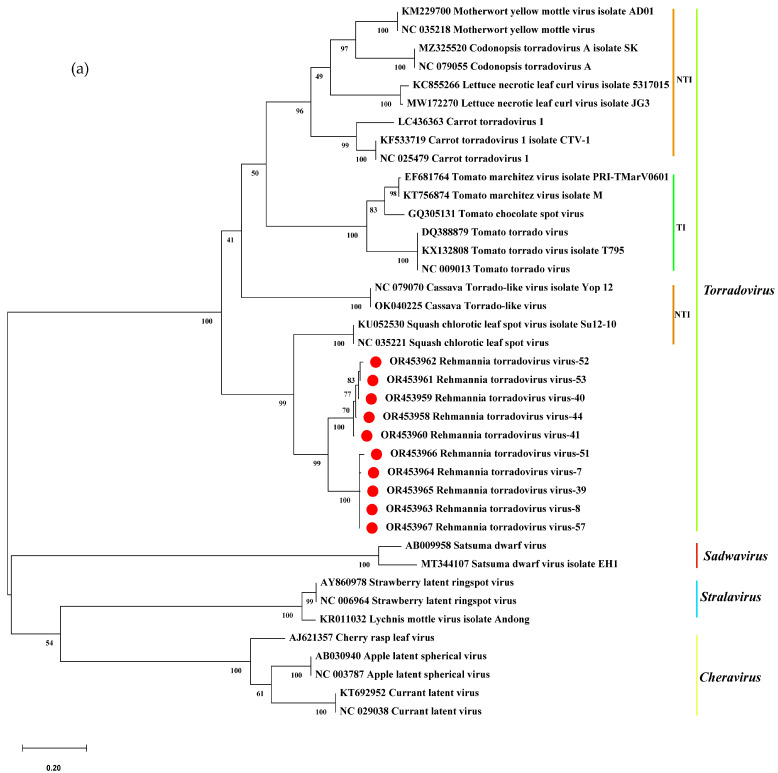 Figure 4
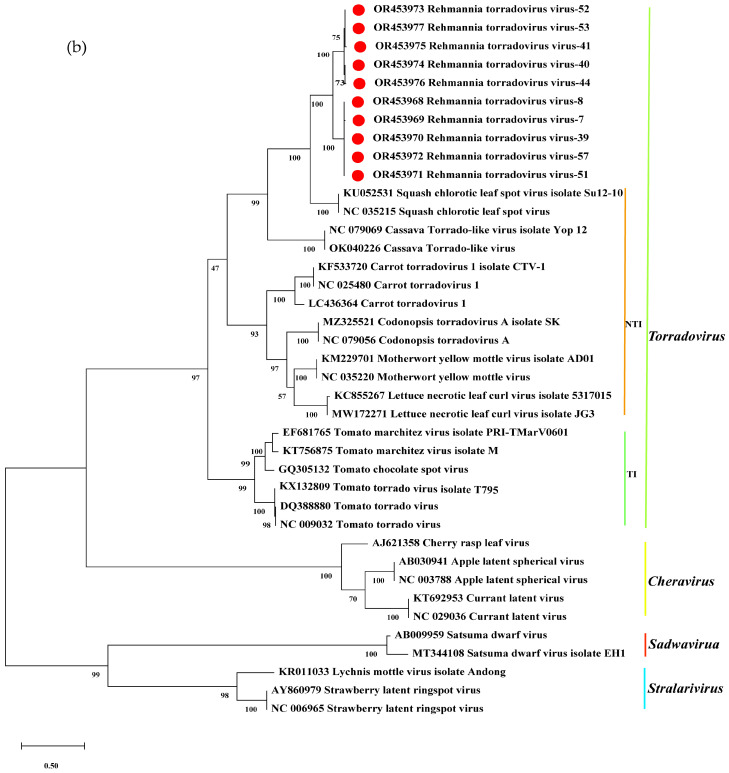 Figure 5
Peer Reviews
No public reviews on file for this paper yet. If you reviewed it on a platform where reviews are public (OpenReview, ICLR, NeurIPS, ICML), you can paste yours below so the community can read it here.
Videos
No videos yet. Explain this paper in a talk, walkthrough, or lecture? Add one.
Taxonomy
TopicsPlant Virus Research Studies · Plant Pathogenic Bacteria Studies · Transgenic Plants and Applications