Design of Acetaldehyde Gas Sensor Based on Piezoelectric Multilayer Microelectromechanical System Resonator
Primavera Argüelles-Lucho, Rosa M. Woo-García, Leandro García-González, Rene Pérez-Cuapio, Natiely Hernández-Sebastian, Agustín L. Herrera-May, Francisco López-Huerta

TL;DR
This paper presents a low-cost, fast-response acetaldehyde gas sensor using a piezoelectric MEMS resonator for detecting low concentrations of the harmful compound.
Contribution
The novelty lies in the design of a cost-effective MEMS-based acetaldehyde sensor with a piezoelectric multilayer resonator and linear detection capability.
Findings
The sensor has a first bending frequency of 4722.4 Hz and a sensitivity of 8.22 kHz/g.
It can detect acetaldehyde concentrations as low as 102 ppm with linear frequency shifts.
Analytical and FEM models show good agreement in predicting the sensor's mechanical behavior.
Abstract
Acetaldehyde is a volatile organic compound that can cause damage at the cellular and genomic levels. The monitoring of acetaldehyde gas at low concentrations requires fast-response and low-cost sensors. Herein, we propose the design of an acetaldehyde gas sensor based on a low-cost Microelectromechanical System (MEMS) process. This sensor is formed by a single-clamped piezoelectric multilayer resonator (3000 × 1000 × 52.2 µm) with a simple operating principle and easy signal processing. This resonator uses a zinc oxide piezoelectric layer (1 µm thick) and a sensing film of titanium oxide (1 µm thick). In addition, the resonator uses a support layer of 304 stainless steel (50 µm thick) and two aluminum layers (100 nm thick). Analytical and Finite-Element Method (FEM) models are developed to predict the mechanical behavior of the gas sensor, considering the influence of the different…
Genes, proteins, chemicals, diseases, species, mutations and cell lines named across the full text — each resolved to its canonical identifier and authoritative record.
Click any figure to enlarge with its caption.
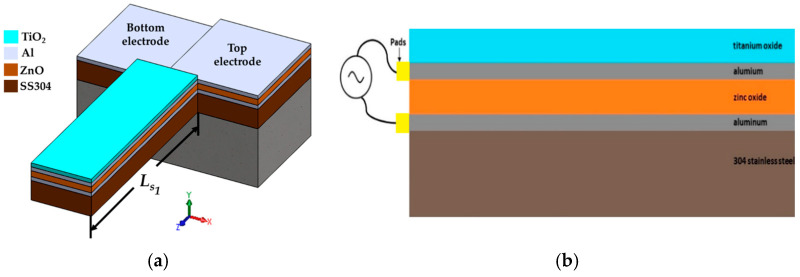 Figure 1
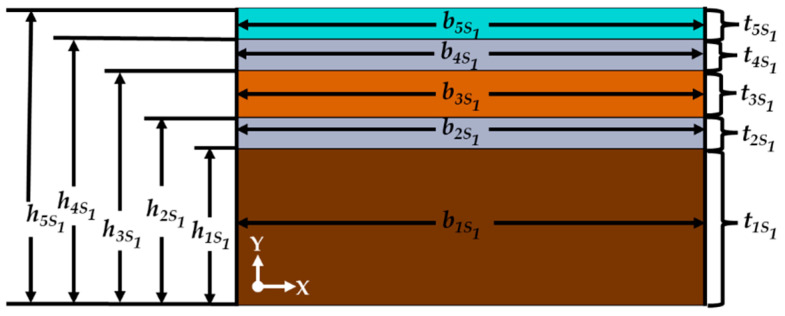 Figure 2
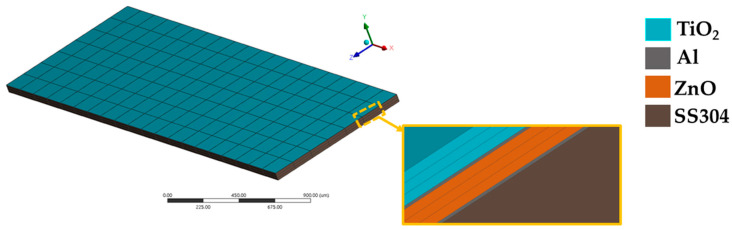 Figure 3
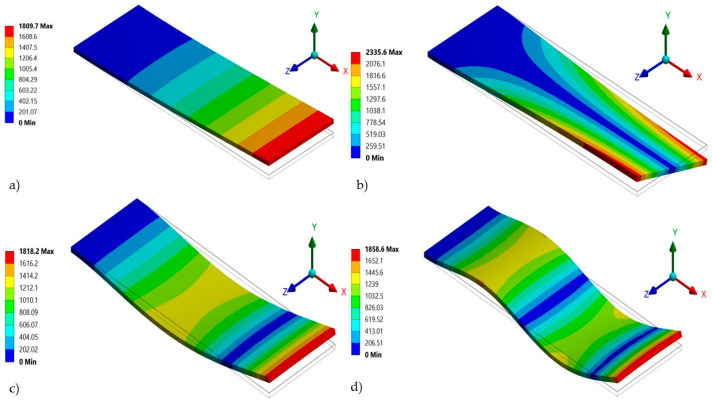 Figure 4
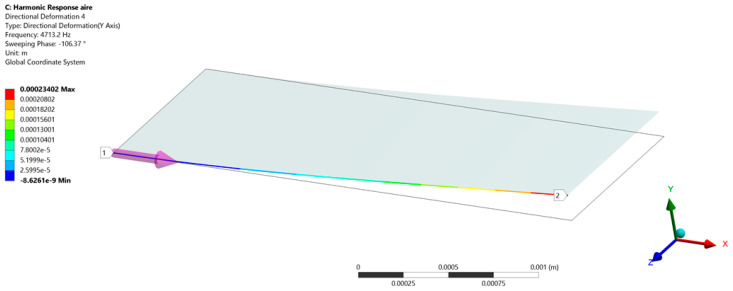 Figure 5
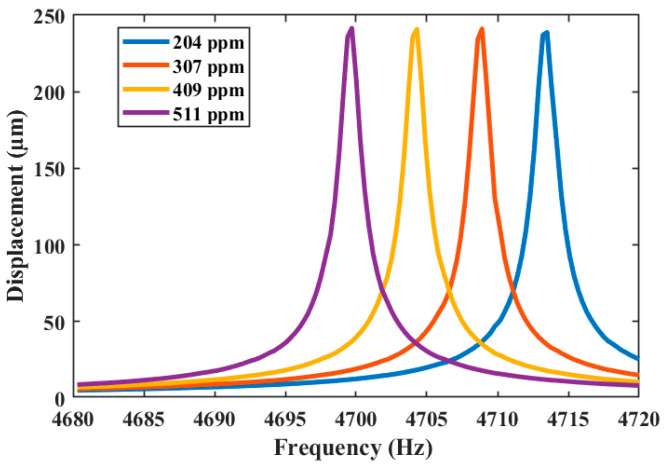 Figure 6
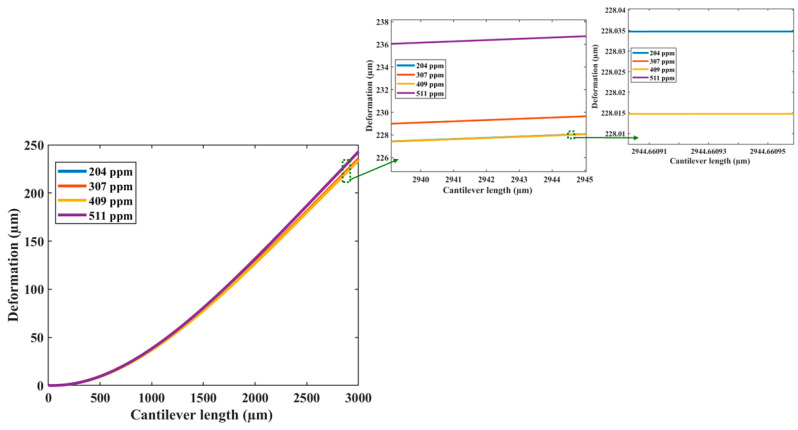 Figure 7
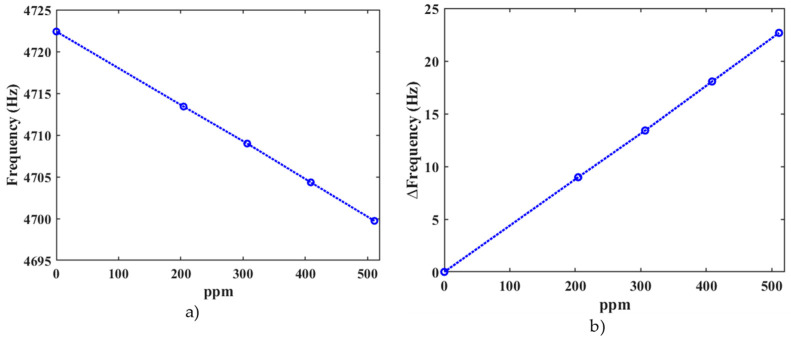 Figure 8
Peer Reviews
No public reviews on file for this paper yet. If you reviewed it on a platform where reviews are public (OpenReview, ICLR, NeurIPS, ICML), you can paste yours below so the community can read it here.
Videos
No videos yet. Explain this paper in a talk, walkthrough, or lecture? Add one.
Taxonomy
TopicsGas Sensing Nanomaterials and Sensors · Mechanical and Optical Resonators · Advanced Chemical Sensor Technologies