Development of a User-Friendly Self-Screening Tool for Assessing Metabolic Syndrome Risk in Youths from Economically Challenged Regions
Jacqueline Fernandes de Sa Xavier, Shirley C. Feuerstein, Augusto Cesar Ferreira De Moraes, Tiago Almeida de Oliveira, Evellyn Ravena da Silva Gomes, Maria Isabela Alves de Almeida Silva, Luiz Fernando de Oliveira, Heraclito Barbosa de Carvalho, Kliver Antonio Marin

TL;DR
Researchers created a self-screening tool to help youths in low-income areas assess their risk of metabolic syndrome using easy-to-answer questions.
Contribution
The study introduces three nomograms using self-reported data to predict metabolic syndrome risk in economically disadvantaged youth.
Findings
Ten variables were identified as predictors of abdominal obesity in young people.
Three nomograms showed acceptable predictive performance for metabolic syndrome risk.
External validation confirmed the A and B scores had strong predictive capability.
Abstract
Background: Metabolic syndrome increases the risk of heart disease and diabetes. Early identification and management are crucial, especially in economically challenged regions with limited healthcare access. Aims: To develop nomograms for individualized risk estimation for metabolic syndrome in young people from low-income regions. Methods: We assessed 496 college students from two Brazilian cities with Gini indices ≤0.56. Of these, 69.9% were female, 65.1% were younger than 20 years, 71.8% were non-white, and 64.3% were enrolled in health-related courses. For external validity, we assessed metabolic syndrome in a subset of 375 students. Results: We found 10 variables associated with abdominal obesity by logistic regression: age, biological sex, physical education facilities, enrollment in sports competitions during elementary school, grade retention, physical education as the preferred…
Genes, proteins, chemicals, diseases, species, mutations and cell lines named across the full text — each resolved to its canonical identifier and authoritative record.
Click any figure to enlarge with its caption.
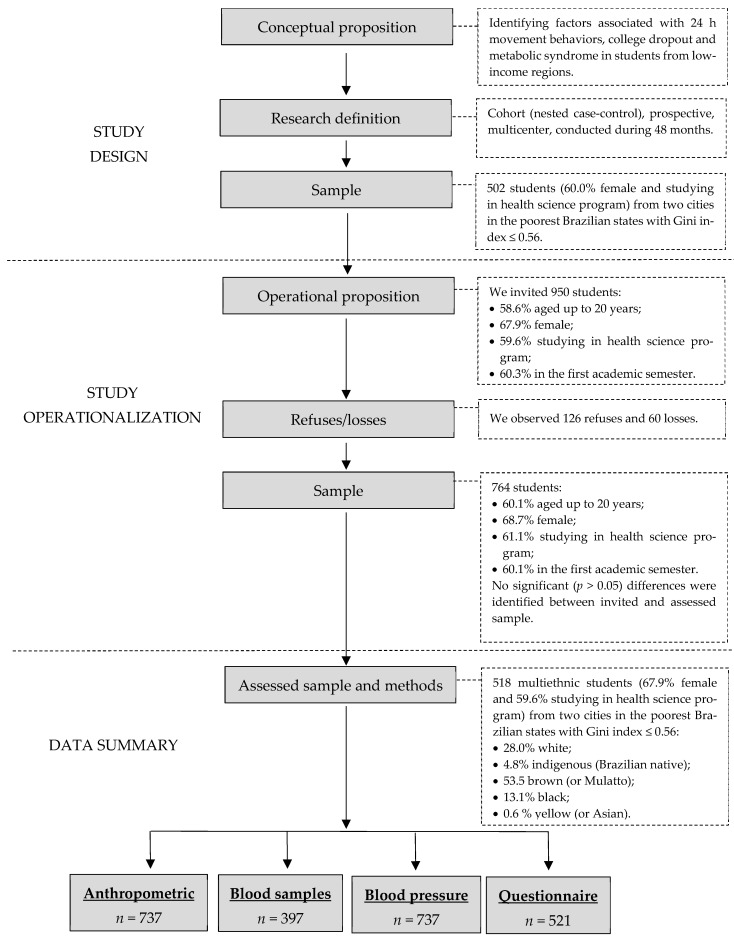 Figure 1
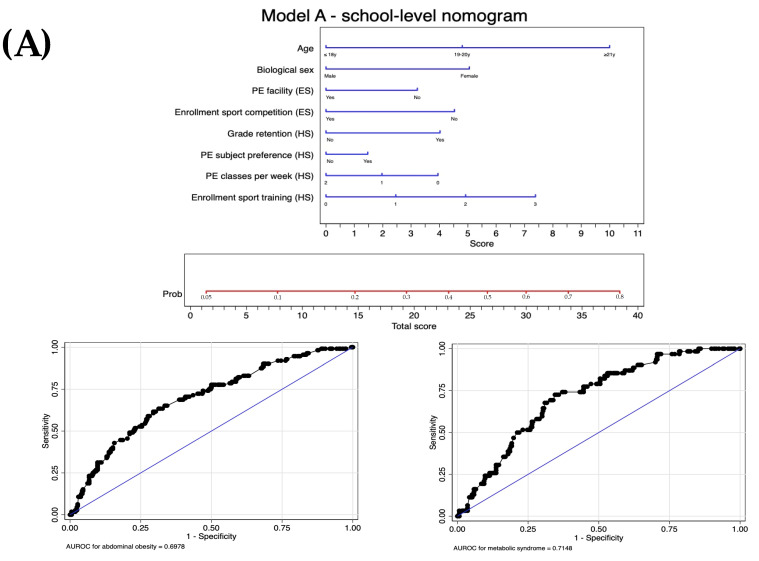 Figure 2
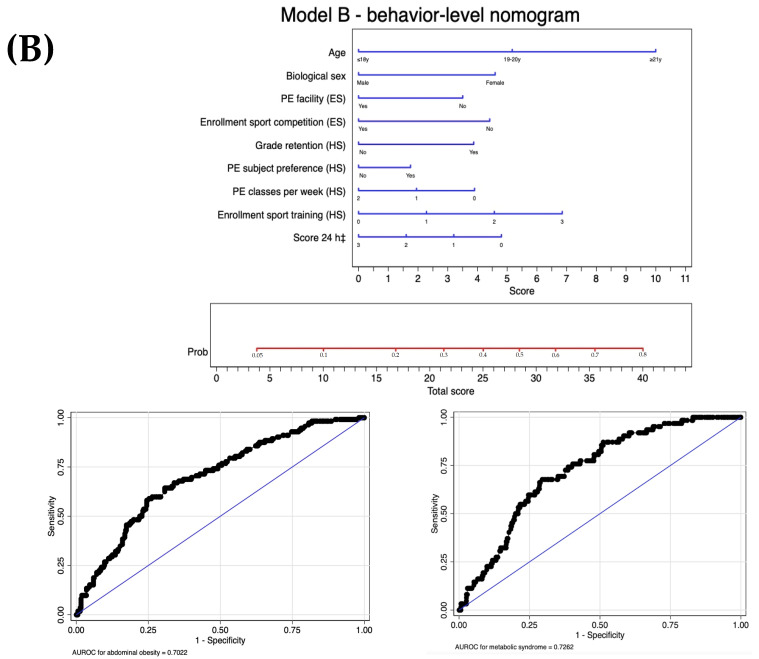 Figure 3
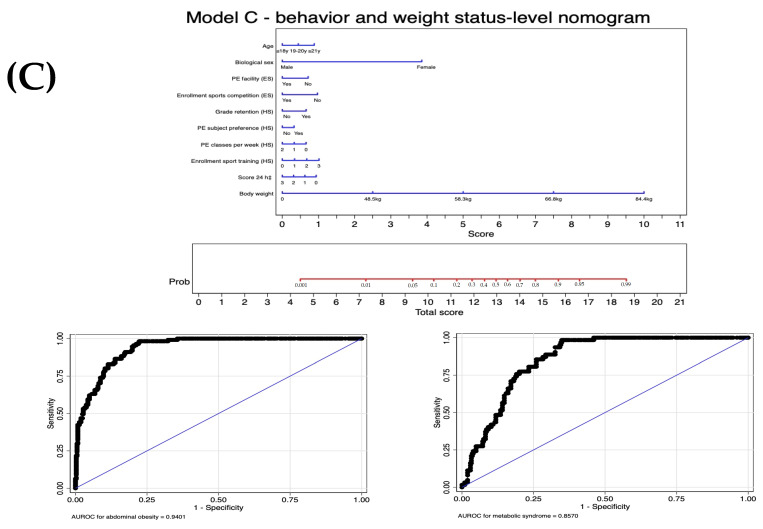 Figure 4
Peer Reviews
No public reviews on file for this paper yet. If you reviewed it on a platform where reviews are public (OpenReview, ICLR, NeurIPS, ICML), you can paste yours below so the community can read it here.
Videos
No videos yet. Explain this paper in a talk, walkthrough, or lecture? Add one.
Taxonomy
TopicsDiabetes, Cardiovascular Risks, and Lipoproteins · Obesity, Physical Activity, Diet · Cardiovascular Health and Risk Factors