Recruitment-Potential-Oriented Mechanical Ventilation Protocol and Narrative Review for Patients with Acute Respiratory Distress Syndrome
Chieh-Jen Wang, I-Ting Wang, Chao-Hsien Chen, Yen-Hsiang Tang, Hsin-Wei Lin, Chang-Yi Lin, Chien-Liang Wu

TL;DR
This paper introduces a new mechanical ventilation protocol for ARDS patients to improve outcomes by assessing lung recruitability and balancing resource use.
Contribution
A novel pressure–volume curve-based method is proposed to guide PEEP settings and evaluate lung recruitability in ARDS patients.
Findings
Using pressure–volume curves can help determine if injured lungs are recruitable, guiding safer PEEP settings.
The proposed protocol helps stabilize hypoxemia and identify patients who truly need advanced therapies like ECMO.
Balancing ventilator settings with resource use can reduce harm and improve outcomes in severe ARDS cases.
Abstract
Even though much progress has been made to improve clinical outcomes, acute respiratory distress syndrome (ARDS) remains a significant cause of acute respiratory failure. Protective mechanical ventilation is the backbone of supportive care for these patients; however, there are still many unresolved issues in its setting. The primary goal of mechanical ventilation is to improve oxygenation and ventilation. The use of positive pressure, especially positive end-expiratory pressure (PEEP), is mandatory in this approach. However, PEEP is a double-edged sword. How to safely set positive end-inspiratory pressure has long been elusive to clinicians. We hereby propose a pressure–volume curve measurement-based method to assess whether injured lungs are recruitable in order to set an appropriate PEEP. For the most severe form of ARDS, extracorporeal membrane oxygenation (ECMO) is considered as…
Genes, proteins, chemicals, diseases, species, mutations and cell lines named across the full text — each resolved to its canonical identifier and authoritative record.
Click any figure to enlarge with its caption.
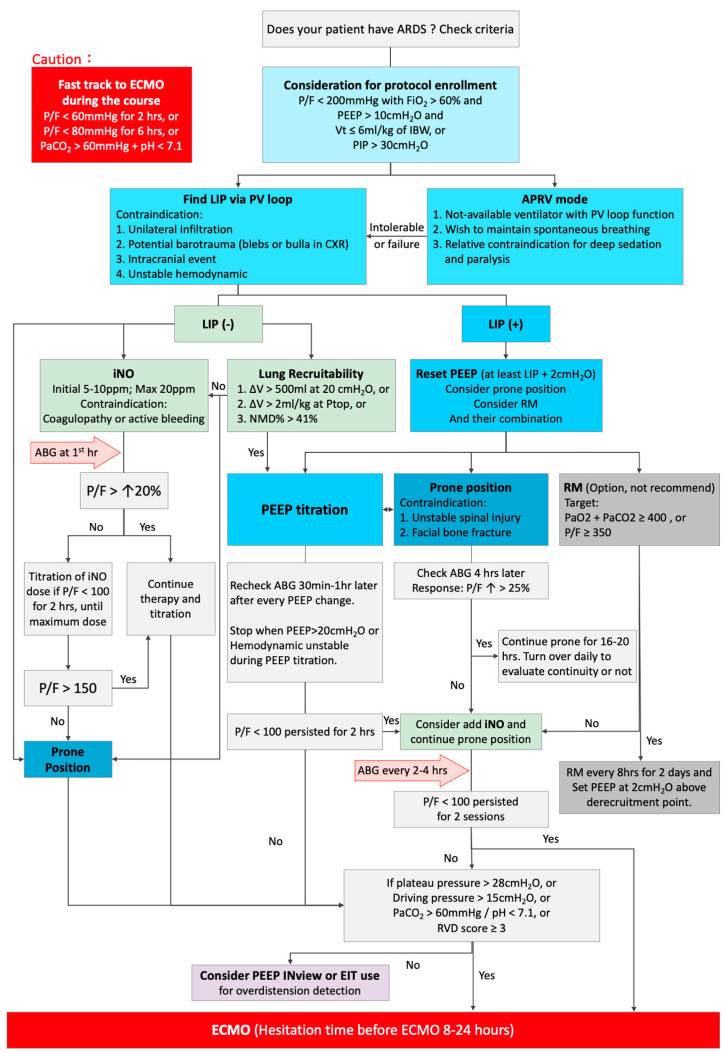 Figure 1
Peer Reviews
No public reviews on file for this paper yet. If you reviewed it on a platform where reviews are public (OpenReview, ICLR, NeurIPS, ICML), you can paste yours below so the community can read it here.
Videos
No videos yet. Explain this paper in a talk, walkthrough, or lecture? Add one.
Taxonomy
TopicsRespiratory Support and Mechanisms · Cardiac Arrest and Resuscitation · Family and Patient Care in Intensive Care Units