Clinical Impact of Self-Recognition of Recurrent Acute Myocardial Infarction: From KRMI-RCC
Kyehwan Kim, Moojun Kim, Chang-Ok Seo, Hangyul Kim, Hye Ree Kim, Min Gyu Kang, Jin-Sin Koh, Jeong Rang Park, Rock Bum Kim, Dong Ryeol Ryu, Jang Hoon Lee, Moo Hyun Kim, Tae-Jin Youn, Dae Woo Hyun, Shin-Jae Kim, Sang Jae Rhee, Sang-Don Park, Young Joon Hong, Jae-Geun Lee

TL;DR
This study finds that only about half of patients who previously had a heart attack recognize a recurrence, and those who do are more likely to seek timely care and survive.
Contribution
The study identifies factors influencing self-recognition of recurrent heart attacks and demonstrates its impact on survival rates.
Findings
Only 52.4% of patients with prior MI recognized a re-MI.
Self-recognised re-MI patients had a 52.6% vs. 31.6% rate of arriving within 90 minutes to the ER.
Self-recognised group had lower in-hospital mortality (1.5% vs. 6.2%) and better 1-year survival.
Abstract
Background/Objectives: Self-recognition of recurrent myocardial infarction (re-MI) may be essential for reducing prehospital time contrast to awareness of re-MI symptoms. However, data on the current status and clinical impact of self-recognition of re-MI are limited in the contemporary period. Thus, this study aimed to increase this body of knowledge. Methods: We enrolled 1018 patients with re-MI using data from the Korean Registry of Acute Myocardial Infarction for Regional Cardiocerebrovascular Centres. The patients were classified into self-recognised MI and unrecognised MI groups, and the differences between them were compared. Results: The rate of self-recognition among the patients with previous experience of MI was only 52.4%. Among the patients with re-MI, factors associated with self-recognition included recent first MI within 3 years, prior dyslipidaemia, two or more MI…
Genes, proteins, chemicals, diseases, species, mutations and cell lines named across the full text — each resolved to its canonical identifier and authoritative record.
Click any figure to enlarge with its caption.
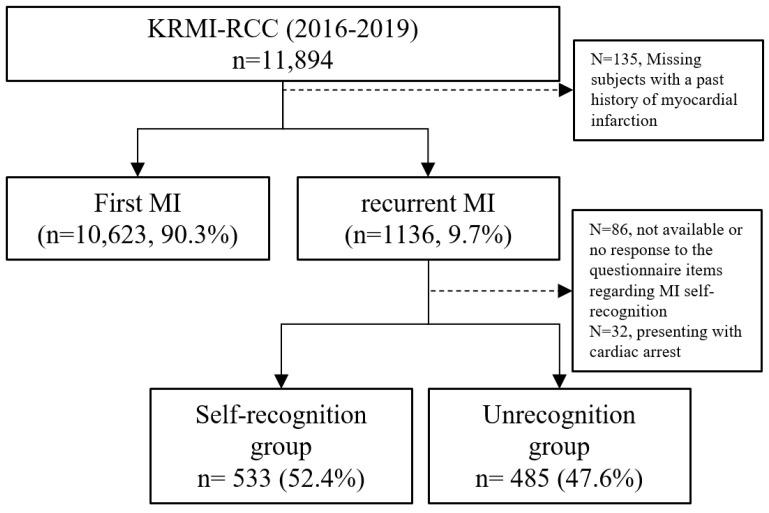 Figure 1
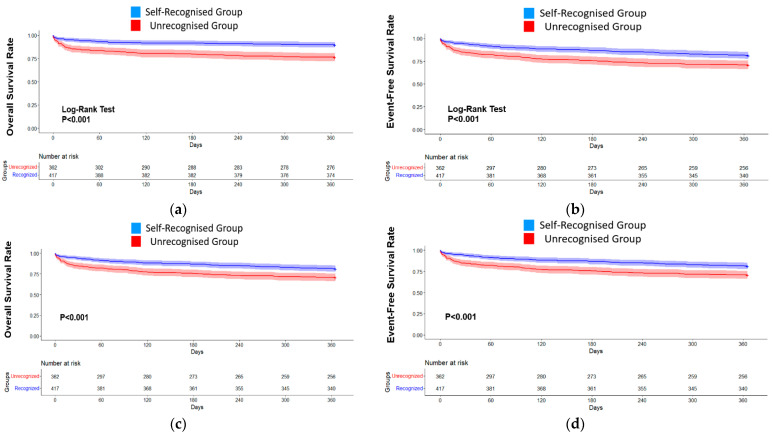 Figure 2
Peer Reviews
No public reviews on file for this paper yet. If you reviewed it on a platform where reviews are public (OpenReview, ICLR, NeurIPS, ICML), you can paste yours below so the community can read it here.
Videos
No videos yet. Explain this paper in a talk, walkthrough, or lecture? Add one.
Taxonomy
TopicsCardiac Imaging and Diagnostics · Acute Myocardial Infarction Research · Traditional Chinese Medicine Studies