A Countermeasure Strategy against Peramine Developed by Chilesia rudis in the Endophyte–Ryegrass–Herbivore Model
Manuel Chacón-Fuentes, Daniel Martínez-Cisterna, Marcelo Lizama, Valeria Asencio-Cancino, Ignacio Matamala, Leonardo Bardehle

TL;DR
This study explores how a Chilean larva adapts to toxic compounds in ryegrass infected with endophytic fungi.
Contribution
The study reveals that Chilesia rudis larvae can adapt to peramine, a toxic alkaloid, through counter-adaptation mechanisms.
Findings
Chilesia rudis larvae prefer certain ryegrass cultivars and show variable pupal development times.
Peramine was detected in larval bodies, suggesting adaptation to the toxin.
Adult wing lengths varied across ryegrass cultivars, indicating performance differences.
Abstract
Exploitation of the symbiotic relationship between endophytic fungi and ryegrass is a crucial technique for reducing the incidence of insect pests. This is primarily due to the production of alkaloids, such as peramine, by the fungi. This alkaloid has been reported as both a deterrent and toxic to a variety of insects. However, insects have developed various strategies to counteract plant defenses. One of the most studied methods is their ability to sequester toxic compounds from plants. In this study, we examined the feeding preferences and adaptation to peramine in Chilesia rudis, a native Chilean larva. Using a no-choice assay, we assessed larval feeding preferences and mass gain on seven experimental lines and two commercial cultivars of endophyte-infected and non-infected ryegrass. Pupal development time and adult performance were evaluated post-assay. Additionally, we measured…
Genes, proteins, chemicals, diseases, species, mutations and cell lines named across the full text — each resolved to its canonical identifier and authoritative record.
Click any figure to enlarge with its caption.
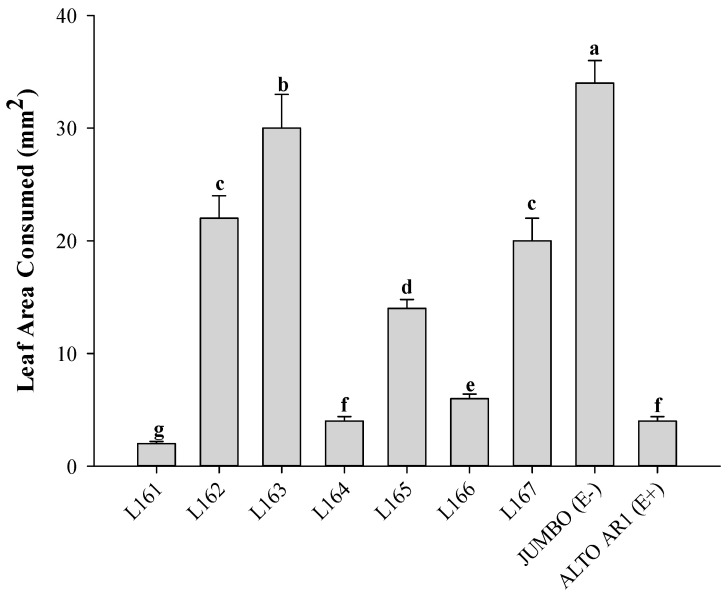 Figure 1
 Figure 2
Peer Reviews
No public reviews on file for this paper yet. If you reviewed it on a platform where reviews are public (OpenReview, ICLR, NeurIPS, ICML), you can paste yours below so the community can read it here.
Videos
No videos yet. Explain this paper in a talk, walkthrough, or lecture? Add one.
Taxonomy
TopicsPlant and fungal interactions · Botanical Research and Chemistry · Plant Toxicity and Pharmacological Properties