The Assessment of Upper Airway Volume Changes Following Bimaxillary Advancement Surgery: A Radiological Evaluation in the Supine Position at Multiple Intervals
Paweł Piotr Grab, Michał Szałwiński, Maciej Jagielak, Jacek Rożko, Dariusz Jurkiewicz, Aldona Chloupek, Maria Sobol, Piotr Rot

TL;DR
This study shows that bimaxillary advancement surgery significantly increases upper airway volume over time, with the largest changes observed six months after the procedure.
Contribution
The study provides new evidence that upper airway volume increases significantly over time following bimaxillary advancement surgery.
Findings
Upper airway volume significantly increased six months after surgery compared to pre-surgery measurements.
The upper airway volume remained larger six months post-surgery than immediately after surgery.
Statistically significant differences in upper airway volume were observed across all measurement intervals.
Abstract
Background: Bimaxillary surgeries (BiMax) are an essential part of the craniomaxillofacial specialty. The osteotomies and subsequent spatial rearrangement of the maxilla and the mandible enable the correction of facial deformities, asymmetry, and malocclusion. Moreover, the movements performed during the procedure affect the morphology of surrounding soft tissues, including the upper airway (UA). Objectives: The objective of this study was to radiologically assess the potential volumetric alterations of the UA in the supine position at various intervals following BiMax advancement surgeries. Methods: A group of 31 patients who underwent BiMax advancement surgery were included in the study. Medical computed tomography (CT) of the head and neck region was performed 2 weeks preoperatively, 1 day postoperatively, and 6 months postoperatively. The UA volumes were calculated and analyzed…
Genes, proteins, chemicals, diseases, species, mutations and cell lines named across the full text — each resolved to its canonical identifier and authoritative record.
Click any figure to enlarge with its caption.
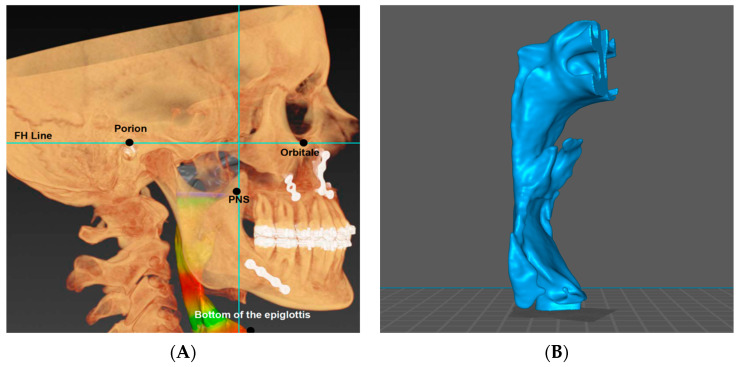 Figure 1
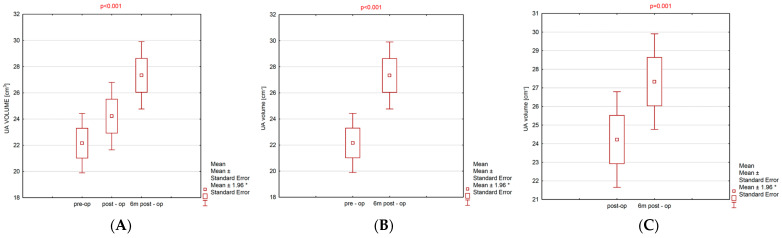 Figure 2
Peer Reviews
No public reviews on file for this paper yet. If you reviewed it on a platform where reviews are public (OpenReview, ICLR, NeurIPS, ICML), you can paste yours below so the community can read it here.
Videos
No videos yet. Explain this paper in a talk, walkthrough, or lecture? Add one.
Taxonomy
TopicsObstructive Sleep Apnea Research · Tracheal and airway disorders · Cleft Lip and Palate Research