Preliminary Data on SNP of Transplantation-Related Genes after Haploidentical Stem Cell Transplantation
Ching-Ping Tseng, Tung-Liang Lin, Shu-Hui Tsai, Wei-Tzu Lin, Fang-Ping Hsu, Wei-Ting Wang, Ding-Ping Chen

TL;DR
This study explores how genetic variations in HLA-related and co-stimulatory genes affect outcomes after a type of stem cell transplant called haplo-HSCT.
Contribution
The study identifies specific SNPs in HLA and co-stimulatory genes that are linked to adverse outcomes after haplo-HSCT.
Findings
Certain SNPs in HLA-DOA, RING1, HCP5, CTLA4, PDCD1, and TNFSF4 genes are significantly associated with adverse post-transplant outcomes.
These SNPs may influence immune responses and could help in selecting better donors for haplo-HSCT.
The findings suggest that genetic screening of these SNPs could improve transplant outcomes.
Abstract
Background: Hematopoietic stem cell transplantation (HSCT) is one of the mainstream treatments for patients with hematologic malignancies. The matching status of human leukocyte antigen (HLA) between the donor and recipient is highly related to the outcomes of HSCT. Haploidentical HSCT (haplo-HSCT) has emerged as a type of HSCT for patients who cannot find a fully HLA-matched donor. In this study, we investigated whether the single nucleotide polymorphisms (SNPs) of the HLA-related genes and the genes encoding co-stimulatory molecules located on the non-HLA region are related to the outcomes of haplo-HSCT. Methods: The genomic DNAs of 24 patients and their respective donors were isolated from the peripheral blood obtained before performing haplo-HSCT. A total of 75 SNPs of the HLA-related genes (HCP5, NOTCH4, HLA-DOA, LTA, HSPA1L, BAG6, RING1, TRIM27, and HLA-DOB) and the genes located…
Genes, proteins, chemicals, diseases, species, mutations and cell lines named across the full text — each resolved to its canonical identifier and authoritative record.
Click any figure to enlarge with its caption.
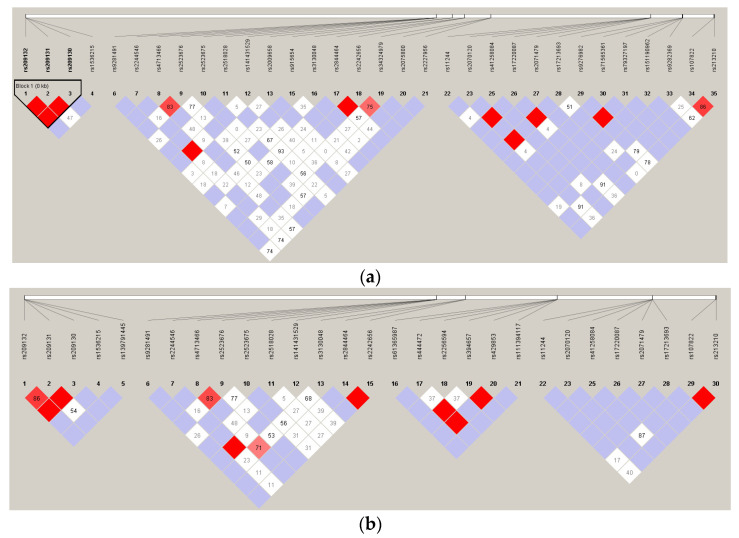 Figure 1
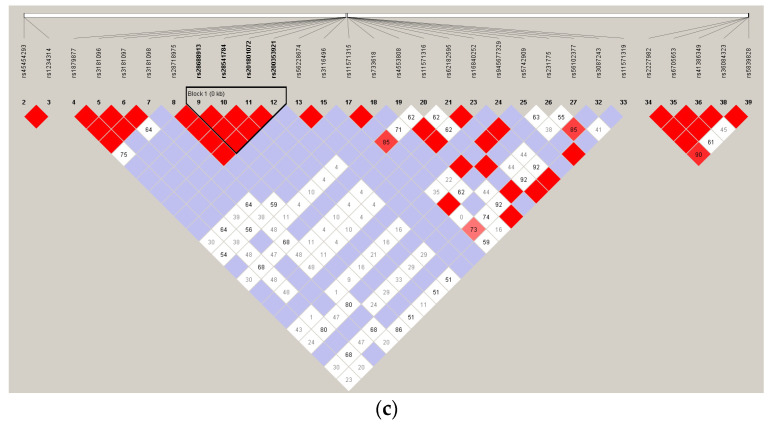 Figure 2
Peer Reviews
No public reviews on file for this paper yet. If you reviewed it on a platform where reviews are public (OpenReview, ICLR, NeurIPS, ICML), you can paste yours below so the community can read it here.
Videos
No videos yet. Explain this paper in a talk, walkthrough, or lecture? Add one.
Taxonomy
TopicsRNA Research and Splicing · Genomic variations and chromosomal abnormalities · Genomics and Chromatin Dynamics