First Detection of Hepatitis B Virus Subgenotype A5, and Characterization of Occult Infection and Hepatocellular Carcinoma-Related Mutations in Latin American and African Immigrants in Brazil
Thaís Barbosa Ferreira Sant’Anna, Thaynara Lorrane Silva Martins, Megmar Aparecida dos Santos Carneiro, Sheila Araujo Teles, Karlla Antonieta Amorim Caetano, Natalia Motta de Araujo

TL;DR
This study identifies a new hepatitis B virus strain in Brazil and highlights its cancer-related mutations among immigrant populations.
Contribution
The first detection of HBV subgenotype A5 in Brazil and characterization of its cancer-linked mutations in immigrant communities.
Findings
HBV subgenotype A5 was first detected in Brazil, with 80% of sequences showing cancer-linked mutations.
Occult HBV infection was found in 5.1% of HBsAg-negative immigrants.
Phylogenetic analysis suggests most HBV strains were introduced to Brazil through migration.
Abstract
This study aims to characterize the molecular profile of the hepatitis B virus (HBV) among socially vulnerable immigrants residing in Brazil to investigate the introduction of uncommon HBV strains into the country. Serum samples from 102 immigrants with positive serology for the HBV core antibody (anti-HBc) were tested for the presence of HBV DNA by PCR assays. Among these, 24 were also positive for the HBV surface antigen (HBsAg). The full or partial genome was sequenced to determine genotype by phylogenetic analysis. Participants were from Haiti (79.4%), Guinea-Bissau (11.8%), Venezuela (7.8%), and Colombia (1%). Of the 21 HBV DNA-positive samples, subgenotypes A1 (52.4%), A5 (28.6%), E (9.5%), F2 (4.8%), and F3 (4.8%) were identified. Among the 78 HBsAg-negative participants, four were positive for HBV DNA, resulting in an occult HBV infection rate of 5.1%. Phylogenetic analysis…
Genes, proteins, chemicals, diseases, species, mutations and cell lines named across the full text — each resolved to its canonical identifier and authoritative record.
Click any figure to enlarge with its caption.
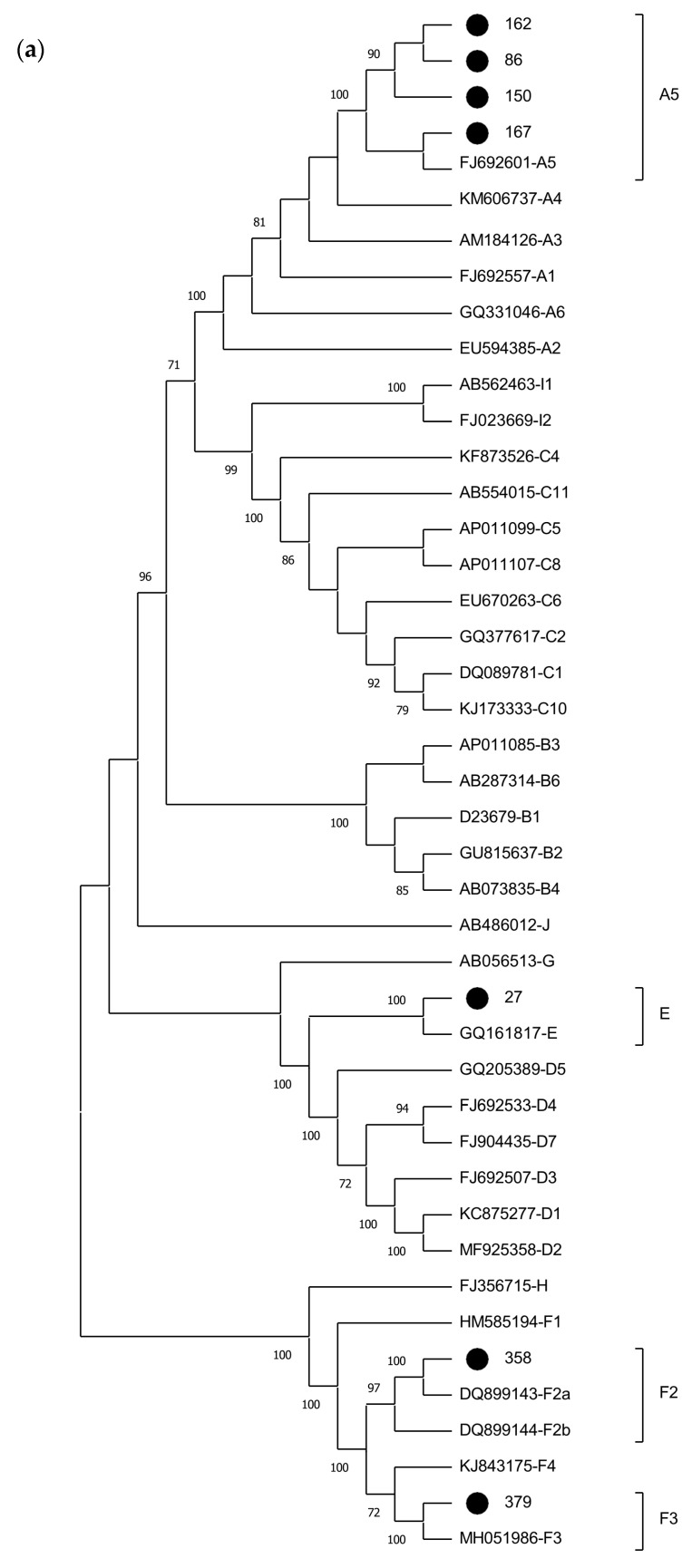 Figure 1
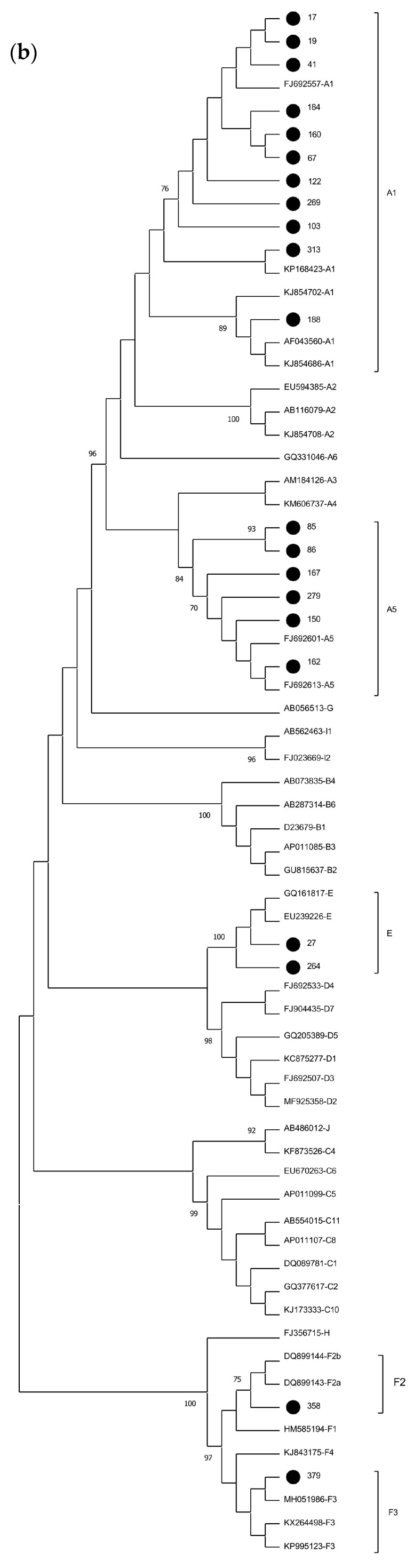 Figure 2
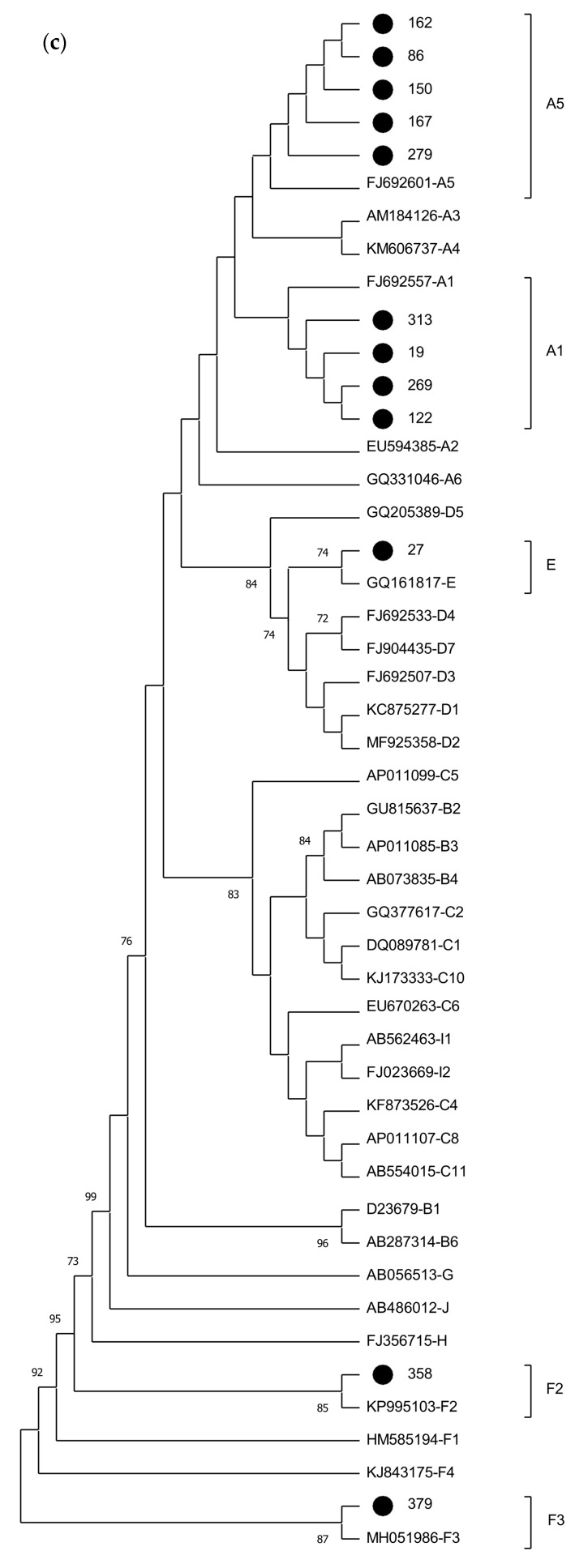 Figure 3
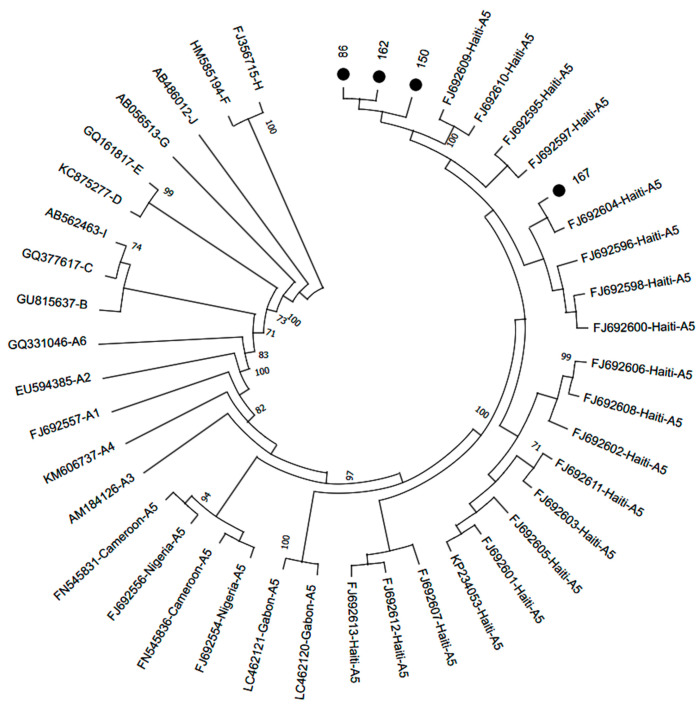 Figure 4
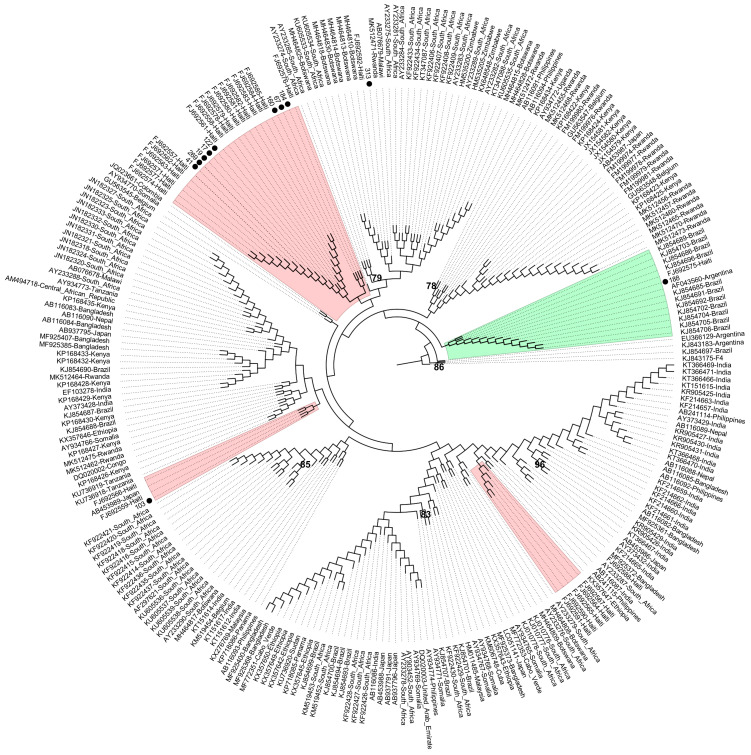 Figure 5
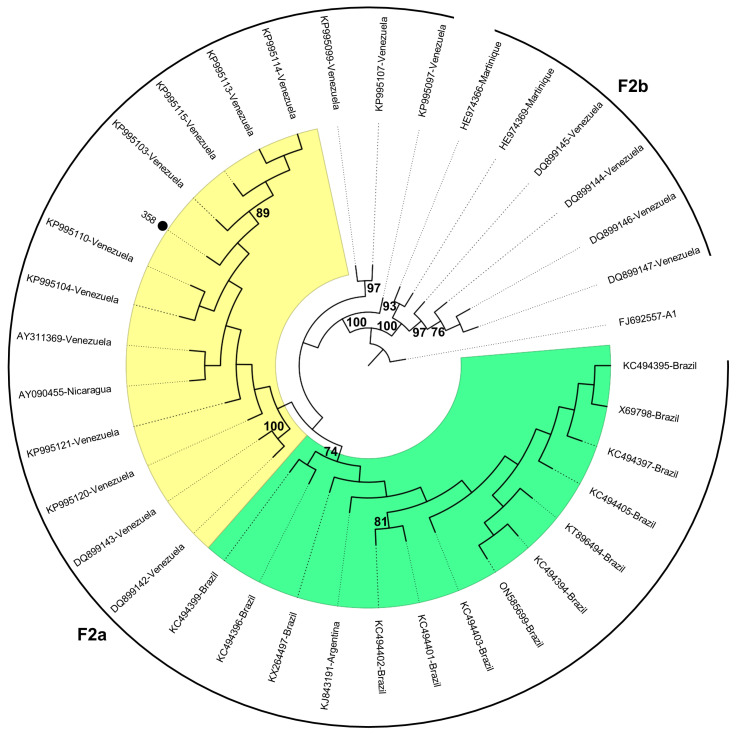 Figure 6
Peer Reviews
No public reviews on file for this paper yet. If you reviewed it on a platform where reviews are public (OpenReview, ICLR, NeurIPS, ICML), you can paste yours below so the community can read it here.
Videos
No videos yet. Explain this paper in a talk, walkthrough, or lecture? Add one.
Taxonomy
TopicsHepatitis B Virus Studies · Hepatitis C virus research · Hepatitis Viruses Studies and Epidemiology