Alterations in Tumor Aggression Following Androgen Receptor Signaling Restoration in Canine Prostate Cancer Cell Lines
Demitria M. Vasilatis, Neelu Batra, Christopher A. Lucchesi, Christine J. Abria, Eva-Maria Packeiser, Hugo Murua Escobar, Paramita M. Ghosh

TL;DR
Restoring androgen receptor signaling in canine prostate cancer cell lines leads to varied effects on tumor aggression, highlighting differences between cell lines.
Contribution
The study demonstrates cell line-specific effects of androgen receptor restoration on tumor aggression in dogs, a natural model for prostate cancer.
Findings
AR restoration in 1508 cells reduced clonogenicity, viability, migration, invasion, and increased tumor suppressor NKX3.1.
In 1258 cells, AR increased migration and invasion, with EMT markers upregulated and vimentin knockdown reversing migration effects.
AR effects varied across cell lines, with suppression in 1508, partial effects in Leo, and EMT-driven aggression in 1258.
Abstract
In prostate cancer (PCa), androgens upregulate tumorigenesis, whereas in benign tissue, the revival of androgen receptor (AR) signaling suppresses aggressive behaviors, suggesting therapeutic potential. Dogs, natural PCa models, often lack AR in PCa. We restored AR in dog PCa to investigate resultant characteristics. Three AR-null canine PCa lines (1508, Leo, 1258) were transfected with canine wild-type AR and treated with dihydrotestosterone (DHT). In 1508, AR restoration decreased clonogenicity (p = 0.03), viability (p = 0.004), migration (p = 0.03), invasion (p = 0.01), and increased expression of the tumor suppressor NKX3.1, an AR transcriptional target (p = 0.001). In Leo, AR decreased clonogenicity (p = 0.04) and the expression of another AR transcriptional target FOLH1 (p < 0.001) and increased the expression of NKX3.1 (p = 0.01). In 1258, AR increased migration (p = 0.006) and…
Genes, proteins, chemicals, diseases, species, mutations and cell lines named across the full text — each resolved to its canonical identifier and authoritative record.
Click any figure to enlarge with its caption.
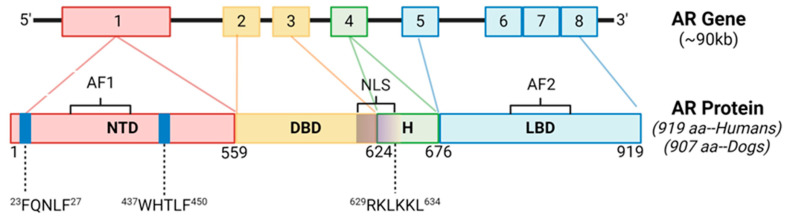 Figure 1
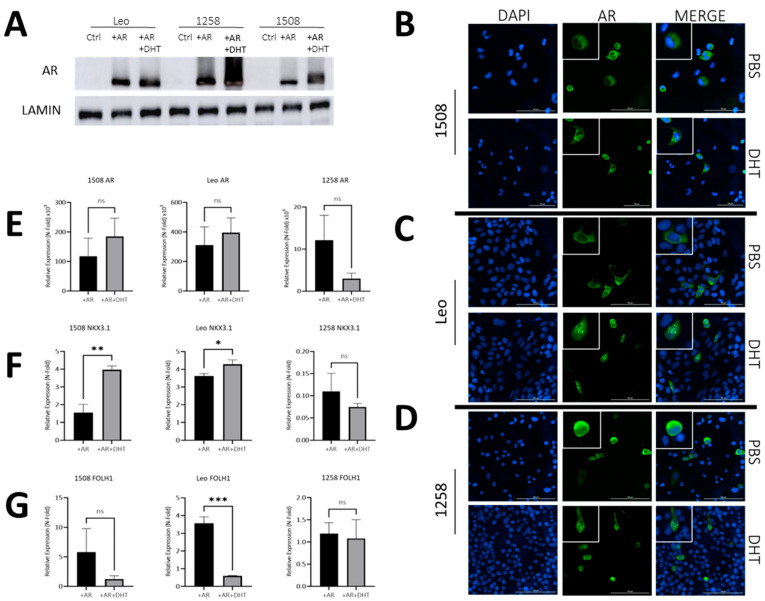 Figure 2
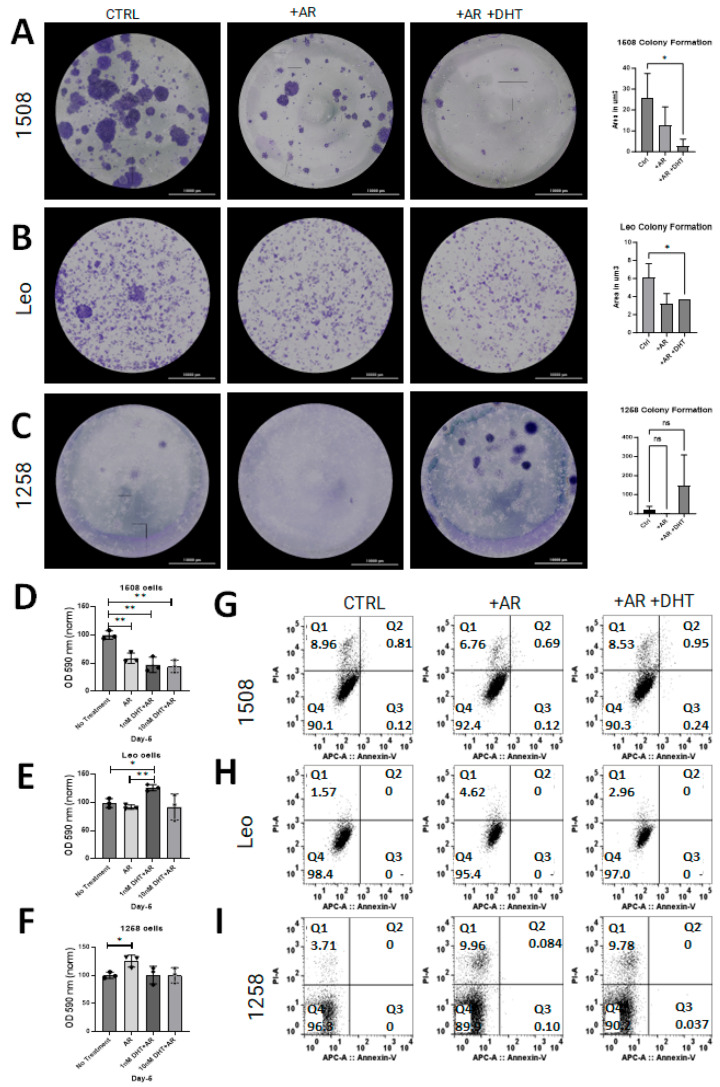 Figure 3
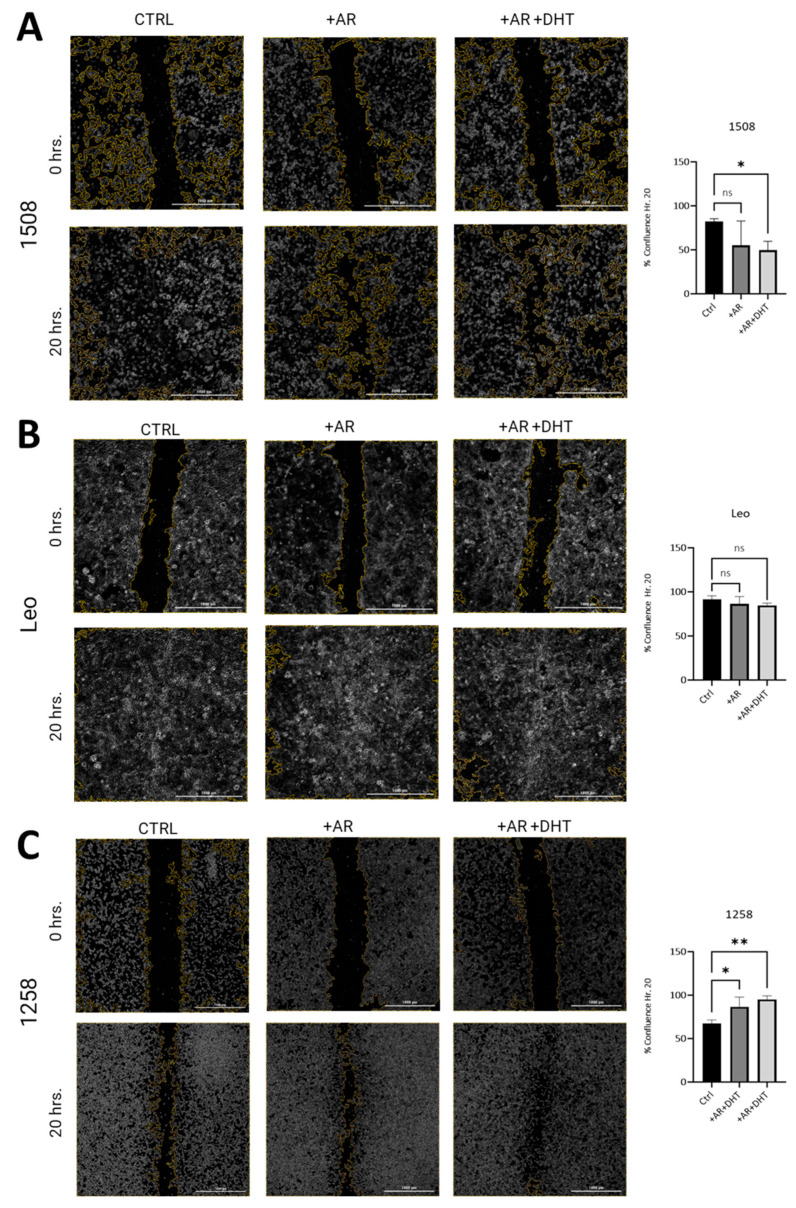 Figure 4
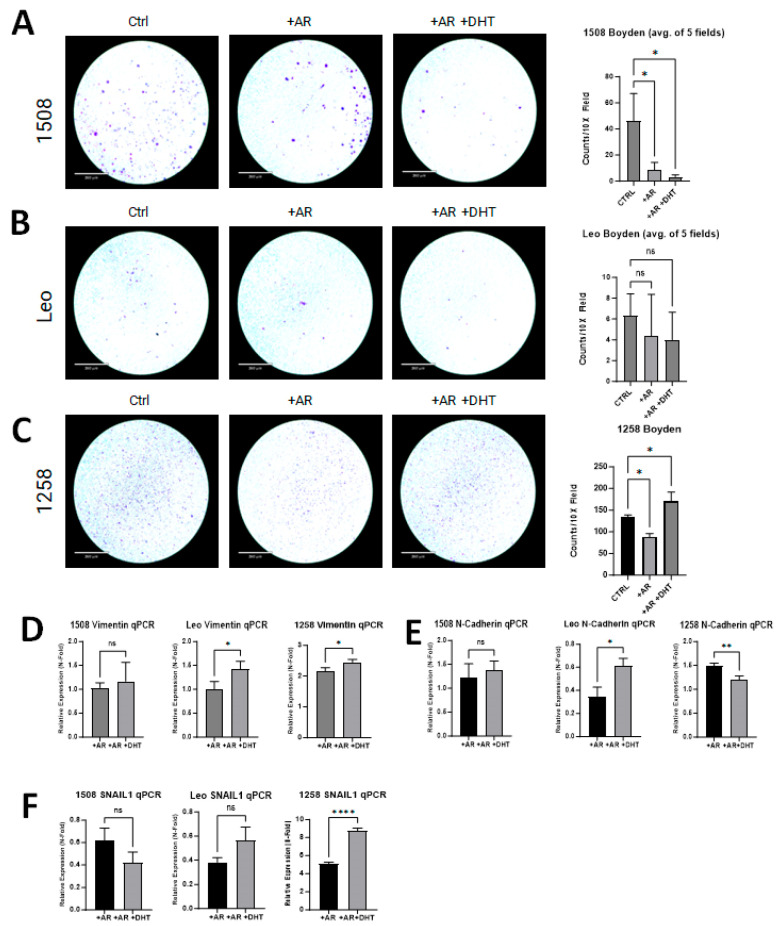 Figure 5
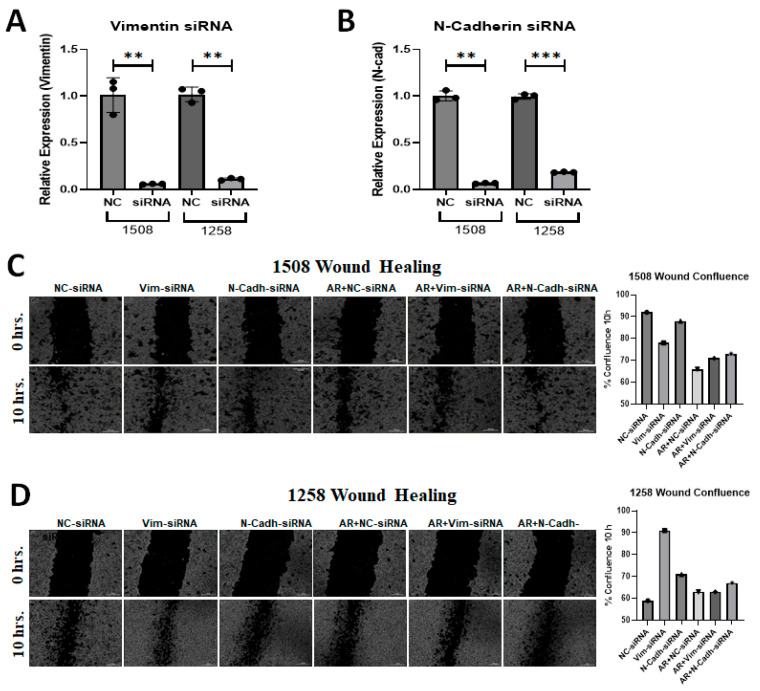 Figure 6
Peer Reviews
No public reviews on file for this paper yet. If you reviewed it on a platform where reviews are public (OpenReview, ICLR, NeurIPS, ICML), you can paste yours below so the community can read it here.
Videos
No videos yet. Explain this paper in a talk, walkthrough, or lecture? Add one.
Taxonomy
TopicsProstate Cancer Treatment and Research · Epigenetics and DNA Methylation · Cancer, Hypoxia, and Metabolism