Pet Owners’ Preferences for Quality of Life Improvements and Costs Related to Innovative Therapies in Feline Pain Associated with Osteoarthritis—A Quantitative Survey
Andrea Wright, Edwina Gildea, Louise Longstaff, Danielle Riley, Nirav Nagda, Kristina DiPietrantonio, Ashley Enstone, Robin Wyn, David Bartram

TL;DR
UK cat owners are willing to pay more for new, safer, and more effective treatments that improve their cats' quality of life, especially for pain caused by osteoarthritis.
Contribution
This study quantifies UK cat owners' willingness to pay for innovative pain therapies based on quality of life improvements and treatment attributes.
Findings
50% of cat owners were willing to pay more for a new injection treatment with improved efficacy and safety.
Pet owners valued quality of life improvements in mobility, pain expression, and well-being.
Most pet owners did not find monthly veterinary visits burdensome.
Abstract
This research examined UK cat owners’ preferences for treatments for feline osteoarthritis, including preferences for quality of life improvements, safety considerations, and costs associated with hypothetical new pain therapies. Aspects of quality of life from previous research were extracted and included in exploratory interviews with cat owners (n = 3) to identify the key domains that contribute to the quality of life of cats. Descriptions of the quality of life of cats with osteoarthritis and hypothetical product characteristics were developed and validated through interviews with veterinarians (n = 3). An online survey was subsequently shared with 255 pet owners in the UK. Pet owners were presented with quality of life descriptions and hypothetical product characteristics to gather their preferences for quality of life improvements and their willingness to pay for (unbranded) pain…
Genes, proteins, chemicals, diseases, species, mutations and cell lines named across the full text — each resolved to its canonical identifier and authoritative record.
Click any figure to enlarge with its caption.
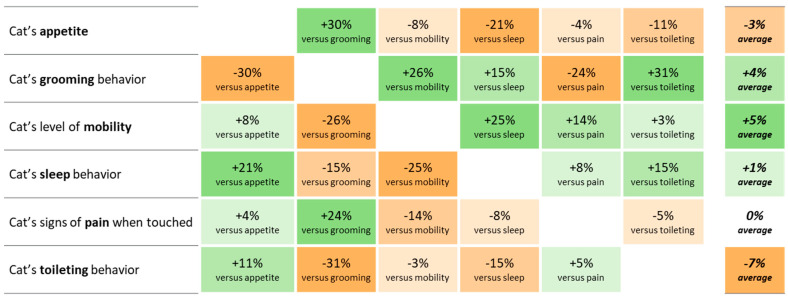 Figure 1
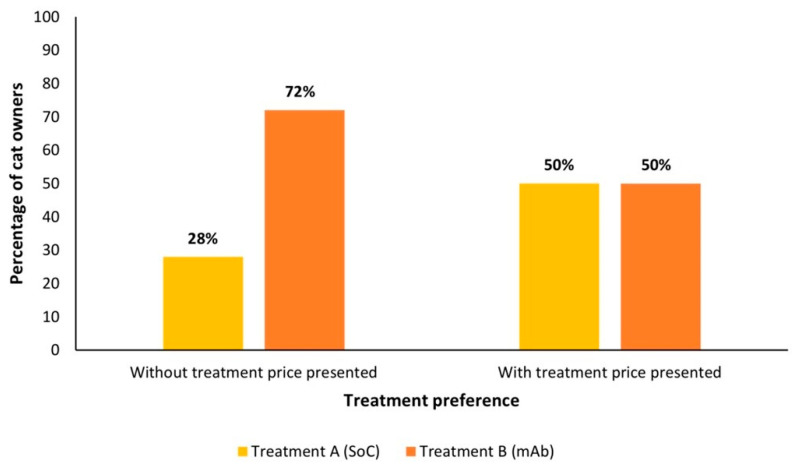 Figure 2
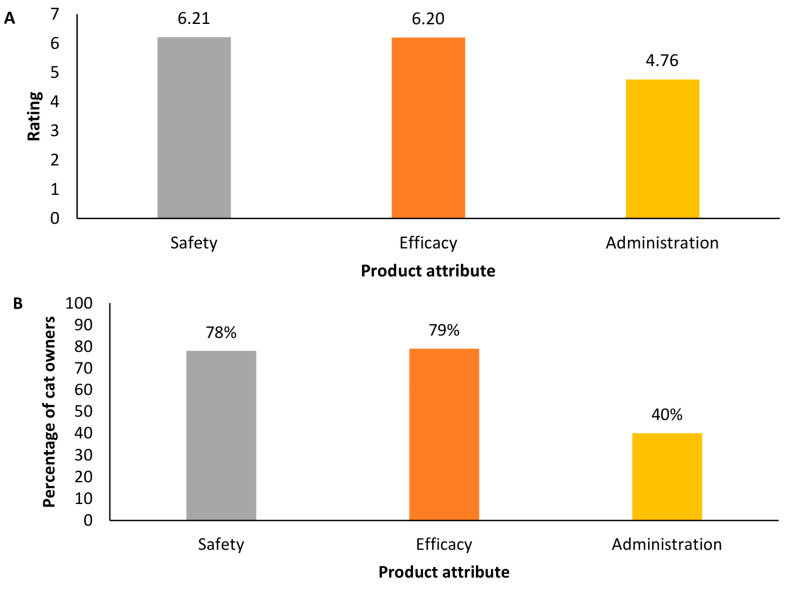 Figure 3
 Figure 4
 Figure 5
- —Zoetis
Peer Reviews
No public reviews on file for this paper yet. If you reviewed it on a platform where reviews are public (OpenReview, ICLR, NeurIPS, ICML), you can paste yours below so the community can read it here.
Videos
No videos yet. Explain this paper in a talk, walkthrough, or lecture? Add one.
Taxonomy
TopicsVeterinary Orthopedics and Neurology · Human-Animal Interaction Studies · Veterinary Equine Medical Research
1. Introduction
Osteoarthritis (OA) is a degenerative joint disease (DJD) that commonly affects cats and leads to gradual behavioral changes and decreased well-being as a result of chronic pain [1,2,3,4]. The prevalence of radiographic evidence of DJD has been reported to be 61–92% in cats [1,2,3]. Hardy et al. found radiographic evidence of DJD in 90% of cats; however, only 4% of the medical records of cats in the study had any mention of DJD or arthritis by the owner or the clinician [1].
The recognition of OA in cats by pet owners and veterinarians can be challenging [1,3]. OA is best identified by the cat owner in their home environment; however, cat owners often do not appreciate the fact that the changes they see in their cat are signs of OA [5]. Thus, OA in cats is largely underdiagnosed, meaning that many cats may not receive appropriate treatment for their condition, resulting in a reduction in their quality of life (QoL) [4,6]. Previous research has identified several key domains that are indicative of a cat’s QoL; these include domains such as energy and vitality, pain, mobility, and well-being [5,6,7]. When a screening checklist was used with cat owners, they were able to identify signs of OA pain, and this identification had a positive correlation with the diagnosis of OA [5].
The overall aim of pain management in the context of OA in cats is to achieve the best possible QoL outcomes for the cats and their owners [8]. Many interventions have been investigated for use in treating OA in cats, including pharmacological therapies such as nonsteroidal anti-inflammatory drugs (NSAIDs), tramadol, and gabapentin, along with other non-pharmacological treatment modalities such as nutraceuticals and environmental adaptations [8].
Pain assessment and subsequent management may result in multidimensional improvements in a variety of domains that can contribute to QoL [9]. Inadequate pain management may, therefore, result in a detrimental impact on a cat’s QoL, which may subsequently impact the owner-pet bond. Previous qualitative research has determined that the owner-pet bond is defined by specific behaviors related to the owners’ feelings about their pets, the amount of time they spend with the pet, and the activities they perform with their pets, alongside other factors [10].
It is currently not known which aspects of a cat’s QoL pet owners prioritize when considering the treatment of pain associated with OA, or which treatment features and benefits they favor when selecting treatment for their cat. Measuring willingness to pay (WTP) is an established methodology [11] that provides an approach for measuring pet owner preferences for QoL improvements and preferred treatment characteristics. In this case, QoL improvements could involve improvement of visual signs of distress or comfort and/or behaviors affecting the pet owner bond (such as reactivity or reluctance to interact). To ensure that cats suffering from pain associated with OA are able to achieve an acceptable QoL, clarification of pet owner preferences for improvements in QoL and treatment attributes is needed.
This research aimed to generate robust evidence for cat owners’ preferences around QoL improvements and potential innovative therapy profiles, as well as how these may affect WTP for pain associated with OA in cats. The outputs of this research aim to help facilitate both veterinarians and pet owners’ decision-making when considering pain management options.
2. Materials and Methods
2.1. Identification of QoL Domains of Importance to Cats and Their Owners
Insights from previous literature were combined with the results of prospective interviews conducted as part of this study in order to maximize the likelihood of reaching concept saturation during the development of scenarios and treatment profiles relating to feline OA.
Initial QoL domains were taken from a conceptual framework that was originally developed to assess health-related quality of life (HRQoL) in cats with OA [7]. The conceptual framework was derived from a systematic review of the published literature. Literature was identified from a series of medical and scientific databases using the search terms; “cat”; “feline”; “chronic pain”; pain; and “quality of life”. Publications were selected if they were full-text and peer-reviewed, based on primary data, and identified or measured behavioral signs of chronic musculoskeletal pain in cats [7]. The conceptual framework was developed according to published guidelines [7]. The domains extracted from the conceptual framework were therefore identified as key concepts for the HRQoL of cats with OA in a robust manner.
Following the extraction of previously identified domains, exploratory interviews were conducted with cat owners (n = 3) to explore the key domains identified in previous conceptual research and to identify any additional domains not covered that may contribute to feline QoL. The screening criteria for cat owners is presented in Table 1.
2.2. Cat Owner Interview Content
Cat owner interviews (in February–March 2020) included open-ended questions that aimed to spontaneously elicit their perception of the most important aspects of a cat’s QoL and the most important attributes of therapies when deciding about their cat’s care, in addition to probing on QoL domains that had been identified from the conceptual framework [7]. The most commonly reported mobility concepts mentioned by respondents when considering potential improvements in feline QoL were jumping, walking/gait, and running. The most commonly reported pain expression concepts mentioned by respondents when considering potential improvements in feline QoL were tolerance to touch and vocalization. The most commonly reported well-being concepts mentioned by respondents when considering potential improvements in feline QoL were appetite and sleeping habits. (Further details on the cat owner interview content can be found in the development phase: interviews with pet owners in the Supplementary Materials).
2.3. Feedback Phase
Following the development interviews, draft QoL descriptions highlighting theoretical QoL improvements in cats with pain associated with OA were prepared for testing with veterinarians (n = 3). The content and distribution of QoL descriptions were reviewed by veterinarians to determine their appropriateness for inclusion in the survey. Veterinarians were probed on whether the QoL descriptions were an accurate representation of the QoL impairments experienced by cats with pain associated with OA. Veterinarians were screened according to the pre-defined criteria that are detailed in Table 2.
2.4. Veterinarian Interview Content
Qualitative interviews (in May 2020) were also conducted with veterinarians to test the domains for inclusion within QoL descriptions and important attributes of therapies for cat owner decision-making to take forward to the WTP fieldwork. Veterinarians’ responses to the attributes identified by pet owners suggested the following: inclusion of “stiffness” when referring to walking/gait, removal of vocalization, and addition of facial expression in pain expression; the addition of eating less due to poor mobility for appetite, and inclusion of willingness to explore outside for outdoor cats.
The veterinarians confirmed that the descriptions were an accurate reflection of the QoL of cats with pain associated with OA; however, the wording included within the descriptions was amended to better represent the language/terminology used by pet owners.
2.5. WTP Fieldwork
WTP fieldwork was conducted in August and September 2020. Following consolidation veterinarian feedback, a 45 min web-based survey was designed and piloted. For the initial pilot stage, 25 pet owners’ WTP was tested by asking them to consider their relative WTP for therapy for their cat when considering improvements in particular behavioral attributes to ensure the survey was easily understood by all respondents, as well as programmed appropriately.
Respondents had previously been registered with an online survey panel (Qualtrics, Provo, UT, USA) and had confirmed their interest in participating in the research. Respondents were contacted via email to participate in the survey, and a target sample size of 250 complete responses was sought, in line with previously published research [12,13,14,15,16,17,18,19,20,21,22,23,24]. The objective screening criteria applied to screen eligible participants are presented in Table 3.
Demographic data were collected, and quotas were applied for geographic regions to correspond with the distribution of the general UK population. Information relating to eligible respondents’ pets was also collected to ensure that key subgroups of interest (as identified during the qualitative interview stage) were present in the final sample (e.g., the presence of pet insurance and pet medical history).
All eligible respondents confirmed their willingness to participate and provided explicit informed consent. All respondents received financial compensation for their participation in the survey. The survey design is detailed in the Supplementary Materials (see the Overview of WTP survey design in the Supplementary Materials).
2.6. Testing WTP
An online survey link was shared with cat owners in August 2020 to investigate their preference when considering potential QoL improvements in cats with pain associated with OA. Cat owners’ WTP for QoL improvement was also explored in the survey.
Cat owners were presented with a series of QoL impairments and were asked to indicate which of the scenarios they would most like their cat to be in (Table 4). The statements were developed to reflect hypothetical improvements in specific QoL domains, including mobility, pain, appetite, grooming, sleep, and toileting behaviors. Cat owners were also asked to indicate how much they would be WTP for potential improvements in each wider QoL domain, comprising pain expression, well-being, and mobility.
The survey was live for three weeks to allow recruitment of cat owners to meet the minimum requirement for the study (n = 250, in line with previously published studies) [12,13,14,15,16,17,18,19,20,21,22,23,24].
Finally, cat owners were presented with hypothetical product profiles with varying product attributes and were asked which product profile they would prefer. Product profiles were highly realistic but were unbranded to avoid bias in participant responses (Table 5). As product profiles were hypothetical, cat owners were of the assumption that no label approval or pharmacovigilance data existed for both profiles. The hypothetical nature of product profiles was reiterated to the respondents. Once presented, respondents were asked to indicate how much they were WTP for each product profile, highlighting key drivers of cat owners’ WTP.
2.7. Data Analysis
Survey results were collated, quality checked, and analyzed. Demographic data and WTP data were analyzed descriptively.
The statistical significance of differences was assessed using a threshold of p < 0.05.
Anonymized results data are available from the corresponding author upon reasonable request.
3. Results
The outputs of the qualitative development and feedback stages of this research are detailed in the Supplementary Materials.
3.1. Sample Characteristics
A total of 255 cat owners participated in the WTP survey. The recruited samples were geographically representative of the UK population and covered a wide range of age groups and sociodemographic backgrounds (Table 6).
Demographic information regarding the respondents’ current pets was also collected (see Table 7). Overall, 58% of the respondents had one cat within their household. A total of 8% of the overall sample had a cat living with pain associated with OA, with the majority (65%) of those receiving medication for their condition. Of the 255 pet owners who did not currently have a cat living with pain associated with OA, a further 25 (11%) had experience of this in the past.
3.2. WTP for QoL Improvements in Pain Associated with OA
Overall, 86% (n = 219/255) of the respondents answered that they would be willing or very willing to initiate any treatment for their cat when considering pain associated with OA.
When presented with wider QoL domains, consisting of pain expression, mobility, and well-being, approximately half of all pet owners were willing to pay for improvements in each of the wider domains listed (Table 8).
When presented with a series of QoL trade-offs among more specific domains, cat owners appeared to value QoL across all specific domains tested; relative preferences for pain expression, mobility, and well-being appeared equal across specific domains (Figure 1).
Pet owners’ WTP for QoL improvement was also demonstrated through a rating exercise. The majority of pet owners (61%; n = 155/255) answered that they would be willing to pay more to ensure their cat has an improved QoL. This statement was rated highly (mean rating of 5.58, on a scale from 0.00 [indicating “strongly disagree”] to 7.00 [indicating “strongly agree”]), indicating a high level of willingness by cat owners.
3.3. Treatment Profile Preferences
When presented with monoclonal antibody (mAb) vs. SoC profiles, significantly more pet owners preferred the mAb profile (72%; n = 184/255) vs. the SoC (28%; n = 71/255) when the price was not presented (p < 0.01). When presented with price, 50% (n = 127/255) of cat owners answered that they would be willing to pay more than the SoC (priced at £30 [106.65/€88.48] per month), despite the increase in price (Figure 2).
When asked unaided how much more they would be willing to pay for the mAb, over half of all pet owners answered that they would be willing to pay an average of £27 [6.75/€5.60] more per month to £150 [$202.50/€168] more per month.
3.4. Administration Profile Preferences
In a series of ranking statements, 79% (n = 201/255) of cat owners strongly agreed or agreed that they would rather administer the treatment themselves to the cats than visit the veterinarian for administration (mean rating of 6.12/7.00). However, when presented in the context of a product profile, the safety and efficacy of a therapy appeared to supersede the method of administration. Despite cat owners rating home administration highly, respondents stated that they would prioritize the safety and efficacy of therapy when considering factors of importance for cat owner decision-making, in the hypothetical scenario that was presented (Figure 3).
Additionally, when asked to rate whether cat owners would find taking their cat to the veterinary clinic once a month stressful/burdensome for their treatment, 85% (n = 217/255) of cat owners did not strongly agree that they would find the trip to the veterinarians once a month stressful/burdensome (mean rating of 3.92/7.00). Cat owners also declared that they would be comfortable with both a veterinarian and veterinary nurse administering their treatment to their cat; significantly more cat owners (86%; n = 219/255) said that they would prefer a veterinary nurse to administer a treatment to their cat at a lower cost per month (presented at £67.50 [106.65/€88.48] per month).
4. Discussion
Although OA is often underdiagnosed and subsequently undertreated in cats [4], this study estimated that over 80% of cat owners in the UK would be willing or very willing to initiate any treatment for their cats when considering the management of pain associated with OA. Additionally, the majority of pet owners did not agree that taking their cat to the veterinarian once a month for their treatment would be stressful or burdensome. Pet owners valued QoL improvements across key behavioral domains such as mobility, pain expression, and well-being.
Moreover, pet owners said that they were willing to pay an average of £27 [$36.45/€30.24] more than the SoC per month for innovative treatment, with an expected improved efficacy and safety profile, if available. This suggests that pet owners value their cats’ QoL and would be willing to initiate and pay more for innovative therapy options to ensure their cat’s QoL improved. Pet owners do not prioritize the administration methods of therapies over their safety and efficacy. Pet owners appear comfortable with having an injection administered by a veterinarian or nurse once a month or administering treatments themselves to their cats.
These findings build upon a previous evidence-based conceptual framework of the factors influencing HRQoL in cats with OA [7]. This framework presented three wide HRQoL domains (namely pain expression, mobility, and physical and mental well-being), each of which was subsequently tested in the current research in terms of pet owners’ WTP. Our findings further suggest that varied preferences exist for efficacy aspects and product profiles in the treatment of pain related to feline OA in the UK. Veterinarians in the UK could therefore elect to offer cat owners the pain treatment they feel is best suited for improving cat QoL, to ensure QoL of the cat and owner-pet bond is preserved.
To our knowledge, this research is one of the few WTP studies conducted on companion animal health [12]. The WTP methodology is a widely used process that is utilized to understand how stakeholders value a proposed product or concept [11]. The application of this trusted methodology within animal health has provided insight into key drivers in pet owner decision-making, when considering the preservation of their cat’s QoL and the subsequent owner-pet bond [10,11].
At present, there are limited NSAID therapies licensed for the treatment of chronic pain associated with OA in cats, and licensing differs across the globe. In an online questionnaire with cat owners (n = 46), only 54% of drugs used to treat felines for a variety of conditions were registered for use in cats by the European Medicines Agency (EMA); while this research was not solely focused on the management of chronic pain associated with OA, these findings emphasize the frequency of off-label drug use in the feline veterinary setting [25]. Additionally, cat owners emphasized the need for more easily administered therapies for the treatment of feline conditions; very few (n = 3/43) cat owners said that their cat consumed the medication willingly without requiring any modifications to the dosage form or administration aid [25]. Consequently, the individual nature of the cat should be taken into account in prescribing decisions [25]. The need for more easily administered therapies and difficulties related to administration highlights a desire from pet owners for additional licensed and easily administered therapy options, with established evidence supporting the efficacy and safety of the products’ use [25].
This research suggests that pet owners in the UK are motivated to improve cat QoL by initiating innovative therapies for pain associated with osteoarthritis. It is important to consider that all product profiles were hypothetical in this research; thus, there was an assumption by respondents that the weight of evidence and approval status for both drugs were the same, as no evidence was presented to suggest otherwise. Therefore, pet owner preferences for real (not hypothetical) treatment options should be interpreted in the context of the available data on efficacy and safety at the time of reading. The use of hypothetical product profiles is a common approach in human and animal health preference research [17,26,27,28,29].
Additionally, while these findings represent a currently unmet need in the UK for further licensed and easily administered therapy options, the generalizability of this research may be limited when considering its validity in other geographic regions. Future research may wish to repeat the methodology employed in this study in other geographic areas, such as the US, where labeling details for the SoC vary compared to those in the EU.
Additionally, the limited treatment options for pain associated with OA will likely have constrained pet owners’ experiences when considering the successful management of pain associated with OA. Thus, the lack of adequate and appropriate treatment options may have limited pet owners’ ability to predict how much they would be WTP for an innovative therapy.
Finally, this research was conducted in 2020 during the COVID-19 pandemic. Given that this research aimed to explore pet owners’ WTP for innovative therapies for their cats, our findings may have been impacted by the financial uncertainty associated with the pandemic. The Office for National Statistics demonstrated that the COVID-19 pandemic subsequently led to an abrupt reduction in household income, as real disposable income decreased by 2.3% during the first UK lockdown. The exacerbation of financial concerns may have impacted the WTP indicated by pet owners in this research. Future researchers may, therefore, wish to re-conduct a similar study to examine whether pet owners are WTP for innovative therapies at times of financial stability.
Although demographic factors such as income and insurance status may interact with and influence respondents’ preferences, no adjusted analysis was conducted as part of this research. However, this study was primarily focused on estimating the preferences of UK cat owners as a whole, which was achieved through the basic unadjusted analysis presented here. In addition, the reported household income of the sample appeared broadly representative of the UK general public (with 68% of respondents reporting a household income below £40k), and pet insurance was held by approximately half of the respondents. Future research may wish to specifically address potential interactions between factors such as income and insurance status in terms of their effect on pet owners’ WTP for treatment.
While the above concerns are valid, the sample size of this research (n = 255 quantitative survey responses) is generally consistent with those of other discrete-choice studies on animal and human health, which typically analyze 100 to 500 responses [12,13,14,15,16,17,18,19,20,21,22,23,24].
5. Conclusions
Pet owners in the UK value treatment profiles that are efficacious in improving QoL and deemed appropriate for long-term use. Veterinarians should, therefore, discuss all licensed treatment options with pet owners and recommend the treatment they believe is best suited, balancing aspects such as effectiveness, tolerability, convenience, and cost. This will help to ensure the treatment outcomes and QoL improvements cat owners desire are achieved and the owner-pet bond is preserved.
The reference list from the paper itself. Each links out to its DOI / PubMed record.
- 1Hardie E.M. Roe S.C. Martin F.R. Radiographic evidence of degenerative joint disease in geriatric cats: 100 cases (1994–1997)J. Am. Vet. Med. Assoc.200222062863210.2460/javma.2002.220.62812418522 · doi ↗ · pubmed ↗
- 2Lascelles B.D.X. Henry J.B.III Brown J. Robertson I. Sumrell A.T. Simpson W. Wheeler S. Hansen B.D. Zamprogno H. Freire M. Cross-sectional study of the prevalence of radiographic degenerative joint disease in domesticated cats Vet. Surg.20103953554410.1111/j.1532-950X.2010.00708.x 20561321 · doi ↗ · pubmed ↗
- 3Slingerland L. Hazewinkel H. Meij B. Picavet P. Voorhout G. Cross-sectional study of the prevalence and clinical features of osteoarthritis in 100 cats Vet. J.201118730430910.1016/j.tvjl.2009.12.01420083417 · doi ↗ · pubmed ↗
- 4Stadig S. Lascelles B.D.X. Nyman G. Bergh A. Evaluation and comparison of pain questionnaires for clinical screening of osteoarthritis in cats Vet. Rec.201918575710.1136/vr.10511531619513 PMC 6996100 · doi ↗ · pubmed ↗
- 5Enomoto M. Lascelles B.D.X. Gruen M.E. Development of a checklist for the detection of degenerative joint disease-associated pain in cats J. Feline Med. Surg.2020221137114710.1177/1098612 X 2090742432122226 PMC 7736399 · doi ↗ · pubmed ↗
- 6Noble C.E. Wiseman-Orr L.M. Scott M.E. Nolan A.M. Reid J. Development, initial validation and reliability testing of a web-based, generic feline health-related quality-of-life instrument J. Feline Med. Surg.201921849410.1177/1098612 X 1875817629463202 PMC 10814614 · doi ↗ · pubmed ↗
- 7Yeowell G. Burns D. Fatoye F. Gebrye T. Wright A. Mwacalimba K. Odeyemi I. Indicators of Health-Related Quality of Life in Cats with Degenerative Joint Disease: Systematic Review and Proposal of a Conceptual Framework Front Vet Sci.2021858214810.3389/fvets.2021.58214834869707 PMC 8636455 · doi ↗ · pubmed ↗
- 8Epstein M. Rodan I. Griffenhagen G. Kadrlik J. Petty M. Robertson S. Simpson W. 2015 AAHA/AAFP pain management guidelines for dogs and cats J. Am. Anim. Hosp. Assoc.201551678410.1177/1098612 X 1557206225764070 · doi ↗ · pubmed ↗