Rapid prediction of wall shear stress in stenosed coronary arteries based on deep learning
Salwa Husam Alamir, Vincenzo Tufaro, Matilde Trilli, Pieter Kitslaar, Anthony Mathur, Andreas Baumbach, Joseph Jacob, Christos V. Bourantas, Ryo Torii

TL;DR
This paper presents a deep learning model that quickly predicts wall shear stress in coronary arteries, combining real and synthetic data for improved accuracy and efficiency.
Contribution
The novel contribution is combining two synthetic data generation methods with real patient data to train a U-net model for fast and accurate WSS prediction.
Findings
The model achieved a 6.03% Normalised Mean Absolute Error in predicting wall shear stress.
Inference time was only 0.35 seconds, making the model suitable for clinical use.
Abstract
There is increasing evidence that coronary artery wall shear stress (WSS) measurement provides useful prognostic information that allows prediction of adverse cardiovascular events. Computational Fluid Dynamics (CFD) has been extensively used in research to measure vessel physiology and examine the role of the local haemodynamic forces on the evolution of atherosclerosis. Nonetheless, CFD modelling remains computationally expensive and time-consuming, making its direct use in clinical practice inconvenient. A number of studies have investigated the use of deep learning (DL) approaches for fast WSS prediction. However, in these reports, patient data were limited and most of them used synthetic data generation methods for developing the training set. In this paper, we implement 2 approaches for synthetic data generation and combine their output with real patient data in order to train a…
Genes, proteins, chemicals, diseases, species, mutations and cell lines named across the full text — each resolved to its canonical identifier and authoritative record.
Click any figure to enlarge with its caption.
 Figure 1
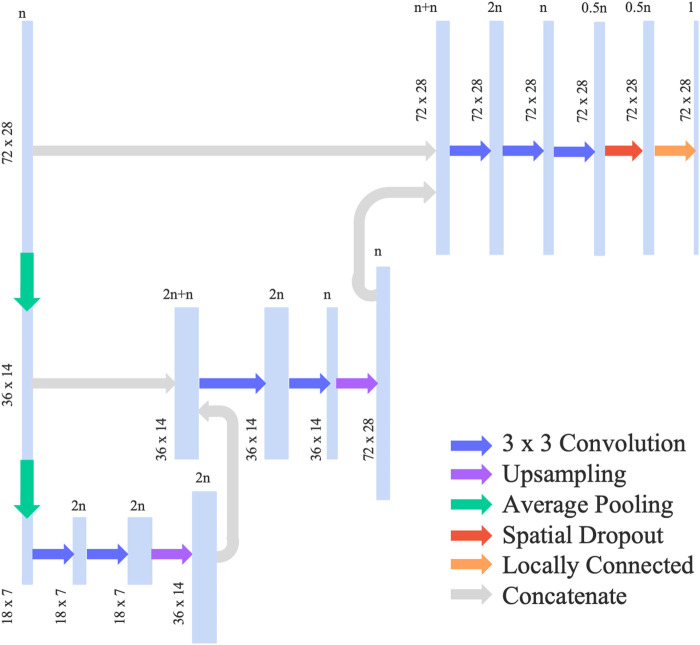 Figure 2
 Figure 3
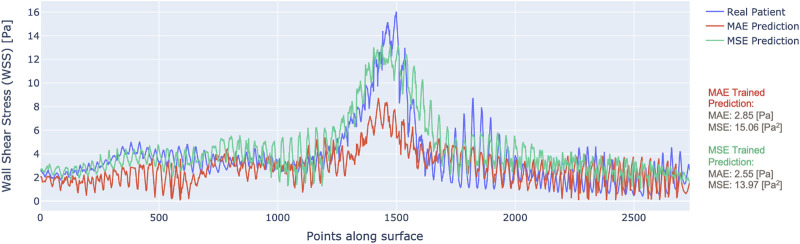 Figure 4
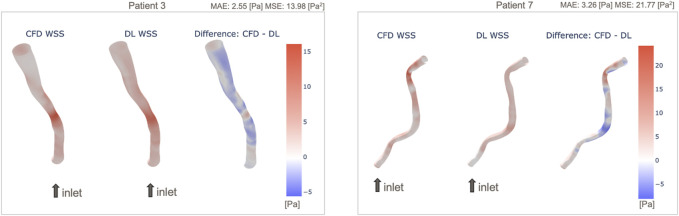 Figure 5
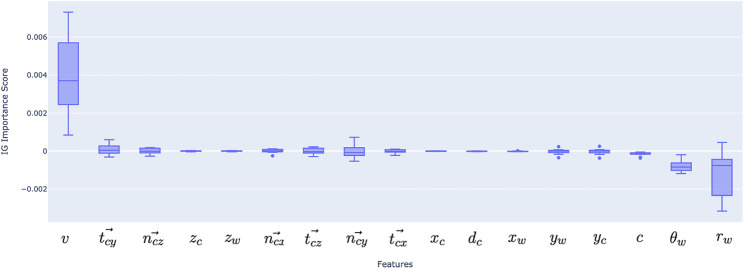 Figure 6
Peer Reviews
No public reviews on file for this paper yet. If you reviewed it on a platform where reviews are public (OpenReview, ICLR, NeurIPS, ICML), you can paste yours below so the community can read it here.
Videos
No videos yet. Explain this paper in a talk, walkthrough, or lecture? Add one.
Taxonomy
TopicsGNSS positioning and interference