Novel Lipopolysaccharide-Responsive Vesicle Trafficking, Beach- and Anchor-Containing (LRBA) Gene Mutation Identified in a Pediatric Patient: A Case Report
Jasleen Dua, Renuka Jadhav, Vineeta Pande, Mridu Bahal, Shailaja V Mane

TL;DR
A 10-year-old girl with a rare genetic disorder caused by LRBA gene mutations showed symptoms like seizures, immune issues, and inflammation, highlighting the importance of early diagnosis.
Contribution
This case report identifies a novel LRBA gene mutation in a pediatric patient with complex clinical manifestations.
Findings
The patient exhibited early-onset hypogammaglobulinemia, autoimmunity, and inflammatory bowel disease.
Novel LRBA gene mutations were associated with seizures and septic shock in the patient.
Prompt recognition of LRBA deficiency is crucial for timely management and improved outcomes.
Abstract
Homozygous mutations in the lipopolysaccharide-responsive vesicle trafficking, beach- and anchor-containing (LRBA) gene lead to a syndrome characterized by early-onset hypogammaglobulinemia, autoimmunity, lymphoproliferation, and inflammatory bowel disease. This report describes a 10-year-old female who experienced three seizure episodes, including two generalized tonic-clonic seizures (GTCS) and one focal seizure, alongside septic shock. The patient had a history of recurrent respiratory tract infections, inflammatory bowel disease, multiple blood transfusions, lymphadenopathy, significant organomegaly, and hematological abnormalities, all consistent with an LRBA deficiency. This case highlights the critical need for prompt recognition and identification of LRBA gene mutations to enable timely management and improve patient outcomes.
Genes, proteins, chemicals, diseases, species, mutations and cell lines named across the full text — each resolved to its canonical identifier and authoritative record.
Click any figure to enlarge with its caption.
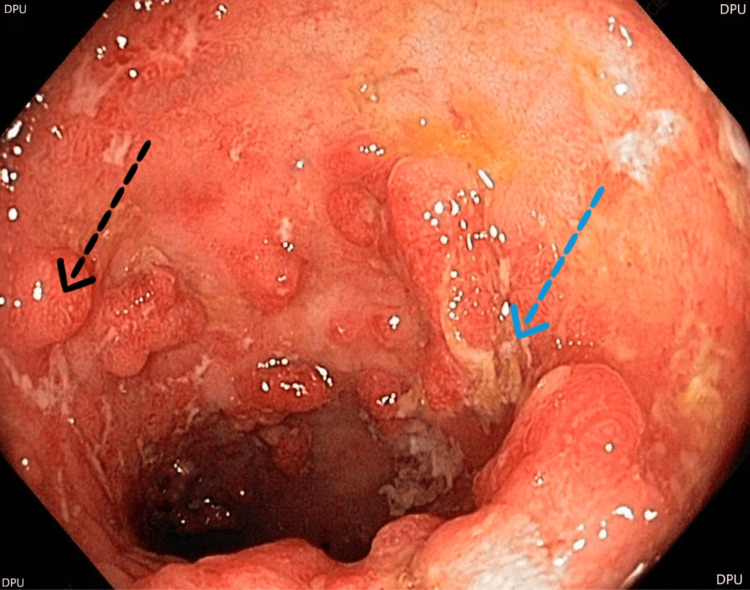 Figure 1
Peer Reviews
No public reviews on file for this paper yet. If you reviewed it on a platform where reviews are public (OpenReview, ICLR, NeurIPS, ICML), you can paste yours below so the community can read it here.
Videos
No videos yet. Explain this paper in a talk, walkthrough, or lecture? Add one.
Taxonomy
TopicsImmunodeficiency and Autoimmune Disorders · Parvovirus B19 Infection Studies · Phagocytosis and Immune Regulation