T2-fluid attenuated inversion recovery fat-suppressed mismatch in the identification and characterization of lesions related to radiologically isolated syndrome
Darin T Okuda, Christine Lebrun-Frenay

TL;DR
This paper explores how a fat-suppressed T2-FLAIR MRI sequence helps identify and characterize brain lesions linked to radiologically isolated syndrome, a condition with MS-like MRI findings but no neurological symptoms.
Contribution
The study introduces the use of fat-suppressed T2-FLAIR mismatch to better identify inflammatory demyelination lesions in radiologically isolated syndrome.
Findings
Fat-suppressed T2-FLAIR mismatch improves lesion identification in radiologically isolated syndrome.
The technique provides morphological insights into disease severity and lesion characteristics.
T2-FLAIR mismatch may help differentiate inflammatory demyelination from other lesion types.
Abstract
The radiologically isolated syndrome is defined by the presence of incidentally identified T2-weighted hyperintense lesions, highly suggestive of central nervous system demyelination, following an MRI study that is performed for reasons other than for the investigation of symptoms related to multiple sclerosis (MS). These individuals also have no evidence of prior neurological symptoms associated with inflammatory demyelination and no alternative explanation for the observed MRI findings. Recently, the introduction of novel imaging techniques such as the “central vein sign” has improved lesion specificity for MS. In addition, the observation of T2-fluid attenuated inversion recovery (FLAIR) mismatch characteristics associated with gliomas and in those with MS with a higher disease burden appear to provide morphological data that relate to disease severity. The value of T2-FLAIR mismatch…
Genes, proteins, chemicals, diseases, species, mutations and cell lines named across the full text — each resolved to its canonical identifier and authoritative record.
Click any figure to enlarge with its caption.
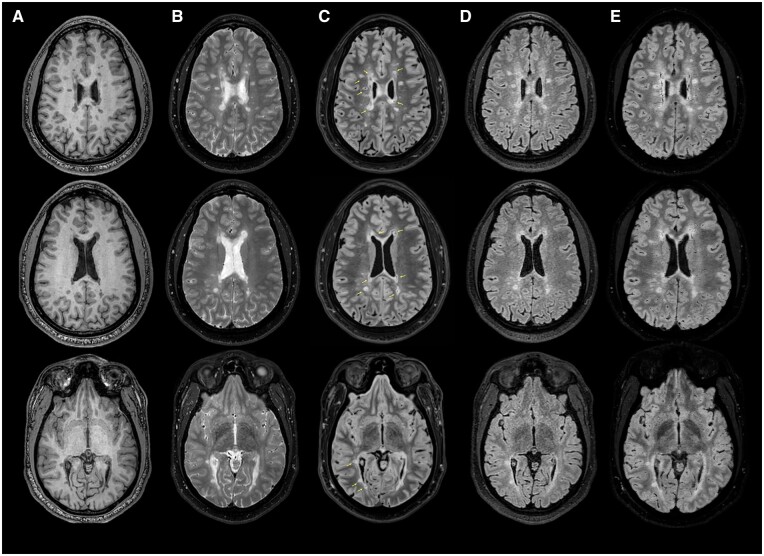 Figure 1
Peer Reviews
No public reviews on file for this paper yet. If you reviewed it on a platform where reviews are public (OpenReview, ICLR, NeurIPS, ICML), you can paste yours below so the community can read it here.
Videos
No videos yet. Explain this paper in a talk, walkthrough, or lecture? Add one.
Taxonomy
TopicsMultiple Sclerosis Research Studies · Peripheral Neuropathies and Disorders · Systemic Lupus Erythematosus Research