The causal relationship between antihypertensive drugs and depression: a Mendelian randomization study of drug targets
Zixian Yang, Jinshuai Li, Peichu Huang, Zhichang Li, Jianfeng He, Dongchun Cai, Yuzheng Lai

TL;DR
This study uses genetic data to explore if antihypertensive drugs like beta-blockers and calcium channel blockers may increase the risk of depression.
Contribution
The study introduces a Mendelian randomization approach to assess the causal link between antihypertensive drug targets and depression.
Findings
Genetic proxies for beta-blockers were linked to increased depression risk (OR 1.027, p < 0.001).
Genetic proxies for calcium channel blockers were also associated with higher depression risk (OR 1.030, p = 0.006).
No significant associations were found for other antihypertensive drug categories.
Abstract
Depression ranks as a leading contributor to the global disease burden. The potential causal relationship between the use of antihypertensive medications and depression has garnered significant interest. Despite extensive investigation, the nature of this relationship remains a subject of ongoing debate. Therefore, this study aims to evaluate the influence of antihypertensive medications on depression by conducting a Mendelian randomization study focused on drug targets. We focused on the targets of five antihypertensive drug categories: ACE Inhibitors (ACEIs), Angiotensin II Receptor Antagonists (ARBs), Calcium Channel Blockers (CCBs), Beta-Blockers (BBs), and Thiazide Diuretics (TDs). We collected single-nucleotide polymorphisms (SNPs) associated with these drug targets from genome-wide association study (GWAS) statistics, using them as proxies for the drugs. Subsequently, we…
Genes, proteins, chemicals, diseases, species, mutations and cell lines named across the full text — each resolved to its canonical identifier and authoritative record.
Click any figure to enlarge with its caption.
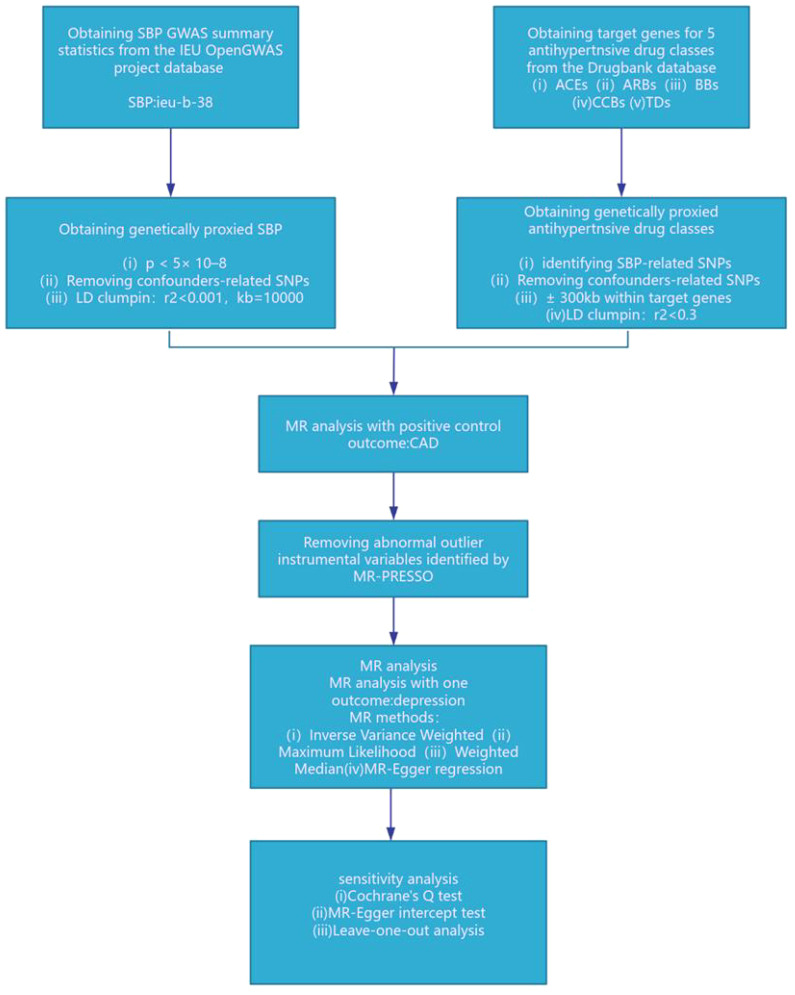 Figure 1
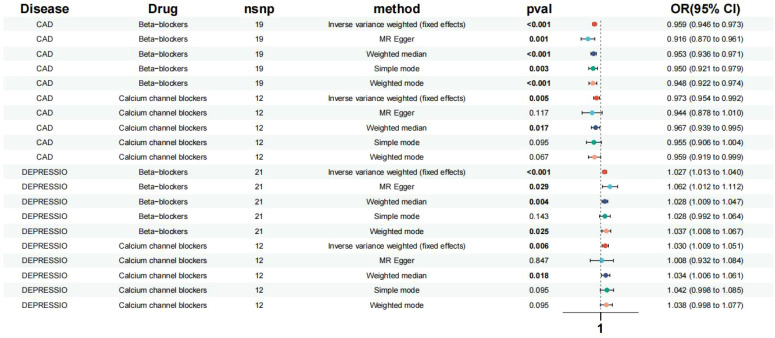 Figure 2
 Figure 3
 Figure 4
Peer Reviews
No public reviews on file for this paper yet. If you reviewed it on a platform where reviews are public (OpenReview, ICLR, NeurIPS, ICML), you can paste yours below so the community can read it here.
Videos
No videos yet. Explain this paper in a talk, walkthrough, or lecture? Add one.
Taxonomy
TopicsGenetic Associations and Epidemiology · Hormonal Regulation and Hypertension · Blood Pressure and Hypertension Studies