Mental states via possessive predication: the grammar of possessive experiencer complex predicates in Persian
Ryan Walter Smith

TL;DR
This paper explores how Persian uses a grammatical structure to express mental states, linking it to broader linguistic theories about possession and property concepts.
Contribution
The paper provides a novel formal semantic analysis of Persian possessive experiencer complex predicates grounded in property concept theory.
Findings
Persian mental state expressions are analyzed as involving possession of abstract qualities.
The analysis explains gradability and modification patterns in these predicates.
The work connects mental state expressions to cross-linguistic possessive morphosyntax theories.
Abstract
Persian possesses a number of stative complex predicates with dâshtan ‘to have’ that express certain kinds of mental state. I propose that these possessive experiencer complex predicates be given a formal semantic treatment involving possession of a portion of an abstract quality by an individual, as in the analysis of property concept lexemes due to Francez and Koontz-Garboden (Language 91(3):533–563, 2015; Natural Language and Linguistic Theory 34:93–106, 2016; Semantics and morphosyntactic variation: Qualities and the grammar of property concepts, Oxford University Press, 2017). Augmented with an analysis of prepositional phrases introducing the target of the mental state and an approach to gradability in terms of measure functions (Wellwood in Measuring predicates, PhD dissertation, University of Maryland, College Park, 2014), the analysis explains various properties of possessive…
Genes, proteins, chemicals, diseases, species, mutations and cell lines named across the full text — each resolved to its canonical identifier and authoritative record.
Click any figure to enlarge with its caption.
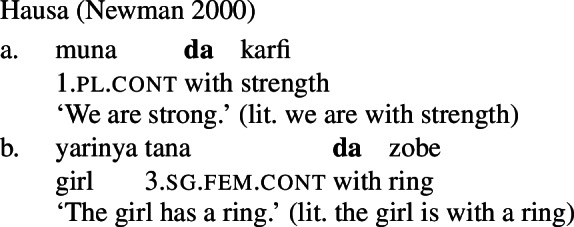 Figure 1
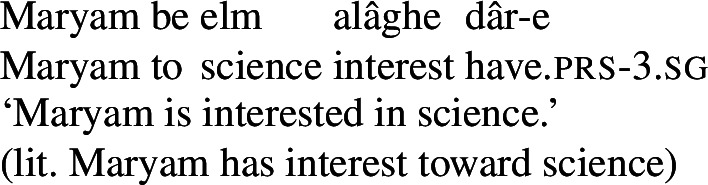 Figure 2
 Figure 3
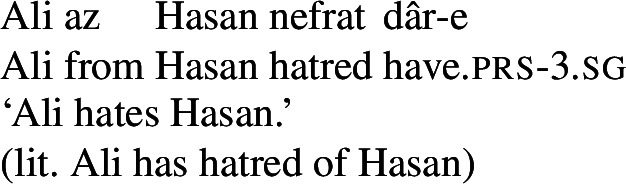 Figure 4
 Figure 5
 Figure 6
 Figure 7
 Figure 8
 Figure 9
 Figure 10
 Figure 11
 Figure 12
 Figure 13
 Figure 14
 Figure 15
 Figure 16
 Figure 17
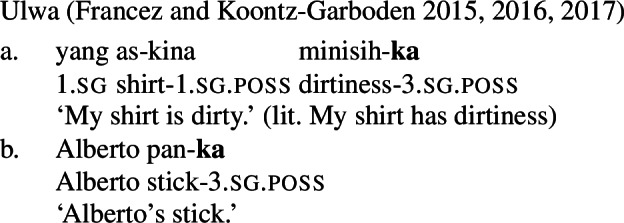 Figure 18
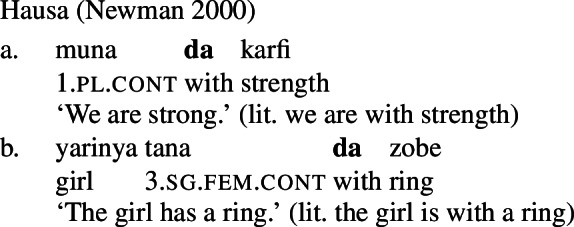 Figure 19
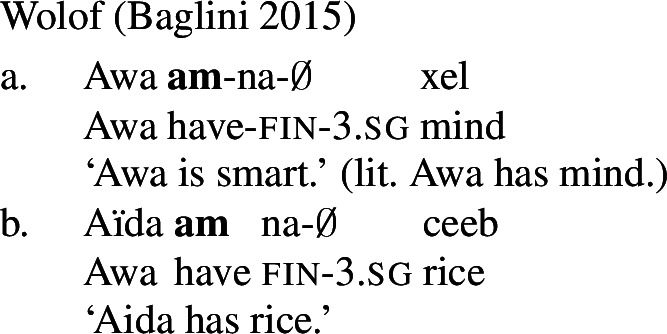 Figure 20
 Figure 21
 Figure 22
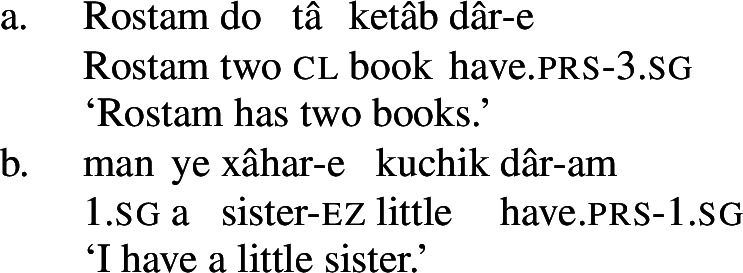 Figure 23
 Figure 24
 Figure 25
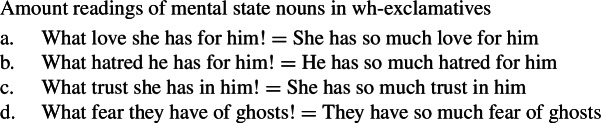 Figure 26
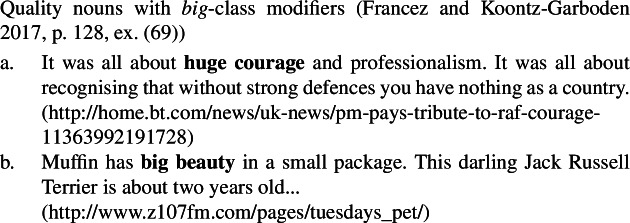 Figure 27
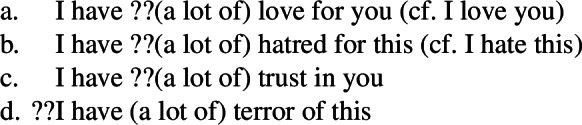 Figure 28
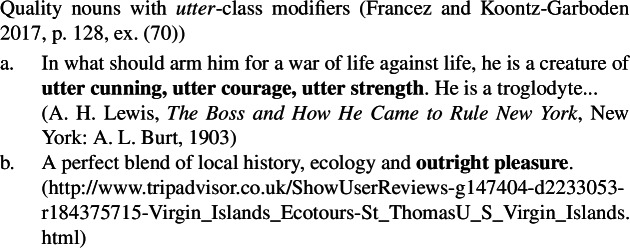 Figure 29
 Figure 30
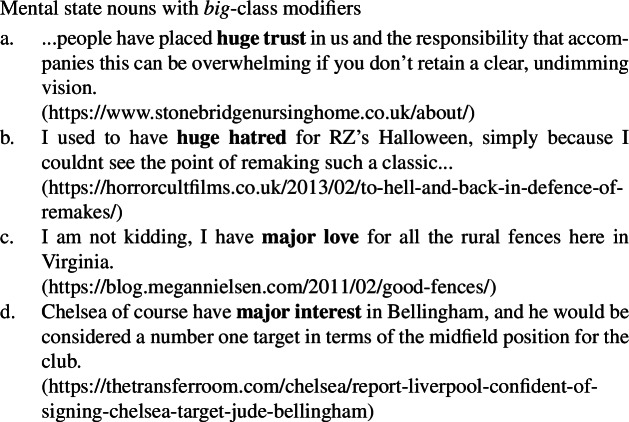 Figure 31
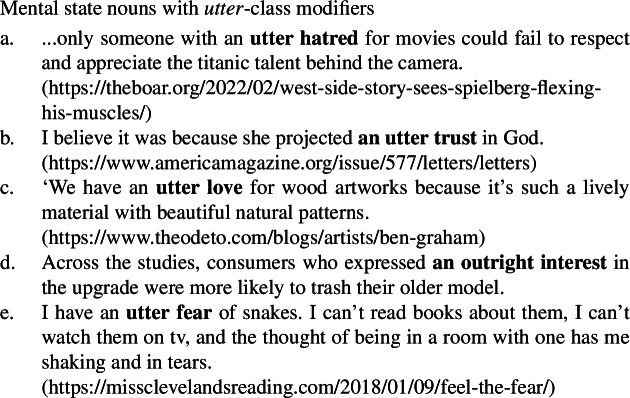 Figure 32
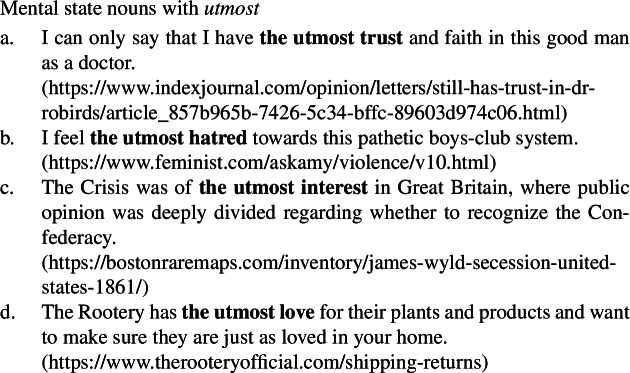 Figure 33
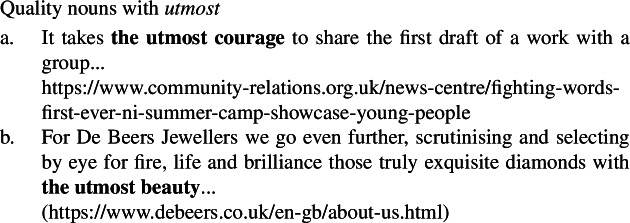 Figure 34
 Figure 35
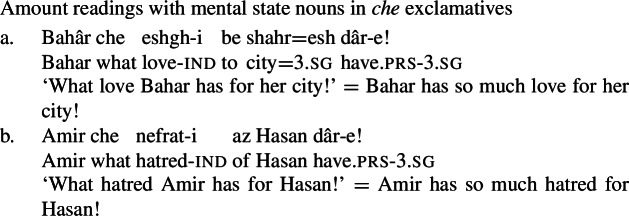 Figure 36
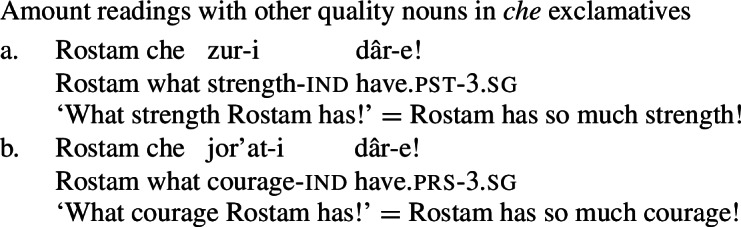 Figure 37
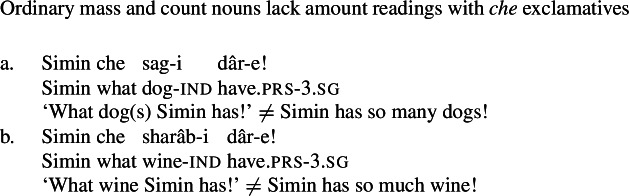 Figure 38
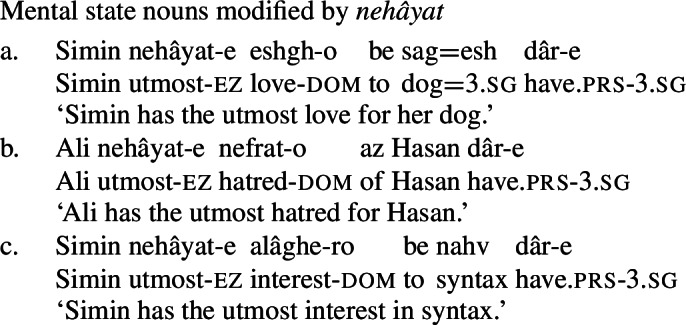 Figure 39
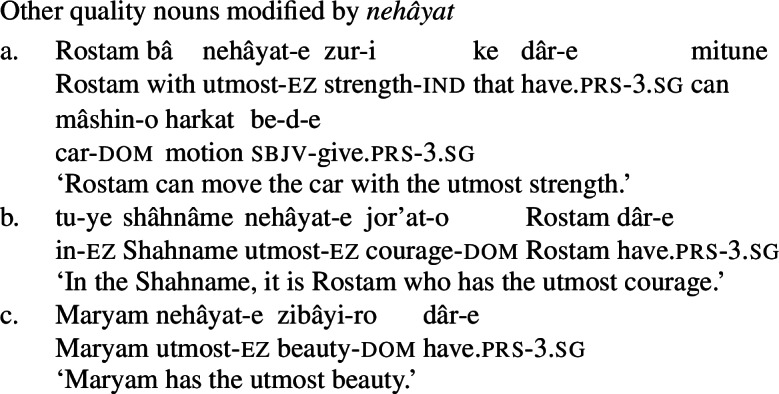 Figure 40
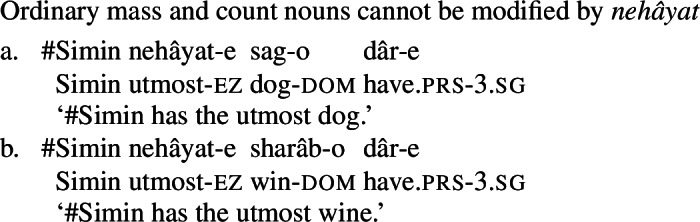 Figure 41
 Figure 42
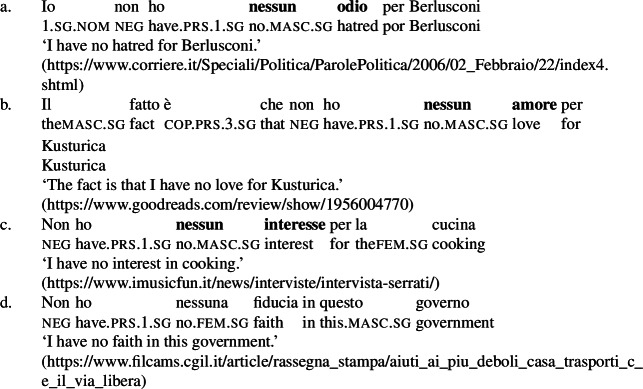 Figure 43
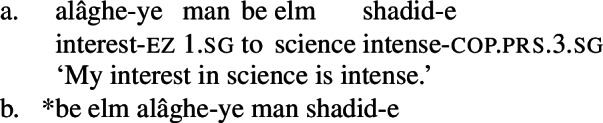 Figure 44
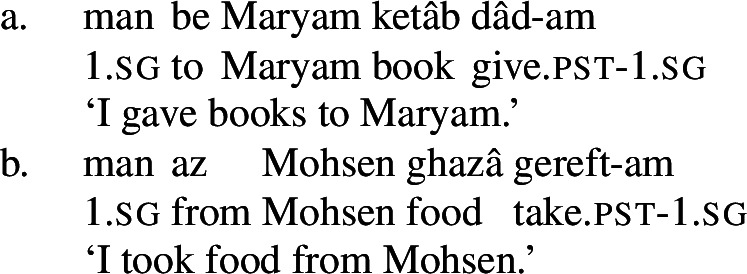 Figure 45
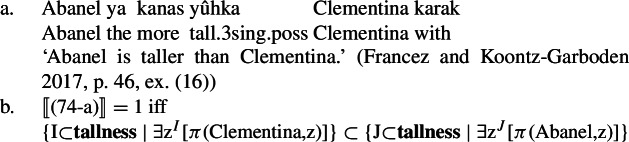 Figure 46
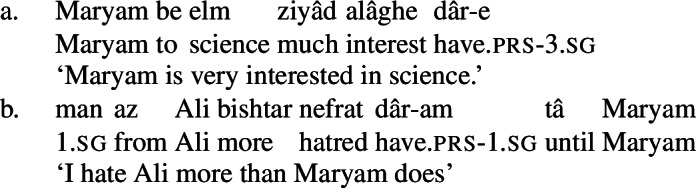 Figure 47
 Figure 48
 Figure 49
 Figure 50
Peer Reviews
No public reviews on file for this paper yet. If you reviewed it on a platform where reviews are public (OpenReview, ICLR, NeurIPS, ICML), you can paste yours below so the community can read it here.
Videos
No videos yet. Explain this paper in a talk, walkthrough, or lecture? Add one.
Taxonomy
TopicsSyntax, Semantics, Linguistic Variation · Linguistics and Discourse Analysis · Historical Linguistics and Language Studies