Bullous pemphigoid successfully treated with dupilumab
Daniela de Abreu e Silva Martinez, Amanda de Freitas Sampaio Periquito, Graciela Galva Roa, João Pedro Lupi, Curt Mafra Treu, Omar Lupi

Abstract
Genes, proteins, chemicals, diseases, species, mutations and cell lines named across the full text — each resolved to its canonical identifier and authoritative record.
Click any figure to enlarge with its caption.
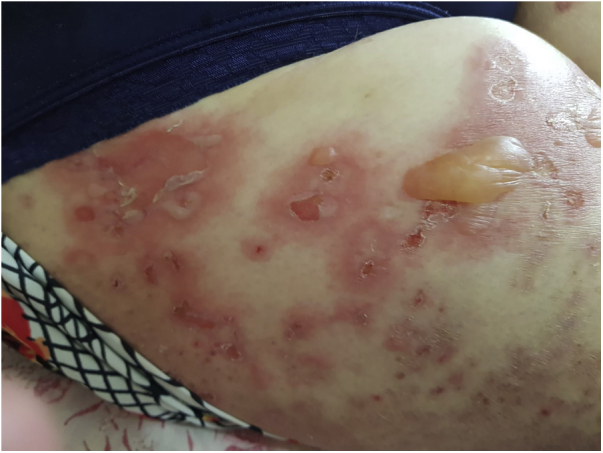 Figure 1
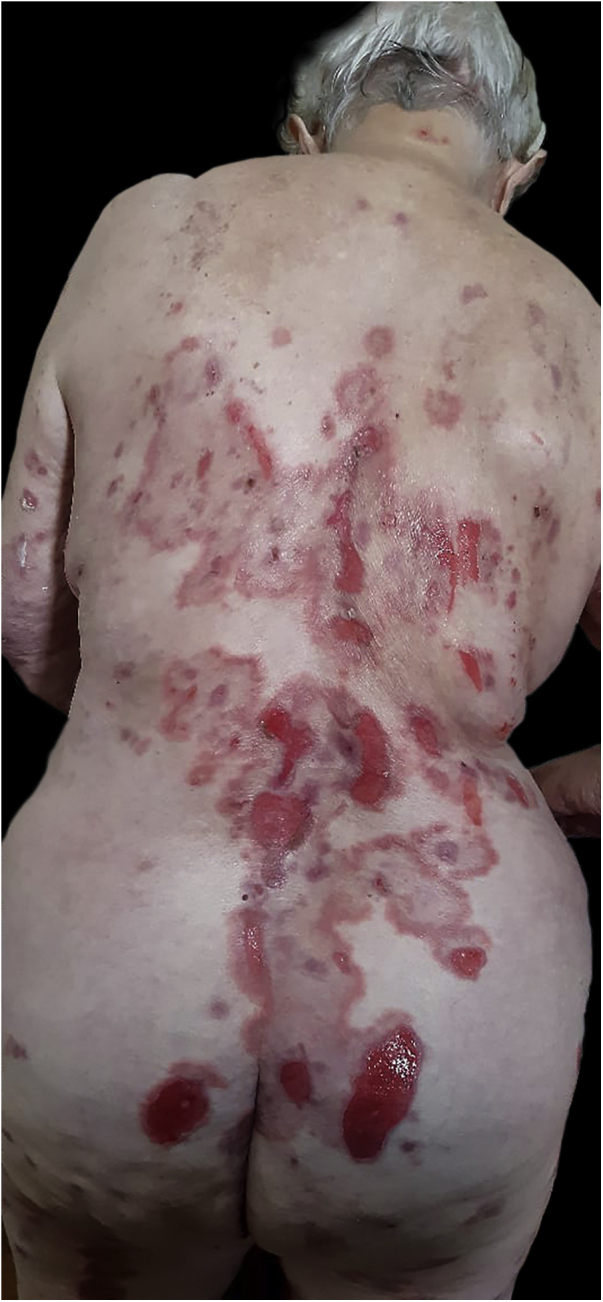 Figure 2
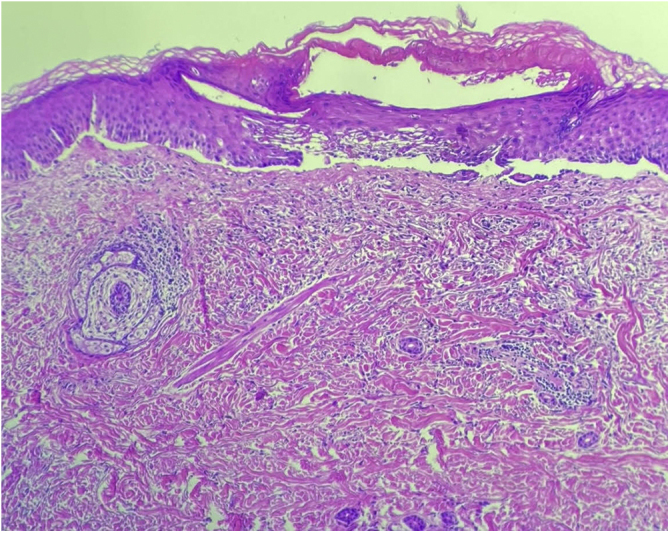 Figure 3
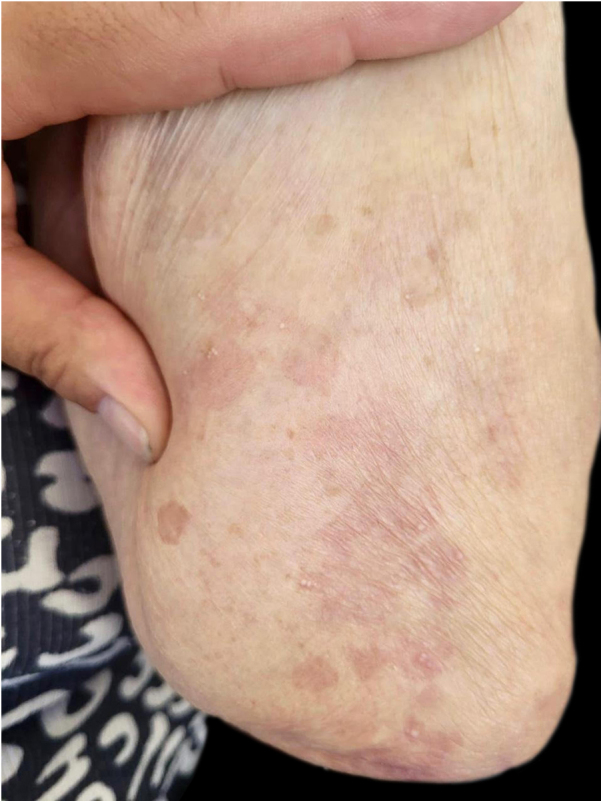 Figure 4
Peer Reviews
No public reviews on file for this paper yet. If you reviewed it on a platform where reviews are public (OpenReview, ICLR, NeurIPS, ICML), you can paste yours below so the community can read it here.
Videos
No videos yet. Explain this paper in a talk, walkthrough, or lecture? Add one.
Taxonomy
TopicsAutoimmune Bullous Skin Diseases · Coagulation, Bradykinin, Polyphosphates, and Angioedema · Urticaria and Related Conditions
Dear Editor,
Bullous pemphigoid (BP), a chronic autoimmune cutaneous blistering disorder affecting predominantly the elderly, is characterized by skin tense bullae formation and pruritus symptoms. At present, the main treatment options are represented by corticosteroids and immunosuppressant drugs. Steroids often need to be administered in high doses, with subsequent adverse events and safety issues.1, 2 Safer treatment modalities are therefore needed. Dupilumab is a biologic agent used to treat BP in recent years.2 Here, we describe an elderly patient with recalcitrant BP successfully treated with dupilumab.
An 89-year-old woman was admitted to our department with a 1-month history of severely itchy erythema, vesicles and blistering. On examination, there were urticarial plaques and vesicles on the trunk, and extremities. Isolated tense blisters could be observed on the abdomen and bilateral thighs (Fig. 1) with sparing of mucosal surfaces. While the lesions evolved into erosions (Fig. 2), the Nikolsky sign was negative. In addition, the patient had type 2 diabetes mellitus on metformin and hypothyroidism on levothyroxine for over 20 years, she denied taking any new medications. Laboratory investigations revealed mild eosinophilia; however, no other significant abnormalities were present. An extensive workup for underlying malignancy and rheumatologic diseases with imaging and laboratory test results proved unremarkable. Skin biopsy demonstrated subepidermal blister formation with eosinophilic infiltrate (Fig. 3). Direct immunofluorescence revealed subepidermal separation with continuous linear depositions of IgG and C3 along the basement membrane zone. The clinical picture in combination with the histologic and immunologic findings confirmed the diagnosis of BP. She was started on prednisone 80 mg, and after 2 flares during tapering of prednisone, the decision was made to proceed with azathioprine 200 mg, and tetracycline 500 mg. Although moderate doses of prednisone effectively reduced the severity of blistering lesions, her pruritus and diabetes were not sufficiently controlled. Attempts to very slowly taper her prednisone resulted in disease flares and severe pruritus itching over three years. Given the patient’s severe disease status and treatment limitations, her treatment was transitioned to a therapeutic trial of dupilumab, with an initial loading dose of 600 mg administered subcutaneously followed by weekly 300 mg subcutaneous injections. At the 6-month follow-up, there was a complete resolution of bullae and pruritus after treatment with dupilumab alone (Fig. 4).Figure 1. Isolated tight blisters can be seen on the right thigh.Figure 1. Figure 2Erosions on the trunk and buttocks.Figure 2. Figure 3Hematoxylin & eosin, 100x. Revealing subepidermal blister formation with eosinophilic infiltrate.Figure 3. Figure 4Lesions resolved with post-inflammatory hyperpigmantation.Figure 4
BP is an autoimmune disease that mainly occurs in the elderly, severely affecting their health and quality of life.3 Treatment often entails topical/systemic corticosteroids, antibiotics, azathioprine, dapsone, methotrexate, and mycophenolate mofetil.4, 5 These regimens carry significant adverse effects, and careful consideration is warranted in elderly patients.
Type 2 inflammation is an immune response that exerts an important role in host defense against parasites and is predominantly mediated by group 2 Innate Lymphoid Cells (ILC2s), type 2 T-helper (Th2) cells, eosinophils, and relevant cytokines, such as IL-4, IL-5, and IL-13. A large number of stimuli can trigger type 2 inflammation, including helminths, various allergies, certain viral or bacterial infections, and endogenous molecules. The process involves both innate and adaptive immune responses.1, 3 An increasing number of studies revealed that BP is a Th2-dominant disease with subsequent overexpression of Th2-type cytokines such as IL4, IL5, and IL13. IL4 is specifically associated with the recruitment of eosinophils which contribute to the incessant pruritis present with the disease.6
Dupilumab is a recently developed monoclonal antibody that blocks the signaling of IL-4 and IL-13, both of which are crucial cytokines in the T2 response.7, 8, 9 For this reason, the hypothesis is that the reduction in disease activity obtained in the cases reported so far may be related to the reduction in Th2-type responses induced by the inhibition of IL-4 and IL-13 signal transduction induced by dupilumab.1 The European Academy of Dermatology and Venereology already considers dupilumab as an optional treatment for refractory BP.10
Treatment of BP can be challenging, especially in refractory cases. However, the role and efficacy of Dupilumab in the treatment of BP is not completely clear yet; Certainly, Dupilumab should not be considered the first-choice treatment, but as a rescue therapy for selected patients with recalcitrant BP. While the present case highlights the use of dupilumab as a novel therapy in the treatment of BP, additional studies are needed. The mild side effect profile of dupilumab would make it an ideal option for treating the elderly and patients with comorbidities.
Financial support
None declared.
Authors’ contributions
Daniela de Abreu e Silva Martinez: Preparation and writing of the manuscript; intellectual participation in propaedeutic and/or therapeutic management of studied cases; approval of the final version of the manuscript; critical literature review.
Amanda de Freitas Sampaio Periquito: Preparation and writing of the manuscript; approval of the final version of the manuscript.
Graciela Galva Roa: Preparation and writing of the manuscript; approval of the final version of the manuscript.
João Pedro Lupi: Preparation and writing of the manuscript; approval of the final version of the manuscript.
Curt Mafra Treu: Preparation and writing of the manuscript; intellectual participation in propaedeutic and/or therapeutic management of studied cases; approval of the final version of the manuscript.
Omar Lupi: Preparation and writing of the manuscript; intellectual participation in propaedeutic and/or therapeutic management of studied cases; approval of the final version of the manuscript.
Conflicts of interest
None declared.
The reference list from the paper itself. Each links out to its DOI / PubMed record.
- 1Russo R.Capurro N.Cozzani E.Parodi A.Use of dupilumab in bullous pemphigoid: where are we now?J Clin Med 11202233673574343810.3390/jcm 11123367 PMC 9224939 · doi ↗ · pubmed ↗
- 2Zhang Y.Xu Q.Chen L.Chen J.Zhang J.Zou Y.Gong T.Ji C.Efficacy and safety of dupilumab in moderate-to-severe bullous pemphigoid Front Immunol 12202173890710.3389/fimmu.2021.738907 PMC 855203834721404 · doi ↗ · pubmed ↗
- 3Zhang L.Chen Z.Wang L.Luo X.Bullous pemphigoid: the role of type 2 inflammation in its pathogenesis and the prospect of targeted therapy Front Immunol 142023111508310.3389/fimmu.2023.1115083 PMC 997879536875098 · doi ↗ · pubmed ↗
- 4Zhou A.E.Shao K.Ferenczi K.Adalsteinsson J.A.Recalcitrant bullous pemphigoid responsive to dupilumab in an adolescent patient JAAD Case Rep 2920221491513627587310.1016/j.jdcr.2022.09.017PMC 9579443 · doi ↗ · pubmed ↗
- 5Santi C.G.Gripp A.C.Roselino A.M.Mello D.S.Gordilho J.O.Marsillac P.F.Consensus on the treatment of autoimmune bullous dermatoses: bullous pemphigoid, mucous membrane pemphigoid and epidermolysis bullosa acquisita - Brazilian Society of Dermatology An Bras Dermatol 94201933473116640510.1590/abd 1806-4841.2019940207 PMC 6544032 · doi ↗ · pubmed ↗
- 6Saleh M.Reedy M.Torok H.Weaver J.Successful treatment of bullous pemphigoid with dupilumab: a case and brief review of the literature Dermatol Online J 27202113030/qt 0dv 3f 9h 633999579 · pubmed ↗
- 7Liang J.Abulikemu K.Maolidan Hu F.Zhao J.Qiu Y.Nine cases of refractory bullous pemphigoid treated with dupilumab and literature review Int Immunopharmacol 116202310978810.1016/j.intimp.2023.10978836731156 · doi ↗ · pubmed ↗
- 8Zhang X.Man X.Tang Z.Dai R.Shen Y.Dupilumab as a novel therapy for bullous pemphigoid Int J Dermatol 622023 e 263e 2663644069110.1111/ijd.16525 · doi ↗ · pubmed ↗