Knowledge and Perceptions of Self-Medication Among Bachelor of Medicine and Bachelor of Surgery (MBBS) Students: A Cross-Sectional, Questionnaire-Based Study
Abhijay Mehta, Ravinder K Gupta, Anirudh Mahajan, Anisha Kapoor, Damanpreet Singh

TL;DR
This study explores how common self-medication is among medical students and their understanding of it.
Contribution
The study provides insights into self-medication practices and perceptions among MBBS students in a specific Indian medical college.
Findings
65% of MBBS students practiced self-medication, primarily for minor illnesses.
Headache, cold/cough, and fever were the most common reasons for self-medication.
Antipyretics and analgesics were the most frequently used drugs for self-medication.
Abstract
Introduction: Self-medication (SM) is a common practice worldwide, and the irrational use of drugs is a cause of concern. Self-medication has various forms, including taking medications without a physician’s prescription, using a previous prescription for a similar condition, or using drugs obtainable at home without getting a physician’s advice. The youth are highly influenced by the media and the internet, which promote SM behavior. Aims and objectives: To determine the knowledge and perceptions of SM in Bachelor of Medicine and Bachelor of Surgery (MBBS) students in all professional years, including interns in Acharya Shri Chander College of Medical Sciences (ASCOMS) and Hospital, Jammu. Material and methods: The present study was conducted at ASCOMS Hospital, Jammu. A total of 200 students of MBBS were included in the study. A self-structured questionnaire was used to assess the…
Genes, proteins, chemicals, diseases, species, mutations and cell lines named across the full text — each resolved to its canonical identifier and authoritative record.
Click any figure to enlarge with its caption.
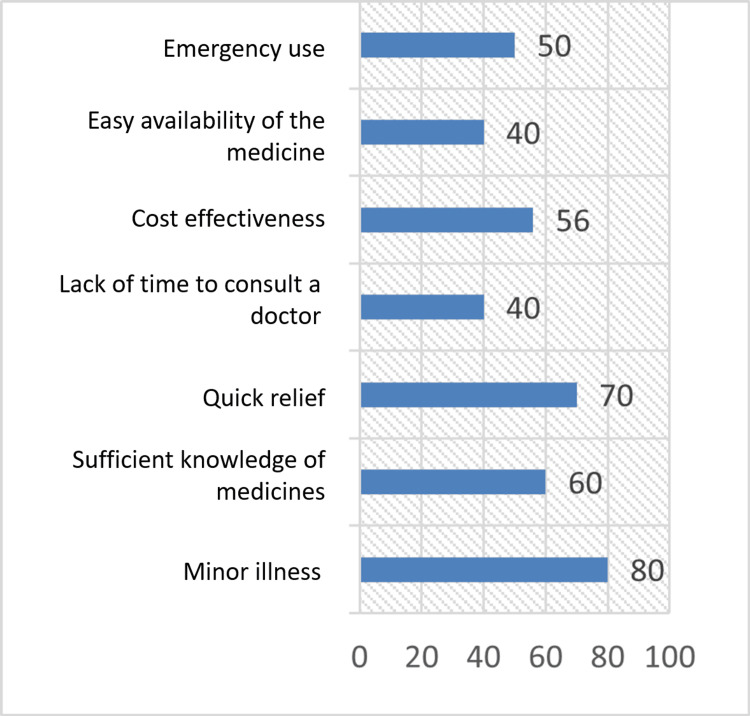 Figure 1
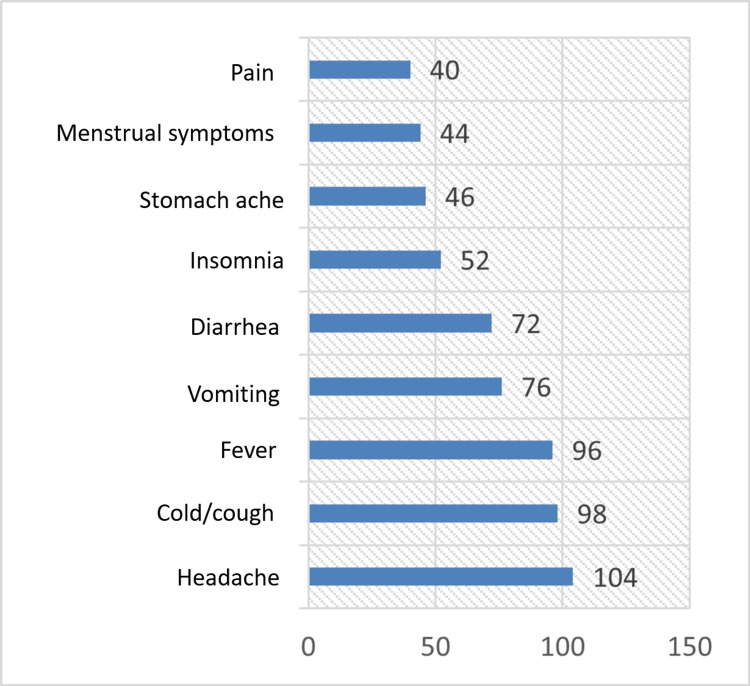 Figure 2
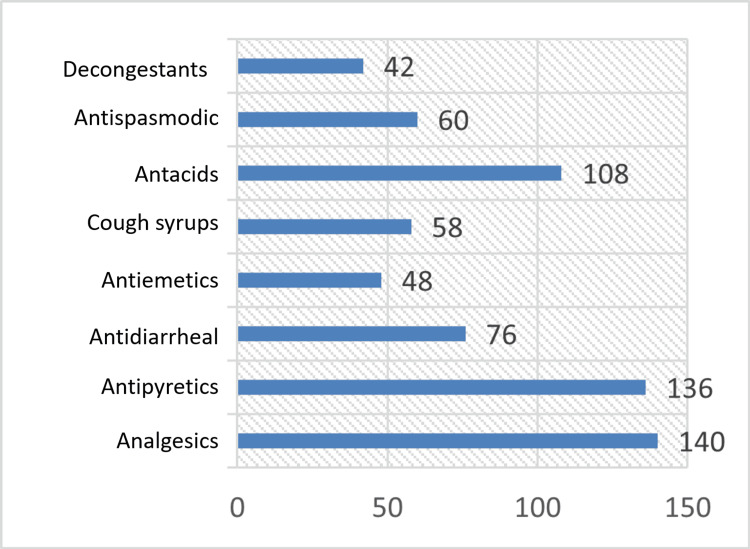 Figure 3
| Demographic variable | Group | Frequency (n) | Percentage (%) |
| Gender | Male | 120 | 60% |
| Female | 80 | 40% | |
| Age | 18-20 | 20 | 10% |
| 21-23 | 120 | 60% | |
| 24-27 | 60 | 30% | |
| Area of living | Urban | 160 | 80% |
| Rural | 40 | 20% | |
| Medical history/ illness | Yes | 30 | 15% |
| No | 170 | 85% |
| Demographic variable | Response | Frequency (n) | Percentage (%) |
| Practice of self-medication (SM) | Yes | 130 | 65% |
| No | 70 | 35% | |
| Gender-wise distribution | Females | 83 | 64% |
| Males | 47 | 36% | |
| Year-wise distribution | First-year | Total: 45 (SM practice: 21) | Total: 22.5% (SM:16.1%) |
| Second year | Total: 43 (SM practice:20) | Total: 21.5% (SM:15.3%) | |
| Pre-final year | Total: 30 (SM practice:18) | Total: 15% (SM:13.8%) | |
| Final year | Total: 40 (SM practice:34) | Total: 25% (SM:26.1%) | |
| Intern | Total: 42 (SM practice:37) | Total: 21% (SM:28.4%) |
| Reason | Frequency (n) | Percentage (%) |
| Minor illness | 80 | 40% |
| Sufficient knowledge of medicines | 60 | 30% |
| Quick relief | 70 | 35% |
| Lack of time to consult a doctor | 40 | 20% |
| Cost-effectiveness | 56 | 28% |
| Easy availability of medicine | 40 | 20% |
| Emergency use | 50 | 25% |
| Awareness | Response | Frequency | Number (%) |
| Aware of dose and frequency | Yes | 152 | 76% |
| No | 48 | 24% | |
| Awareness of adverse drug reactions | Yes | 144 | 72% |
| No | 56 | 28% | |
| Expiration date check | Yes | 184 | 92% |
| No | 16 | 8% |
| Indication | Number (N) | Percentage (%) |
| Headache | 104 | 52% |
| Cough/ cold | 98 | 49% |
| fever | 96 | 48% |
| Vomiting | 76 | 38% |
| Diarrhea | 72 | 36% |
| Insomnia | 52 | 26% |
| Stomach ache | 46 | 23% |
| Menstrual symptoms | 44 | 22% |
| Pain | 40 | 20% |
| Drugs | Number (N) | Percentage (%) |
| Analgesics | 140 | 70% |
| Antipyretics | 136 | 68% |
| Antidiarrheal | 76 | 38% |
| Antiemetics | 48 | 24% |
| Cough syrups | 58 | 29% |
| Antacids | 108 | 54% |
| Antispasmodic | 60 | 30% |
| Decongestant | 42 | 21% |
Peer Reviews
No public reviews on file for this paper yet. If you reviewed it on a platform where reviews are public (OpenReview, ICLR, NeurIPS, ICML), you can paste yours below so the community can read it here.
Videos
No videos yet. Explain this paper in a talk, walkthrough, or lecture? Add one.
Taxonomy
TopicsAntibiotic Use and Resistance · Diverse Scientific Research Studies · Pharmaceutical Practices and Patient Outcomes
Introduction
Around the world, self-medication (SM) is widespread, and excessive drug use is concerning. "Use of over-the-counter medication (OTC) to treat self-diagnosed symptoms or disorders, or for the continuation and reuse of prescribed medications for recurrent diseases" is how the World Health Organization (WHO) defines SM [1].
Self-medication has various forms, including taking medications without a physician’s prescription, using a previous prescription for a similar condition, or using drugs obtainable at home without getting a physician’s advice.
Self-medication may occur for a variety of reasons, including insufficient time to see a doctor, incompetence to make an urgent appointment, relative remoteness from surrounding hospitals and clinics, a lack of slots for prompt treatment from a government hospital during busy hours, and exorbitant consultation fees. [2].
Self-medication has the potential to be a severe problem that can result in a few issues, including adverse drug reactions, an increase in antibiotic resistance, and a waste of resources [3].
Additional potential hazards linked to SM encompass misdiagnosing oneself, concealing a serious underlying illness, and neglecting to swiftly seek medical assistance afterward. More serious hazards include the possibility of drug dependence or misuse, errors in dosage, storage, administration technique, and medication selection, as well as the inability to identify contraindications and possible combinations with food or other medications.
The youth are highly influenced by the media and the internet, which promote SM behavior [4]. The increased advertising of pharmaceuticals poses a larger threat of SM to the younger population in general. This raises concerns about incorrect self-diagnosis, drug interaction, and use of drugs other than for the original indication [5].
Given the above, the present study was conducted to assess the knowledge and perception regarding SM among the Bachelor of Medicine and Bachelor of Surgery (MBBS) students of Acharya Shri Chander College of Medical Sciences (ASCOMS) and Hospital, Jammu, India.
This study aimed to determine the knowledge and perceptions regarding SM among MBBS students in all professional years, including interns in ASCOMS Hospital, Jammu.
Materials and methods
The current cross-sectional study was conducted to investigate the knowledge and perception of self-medication among MBBS students (including interns) at ASCCMS Hospital, Jammu, India. The study was conducted over five months from 24 October 2023 to 10 April 2024 after obtaining permission from the institutional ethical committee (approval number: ASCOMS/IEC/2023Meeting2/FM/10). A total of 200 MBBS students were enrolled in the study after obtaining informed consent.
The following subjects were included in the study: MBBS students, both male and female, who were in the 18-25 age group and were willing to participate.
All the students were briefed about the nature of the study. A self-structured questionnaire was prepared after thorough literature reviews and was used to collect the data (Appendix A). The questions were designed keeping in view the objectives of the study and were made in such a way that they could be easily understandable to the participants. The data regarding variables like age, gender, educational status, semester, etc. were collected in a predesigned pro forma. The collected data was recorded in a Microsoft Excel sheet (Microsoft Corp., Redmond, WA) and analyzed with the help of IBM SPSS Statistics software for Windows, version 21.0 (IBM Corp., Armonk, NY).
Results
A total of 200 students participated in the study, and their SM practice was analyzed. In the study, it was observed that there were 120 (60%) males and 80 (40%) females. The maximum subjects were in the age group of 21-23 years (120 students, 60%). The mean age was 21.4 ± 2.2 years. (mean ± SD) Out of the total subjects, 160 (80%) lived in urban areas and 40 (20%) lived in rural areas. Further, 170 (85%) students did not report any medical illness or medical history (Table 1).
Table 2 depicts that 130 (65%) students practiced SM for different ailments, whereas 70 (35%) students didn't. Eighty-three (64%) females were practicing SM, whereas only 47 males (36%) practiced the same in our study. Year-wise SM practices are also included, which showed that final-year students and interns practiced it the most.
The main reasons for choosing to self-medicate were minor illness (80 students, 40%), followed by quick relief (70 students, 35%), sufficient knowledge of medicines (60 students, 30%), cost-effectiveness (56 students, 28%), emergency use (50 students, 25%), and lack of time to consult a doctor, and easy availability of medicines (40 students each, 20%) (Table 3, Figure 1).
Reasons for self-medication The data have been represented as frequency (N).
Table 4 depicts the awareness of self-medication among the study participants. It was found that 152 (76%) students were aware of dose and frequency, 144 (72%) students were aware of adverse drug reactions, and 184 (92%) students checked the expiration date before using the medicines.
Table 5 and Figure 2 depict the indications for self-medication. It was observed that common indications for self-medicating included headache (104 students, 52%), cough/ cold (98 students, 49%), fever (96 students, 48%), vomiting (76 students, 38%), diarrhea (72 students, 36%), insomnia (52 students, 26%), stomach ache (46 students, 23%), menstrual symptoms (44 students, 22%), and pain (40 students, 20%).
Common indications for self-medication The data have been represented as frequency (N).
Table 6 and Figure 3 depict the various types of medicines that were used without prescription, which included analgesics (140 students, 70%), antipyretics (136 students, 68%), antacids (108 students, 54%), antidiarrheal (76 students, 38%), antispasmodics (60 students, 30%), cough syrups (58 students, 29%), antiemetics (48 students, 24%), and decongestants (42 students, 21%).
Commonly used drugs for self-medicationThe data have been represented as frequency (N).
Discussion
The least developed nations have seen the highest rates of irrational medication usage, particularly among young people and college students. Consequently, one important way to assess how students will behave when it comes to future prescription patterns for medications is to look into their perceptions of SM behaviors.
A total of 200 students participated in the study, and their SM practice was analyzed. In the study, it was observed that there were 120 (60%) males and 80 (40%) females. The maximum subjects were in the age group of 21-23 years, i.e., 120 (60%). The mean age was 21.4 ± 2.2 years. These observations are in accordance with the findings in a similar study conducted by Sankdia et al., where female students were more interested in taking SM compared to male students [6]. This may be because female students are more hesitant to go to the hospital or outpatient departments (OPDs) for minor illnesses. In another study conducted by Patil et al., there were more male students who practiced SM as compared to female students [7].
In our study, 130 (65%) students practiced SM for different ailments, whereas 70 (35%) students didn’t practice SM. The results are in accordance with the study conducted by Kumar et al. and Aljaouni et al., wherein the prevalence of SM among students was 78% and 64.8%, respectively [8,9].
It was found in our study that the main reasons for choosing to self-medicate were minor illness (80 students, 40%), followed by quick relief (70 students, 35%), sufficient knowledge of medicines (60 students, 30%), cost-effectiveness (56 students, 28%), emergency use (50 students, 25%), lack of time to consult a doctor, and easy availability of medicines (40 students each, 20%). Further, it was found that 152 (76%) students were aware of dose and frequency, 144 (72%) students were aware of adverse drug reactions, and 184 (92%) students checked the expiration date before using the medicines. Similar observations were reported in the studies conducted by Banerjee et al. and Badiger et al. [10,11]. In a study conducted by Kayalvizhi et al., most students practiced SM as it was time-saving, whereas, in a similar study conducted by Gupta et al., the most common reason for SM was for quick relief [12,13].
It was observed in our study that the common indications for self-medicating included headache (104 students, 52%), cough/cold (98 students, 49%), fever (96 students, 48%), vomiting (76 students, 38%), diarrhea (72 students, 36%), insomnia (52 students, 26%), stomach ache (46 students, 23%), menstrual symptoms (44 students, 22%), and pain (40 students, 20%). Melatonin in the form of gummies was the most commonly used drug for insomnia. The results of the studies conducted by Kayalvizhi et al. and Banerjee et al. showed that fever, headache, cough, and cold were the most common ailments for self-medication [10,12].
It was observed in our study that the various types of medicines that were used without prescription were analgesics (140 students, 70%), antipyretics (136 students, 68%), antacids (108 students, 54%), antidiarrheal (76 students, 38%), antispasmodics (60 students, 30%), cough syrups (58 students, 29%), antiemetics (48 students, 24%), and decongestants (42 students, 21%). Similar results were observed in the studies conducted by Badiger et al., Abay et al., and Zafar et al. [11,14,15]
A limitation of our study arose from the circumstance where each of the four professional years of MBBS in our institute consists of approximately 100 students each, and due to factors such as absenteeism, incomplete form submissions, or students declining to participate in the study for varied reasons, our sample size for the research was smaller than initially anticipated.
Conclusions
The present study found a high prevalence of SM practice among medical students, especially among females. However, the knowledge and perception regarding SM were not insufficient. Self-medication may lead to medication misuse; therefore, it is recommended that better awareness be adopted among medical students about the necessity of consulting a physician before taking any medicine. Pharmacists should be made more aware of the situation and what effects it could have on the health of our society in general.
The reference list from the paper itself. Each links out to its DOI / PubMed record.
- 1World Health Organization. Guidelines for the regulatory assessment of medicinal products for use in self-medication Guidelines for the Regulatory Assessment of Medicinal Products for Use in Self-Medication World Health Organization 1Geneva, Switzerland World Health Organization 02000 https://iris.who.int/handle/10665/66154
- 2Use of self-medication among adolescents: a systematic review and meta-analysis Eur J Public Health Gualano MR Bert F Passi S Stillo M Galis V Manzoli L Siliquini R 4444502520152547975810.1093/eurpub/cku 207 · doi ↗ · pubmed ↗
- 3Prevalence, pattern and perceptions of self-medication in medical students Int J Basic Clin Pharmacol Pandya RN Jhaveri KS Vyas FI Patel VJ 27528022017
- 4A cross sectional study of sex differences in self-medication practices among university students in Slovenia Coll Antropol Klemenc-Ketis Z Hladnik Z Kersnik J 329334352011 https://pubmed.ncbi.nlm.nih.gov/21755698/21755698 · pubmed ↗
- 5College students' use of widely advertised medications J Am Coll Health Burak LJ Damico A 1181214920001112563910.1080/07448480009596293 · doi ↗ · pubmed ↗
- 6A questionnaire based study regarding the knowledge, attitude and practice of self-medication among second year undergraduate medical students Int J Pharmacol Clin Sci Sankdia RK Agrawal M Rekha PB Kothari N 1562017
- 7Self-medication practice and perceptions among undergraduate medical students: a cross-sectional study J Clin Diagn Res Patil SB S HV B VP Santoshkumar J Binjawadgi AS Kanaki AR 038201410.7860/JCDR/2014/10579.5313 PMC 431627525653969 · doi ↗ · pubmed ↗
- 8Perceptions and practices of self-medication among medical students in coastal South India P Lo S One Kumar N Kanchan T Unnikrishnan B 08201310.1371/journal.pone.0072247 PMC 375605824015223 · doi ↗ · pubmed ↗