Learning the hierarchical organization of the frontal lobe with differential causal effects
Kurt Butler, Duncan Cleveland, Charles B. Mikell, Sima Mofakham, Yuri B. Saalmann, Petar M. Djurić

TL;DR
This paper introduces a new method to study brain connectivity, revealing that the medial prefrontal cortex influences the lateral prefrontal cortex.
Contribution
A novel metric called double-averaged differential causal effect is proposed to measure causal strength in brain signals.
Findings
The medial prefrontal cortex causally influences the lateral prefrontal cortex.
A new causal effect metric was developed and applied to brain signal data.
The method uses Gaussian processes and causal strengths to analyze neural circuits.
Abstract
In this video article, accompanying the paper “An approach to learning the hierarchical organization of the frontal lobe”, we discuss a data driven approach to learning brain connectivity. Hierarchical models of brain connectivity are useful to understand how the brain can process sensory information, make decisions, and perform other high-level tasks. Despite extensive research, understanding the structure of the prefrontal cortex (PFC) remains a crucial challenge. In this work, we propose an approach to studying brain signals and uncovering characteristics of the underlying neural circuity, based on the mathematics of Gaussian processes and causal strengths. For discovering causations, we propose a metric referred to as double-averaged differential causal effect, which is a variant of the recently proposed differential causal effect, and it can be used as a principled measure of the…
Click any figure to enlarge with its caption.
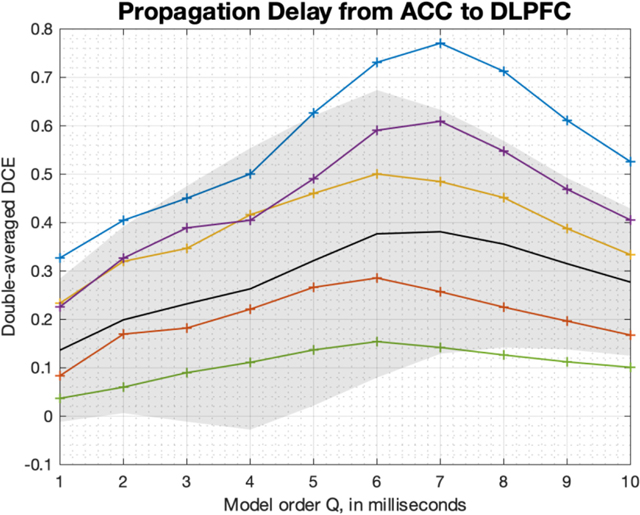 Figure 1
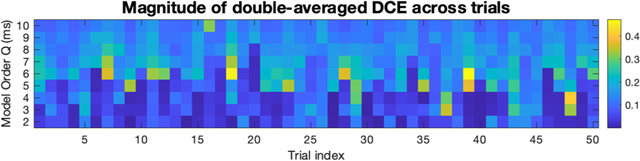 Figure 2
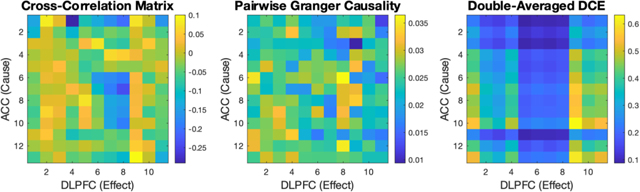 Figure 3
Peer Reviews
No public reviews on file for this paper yet. If you reviewed it on a platform where reviews are public (OpenReview, ICLR, NeurIPS, ICML), you can paste yours below so the community can read it here.
Videos
No videos yet. Explain this paper in a talk, walkthrough, or lecture? Add one.
Taxonomy
TopicsFunctional Brain Connectivity Studies · Neural dynamics and brain function · Visual perception and processing mechanisms
Double-averaged Differential Causal Effect (DCE) vs. the model order parameter Q. In black, we show the average across all pairs of channels and trials, with one standard deviation in the shaded region. In each pair, one channel is from the anterior cingulate cortex (ACC) and the other from dorsolateral prefrontal cortex (DLPFC). The colored curves correspond to the results for fixed pairs of channels, but we still average over trials to produce each curve. The strongest influence appears when the model order (interpreted as a window length) is around 6 to 8 ms.
Heatmap illustrating how the double-averaged Differential Causal Effect (DCE) varies from trial to trial, for a fixed pair of channels (one from anterior cingulate cortex (ACC) and one from dorsolateral prefrontal cortex (DLPFC)). For clarity, we only show 50 trials here. There is noticeable variability from trial to trial. However, mostly all trials show the behavior that the causal strength is small for small Q, and the measured causal strength of the ACC on the DLPFC increases significantly when Q passes some trial-dependent threshold.
Comparison of the cross-correlation, pairwise Granger causality [1], and the double-averaged Differential Causal Effect (DCE) across pairs of channels from the anterior cingulate cortex (ACC) and dorsolateral prefrontal cortex (DLPFC), respectively. The cross-correlation and Granger causality analyses are suggestive of a relationship between ACC and DLPFC, but the resulting plots do not show recognizable spatial structure across channels. The double-averaged DCE detected causal strength which was more spatially organized than the two linear measures. In all three plots, the matrices were computed using 212 trials of the hierarchical rule task, where each channel recorded 1000 samples of data per trial.
The reference list from the paper itself. Each links out to its DOI / PubMed record.
- 1Bressler SL, Seth AK, Wiener–Granger causality: a well established methodology, Neuroimage 58 (2) (2011) 323–329.20202481 10.1016/j.neuroimage.2010.02.059 · doi ↗ · pubmed ↗
- 2Botvinick MM, Hierarchical models of behavior and prefrontal function, Trends Cogn. Sci 12 (5) (2008) 201–208.18420448 10.1016/j.tics.2008.02.009PMC 2957875 · doi ↗ · pubmed ↗
- 3Butler K, Feng G, Djuric PM, A differential measure of the strength of causation, IEEE Signal Process. Lett 29 (2022) 2208–2212.
- 4Domenech P, Koechlin E, Executive control and decision-making in the prefrontal cortex, Curr. Opin. Behav. Sci 1 (2015) 101–106.
- 5Koechlin E, Ody C, Kouneiher F, The architecture of cognitive control in the human prefrontal cortex, Science 302 (5648) (2003) 1181–1185.14615530 10.1126/science.1088545 · doi ↗ · pubmed ↗
- 6Rasmussen CE, Williams CK, Gaussian Processes for Machine Learning, MIT Press, 2006.
- 7Shenhav A, Botvinick MM, Cohen JD, The expected value of control: an integrative theory of anterior cingulate cortex function, Neuron 79 (2) (2013) 217–240.23889930 10.1016/j.neuron.2013.07.007PMC 3767969 · doi ↗ · pubmed ↗
- 8Solak E, Murray-Smith R, Leithead W, Leith D, Rasmussen C, Derivative observations in Gaussian process models of dynamic systems, Adv. Neural Inf. Proces. Syst 15 (2002).