Mosquito prevalence, resting habitat preference, and Plasmodium infection status of anophelines in coastal Karnataka during the declining phase of malaria—an exploratory study
Gowthami Arumugam, Kavitha Saravu, Prashanth Kotthapalli, Vishnu Teja Nallapati, Prashanth Bhat, Muktha Achari, Naveenchandra Kulal, Shriram Ananganallur Nagarajan, Hoti S. L., Ashwani Kumar

TL;DR
This study explores mosquito habitats and malaria transmission potential in coastal Karnataka, where malaria cases are declining.
Contribution
The study identifies anopheline mosquito preferences and confirms low Plasmodium infection rates in the region.
Findings
Culex quinquefasciatus was the most prevalent mosquito species collected.
Anopheles stephensi and An. subpictus were identified as potential malaria vectors but at low densities.
No Plasmodium infection was detected in 96 tested female anophelines.
Abstract
Malaria has a historical presence in the Dakshina Kannada (D.K.) and Udupi districts of Karnataka, India. To understand the potential involvement of anopheline fauna in malaria transmission, we conducted an exploratory entomological survey. The study is crucial given the decreasing malaria incidence in these districts in recent years. From September 2022 to August 2023, we collected indoor resting mosquitoes using a manual aspirator at 27 randomly chosen sites within three distinct resting habitats (human dwellings, cattle sheds, and construction sites) in the urban areas of Udupi and Dakshina Kannada districts. Mosquitoes were morphologically identified, and anopheline specimens were tested for the presence of malarial parasite by polymerase chain reaction (PCR) analysis. We collected a total of 1810 mosquitoes, comprising 21 species distributed across five genera. Culex emerged as the…
Genes, proteins, chemicals, diseases, species, mutations and cell lines named across the full text — each resolved to its canonical identifier and authoritative record.
Click any figure to enlarge with its caption.
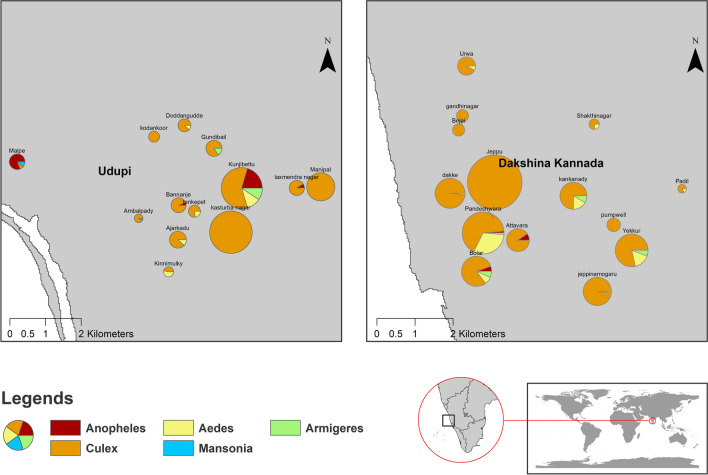 Figure 1
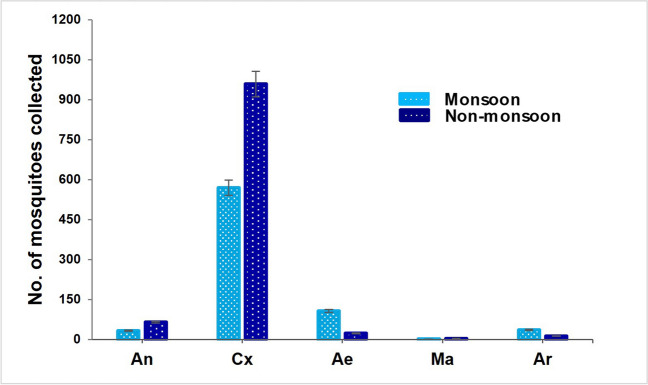 Figure 2
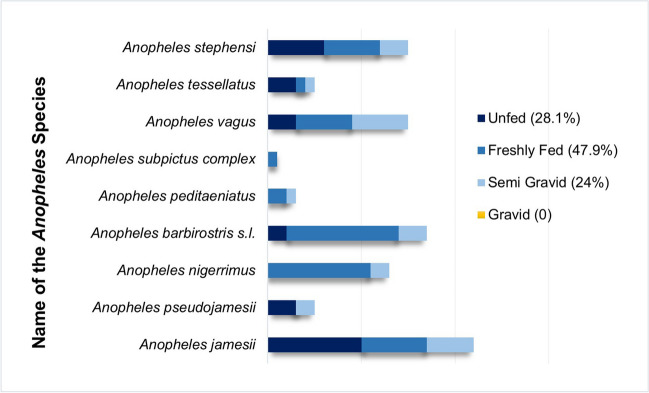 Figure 3
- —Manipal Academy of Higher Education, Manipal
Peer Reviews
No public reviews on file for this paper yet. If you reviewed it on a platform where reviews are public (OpenReview, ICLR, NeurIPS, ICML), you can paste yours below so the community can read it here.
Videos
No videos yet. Explain this paper in a talk, walkthrough, or lecture? Add one.
Taxonomy
TopicsMalaria Research and Control · Mosquito-borne diseases and control · Vector-borne infectious diseases
Introduction
Malaria, a parasitic disease transmitted by Plasmodium-infected female Anopheline mosquitoes, poses a significant global health challenge. In 2022, the world witnessed an alarming 249 million reported cases of malaria, resulting in 608,000 deaths (World Health Organization 2023). Within the Southeast Asia region, 5.2 million cases were documented, with India alone contributing 65.7% of these cases in the same year (World Health Organization 2023). Despite India’s substantial malaria burden, there has been a noteworthy decline in malaria cases over the past 15 years (NCVBDC 2023). Specifically, in Karnataka, a south Indian state, a remarkable reduction in malaria morbidity from 109,118 in 2001 to a mere 974 cases in 2021 was seen (Chalageri et al. 2023; Krishna and Haradanhalli 2017). Within Karnataka, Dakshina Kannada (D.K.) and Udupi districts contribute significantly to the major burden of malaria, with the cases primarily located in urban areas (Chalageri et al. 2023; Dayanand et al. 2017; Malaria Elimination Plan in Karnataka 2016). Historically, the rise in malaria cases and mosquito populations in this region has been closely linked to tropical climate, road development projects, uncontrolled urban expansion, multi-storeyed housing complex, population growth, and environmental/ecological changes (Dayanand et al. 2017).
Out of the 537 known species of Anopheles mosquitoes worldwide (Harbach 2013), only a subset of approximately 70 to 80 species possesses the capability to transmit malaria to humans (Robert et al. 2011). In the Indian context, there are a total of 58 anopheline species, with 10 of them having a role in malaria transmission within different geographical areas (Baghel et al. 2009; Dev and Sharma 2013; Subbarao et al. 2019). Notably, Anopheles stephensi, an urban dweller, stands out as a major malaria vector, even though its presence is often observed at relatively low densities (Subbarao et al. 2019). This mosquito species is significantly responsible for the transmission of urban malaria, particularly in the state of Karnataka (Anvikar et al. 2016; Ghosh et al. 2008). It breeds in stagnant freshwater, including overhead tanks, cemented storage tanks, cisterns, peri-domestic containers, curing waters, and sunken pits commonly found at construction sites (Anvikar et al. 2016; Dash et al. 2007).
The government of Karnataka has implemented vector control measures aimed at interrupting the transmission of urban malaria in the selected endemic zones. These measures involve the distribution of long-lasting insecticide-treated nets (LLINs), the use of larvicides, and the introduction of guppy and Gambusia fish in the community (Chalageri et al. 2023; Malaria Elimination Plan in Karnataka (2016 to 2025). As malaria transmission intensity has decreased owing to these efforts (Chalageri et al. 2023), there arises a greater need to monitor the transmission potential and relative abundance of anopheline mosquitoes.
Furthermore, there may exist other neglected mosquito species that could contribute to malaria transmission at lower levels within the study area. Consequently, gathering such information through entomological surveillance becomes essential to envisage effective vector control strategies aimed at eliminating malaria. It is pertinent to state that research on mosquito diversity in Karnataka has been relatively scanty (Ganesh et al. 2004; Ishwara Prasad et al. 2021; Kanojia 2007; Kanojia and Jamgaonkar 2008; Prasad and Sreepada 2013; Rajavel et al. 2006; Shetty et al. 2007; Urmila et al. 1999), and our understanding of mosquito populations in the urban and coastal landscapes of this region remains inadequate. Hence, we conducted a pilot study to shed light on the composition of anopheline mosquito population and their potential role in disease transmission in two coastal areas that have historical association with malaria.
Material and methods
Study area
The coastal districts of Udupi and Dakshina Kannada (D.K.) are located approximately 30 km from the western shore of the Arabian Sea, separated from the interior by the lush western ghats to the east. Mangalore (12° 54ʹ 56.1780ʺ N, 74° 51ʹ 21.474ʺ E), the administrative centre of D.K. district, is a prominent coastal city characterised by a densely populated metropolitan area of 170 km^2^, primarily comprising residential and commercial buildings. Udupi town occupies 68.23 km^2^ (13° 20ʹ 27.1716ʺ N, 74° 44ʹ 31.7112ʺ E), situated approximately 58 km north of Mangalore in Udupi district, and holds a special place as a pilgrimage centre.
Both coastal cities are renowned for their rich and ancient culture, marked by numerous festivals, traditional celebrations, and year-round concerts. However, they are also considered as high endemic areas for malaria transmission due to rapid economic expansion and urbanization. Further, these two districts experience heavy rainfall between June and September due to southwest monsoon and exhibit warm-humid tropical climate conditions conducive to mosquito proliferation on an annual basis. The average annual rainfall in the study area was 3125 mm, with an average humidity of 83% during the study period.
Resting mosquito collection
An entomological survey focusing on anopheline fauna distribution was conducted at two densely populated urban cities, Udupi and Mangalore, in monsoon (May–Oct) and non-monsoon (Nov–April) seasons during the year 2022 to 2033. The study involved sampling of adult resting mosquitoes from three distinct habitats—human dwellings, construction sites, and cattle sheds at 27 sampling points within the study area. A construction site is defined as a place where building structures are actively being constructed, which creates temporary water bodies and provides dark shady areas that serve as ideal conditions for mosquito proliferation. Of the 27 sampling points, 13 were randomly selected from Udupi and 14 from Mangalore, in which 10 human dwellings and 2 construction sites were chosen at each sampling points. However, the same resting habitats were selected for both seasons, and the cattle sheds were surveyed randomly based on their availability and accessibility on the study area.
The survey involved random or on regular inspections of resting habitats across the two seasons, with each session lasting 15 to 30 min. The mosquito collections were conducted at the selected sampling points once per season during the dawn hours (from 5.30 a.m. to 8 a.m.) and evening hours (6 p.m. to 8.30 p.m.), using a manual aspirator and a flashlight. Additionally, location data, including geographical coordinates and altitude, were recorded using the geo Tracker mobile application (Version: 5.3.4.3910), and a map was generated using Q-GIS software (Version: 3.36.3).
Laboratory processing
The mosquito specimens collected from the field were etherised and then subjected to species identification through direct observation of the morphological characters using a stereomicroscope, following standard taxonomic keys (Nagpal et al. 2005; World Health Organization 2020).
The abdominal conditions of female mosquitoes were recorded separately, classifying them as unfed (UF), freshly fed (FF), semi-gravid (SG), or gravid (G). Subsequently, anopheline specimens were categorised by species, depending on the collection sites. They were placed in 1.5-ml Eppendorf tubes and dried for 12 h at 90 °C. The dried specimens were then sealed in Ziplock bag with silica gel and transported to the ICMR-VCRC laboratory, Pondicherry.
The body parts of individual mosquitoes were separated into head + thorax and abdomen for DNA extraction. A maximum of five mosquito body parts of head + thorax or abdomen were pooled, and placed in separate 1.5-ml Eppendorf tubes, yielding 20 pools. DNA was extracted according to the manufacturer’s protocol based on QIAamp DNA Mini Kit (QIAGEN GmbH, Hilden, Germany). Following extraction, DNA amplification was performed to detect Plasmodium infection, using primers (S1 File) and methodology described by Snounou et al. (1993). Gel electrophoresis and image visualization process were done as previously described elsewhere (Kumar et al. 2012; Sahu et al. 2017). Additionally, the per–man hour density (PMHD) was calculated for each Anopheles mosquito species, representing the number of female mosquitoes collected per man hour spent on collection.
Data analysis
The collected data were entered into Microsoft Excel and analysed using GraphPad Prism version 5 for Windows. In term of descriptive analysis, the number of mosquitoes in the study areas was expressed using percentages and mean ± standard error (SE). The data underwent Shapiro–Wilk normality test, and for non-normal distributed data, the Mann–Whitney U test was employed to assess the variations in mosquito abundance between the two seasons. Kruskal–Wallis test was applied to compare the mean densities of Anopheles mosquitoes across different resting habitats. Dunn’s pair-wise comparison test was utilised to analyse differences within the habitats. To determine if there was a significant relationship between districts and the prevalence of mosquito densities across genera, Chi-square (χ^2^) test was employed. All statistical tests were conducted at the p < 0.05 significant level.
Results
Species composition
During the study period, spanning from September 2022 to August 2023 and encompassing two seasons, a total of 1810 adult mosquitoes were sampled across 27 different sampling points within two coastal cities in Karnataka, India, situated in the Western Ghats region. Theses mosquitoes were classified into 21 species belonging to five genera. Notably the areas, Kasturba Nagar, Kunjibettu, and Jeppu recorded a higher number of mosquitoes compared to other locations, constituting 15.1%, 14%, and 13.6% of the total, respectively. Additionally, the anopheline mosquitoes were identified in seven of the sampled areas, adding to the overall diversity observed during the study (Fig. 1).Fig. 1. Site wise mosquito collection in two districts of Karnataka (Sep 2022–Aug 2023)
Among five genera, Culex emerged as the most predominant genus, comprising a significant 84.4% of the total specimens, with seven species belonging to subgenus Culex. In contrast, Anopheles accounted for 5.4%, encompassing nine species distributed across the subgenera Anopheles and Cellia. The subgenus Stegomyia represented 7.2% with three species, while Mansonia and Armigeres were sparsely represented by a single species each in the current study (Table 1).Table 1. Diversity of mosquito fauna of Udupi and Mangalore from Sep 2022 to Aug 2023GeneraMosquito speciesUdupiMangaloreS1^a^S2^b^N^c^%^d^PMHD^e^Anopheles**Anopheles (Anopheles) nigerrimus Giles 1900√˟310130.725.2Anopheles (Anopheles) barbirostris s.l. Van der Wulp 1984√√512170.946.8Anopheles (Anopheles) peditaeniatus Leicester 1908√˟1230.171.2Anopheles (Cellia) jamesii Theobald 1901√˟320231.279.2Anopheles (Cellia) pseudojamesii Strickland 1927√˟0550.282Anopheles (Cellia) subpictus Grassi 1899√˟0110.060.4Anopheles (Cellia) vagus Doenitz 1902√˟96150.836Anopheles (Cellia) tessellatus Theobald 1901√˟0550.282Anopheles (Cellia) stephensi Liston 1901√√133160.886.4Culex**Culex (Culex) quinquefasciatus Say 1823√√462948141077.905640Culex (Culex) vishnui Theobald 1901√√389472.6018.8Culex (Culex) pesudovishnui Theobald 1902√˟6060.332.4Culex (Culex) tritaeniorhynchus Giles 1901√˟7070.392.8Culex (Culex) gelidus Theobald 1901√√530532.9321.2Culex (Culex) whitmori Giles 1904√˟0220.110.8Culex (Culex) fuscocephala Theobald 1907√˟3030.171.2Aedes**Aedes (stegomyia) albopictus Kuse 1894√√4220623.4324.8Aedes (stegomyia) aegypti Linnaeus 1762˟√453482.6519.2Aedes (stegomyia) vittatus Bigot 1861√˟200201.108Mansonia**Mansonia (Mansonioides) uniformis Theobald 1901√˟0550.282Armigeres**Armigeres (Armigeres) subalbatus Coquillett 1898√√3613492.7119.6√Mosquitoes captured in the study area; ˟Mosquitoes not captured in the study area; ^a^number of mosquitoes collected in monsoon season; ^b^number of mosquitoes collected in non-monsoon season; ^c^total no. of mosquitoes collected; ^d^percentage of mosquitoes collected; ^e^per man hour density
Of the 1810 mosquitoes collected, Culex quinquefasciatus was the most prevalent species, constituting a 77.9% of all specimens, followed by Aedes albopictus (3.43%). In contrast, Culex whitmori and Anopheles subpictus complex were the least collected species, accounting for 0.11% and 0.06% respectively in the present study. Notably, the species common to both areas included An. barbirostris s.l., An. stephensi, Cx. quinquefasciatus, Cx. vishnui, Cx. gelidus, Ae. albopictus, and Armigeres subalbatus. The mosquito density of Anopheles, Culex, and Mansonia genera were higher during the non-monsoon period (n = 1028), in comparison to the monsoon season (n = 603). In contrast, genera Aedes and Armigeres density were higher during the monsoon period (n = 143), compared to the non-monsoon period (n = 36). The diversity of mosquito fauna of Udupi and Mangalore is summarized in Table 1.
The χ^2^ test results indicated a significant variation in mosquito density between the two seasons (P < 0.0001) among different genera. The graphical representation of mosquitoes collected across two seasons among different genera is illustrated in Fig. 2.Fig. 2. Number of mosquitoes collected genus-wise during monsoon and non-monsoon seasons in Coastal Karnataka, India (Sep 2022–Aug 2023)
Anopheline composition and seasonal abundance
A total of 98 Anopheles mosquitoes representing nine species were collected and identified. Among the collected species, An. jamesii, An. barbirostris s.l., An. stephensi were the most abundant species, with PMHD of 9.2, 6.8, and 6.4, respectively. In contrast, An. subpictus complex was the least collected species with a PMHD of 0.4. Moreover, the number of Anopheles mosquitoes collected during the non-monsoon season (66.3%, 95% CI: 0.51 to 0.85) was notably higher than in the monsoon season (33.7%, 95% CI: 0.23 to 0.47) (Table 1) (Fig. 2), and there was a significant difference in mosquito density between the seasons in the study area (P = 0.036).
The mosquito density peaked in December 2022 and February 2023, while the remaining months exhibited lower abundance. However, no anophelines was recorded in March and April 2023. Comparably, in terms of Anopheles species, the numbers varied across both seasons. For instance, An. pseudojamesii (n = 5), An. subpictus (n = 1), and An. tessellatus (n = 5) were observed only during the non-monsoon season, whereas the remaining six species were observed in both seasons (Table 2).Table 2. Monthly anopheline density variation recorded from Sep 2022 to Aug 2023Anopheline mosquitoesMonthsAn. jamesii**N (%)An. pseudojamesii**N (%)An. nigerrimus**N (%)An. barbirostris s.lN (%)An. peditaeniatus**N (%)An. subpictus**N (%)An. vagus**N (%)An. tessellatus**N (%)An. stephensi**N (%)Sep 221 (4.35)-1 (7.7)3 (17.6)----2 (12.5)Oct 222 (8.7)-2 (15.4)2 (11.8)1 (33.3)----Nov 22-----1 (100)---Dec 2214 (60.9)5 (100)4 (30.8)5 (29.4)2 (66.7)-5 (33.3)5 (100)-Jan 23--------4 (25)Feb 236 (26.1)-6 (46.2)7 (41.2)--1 (6.7)--Mar 23---------Apr 23---------May 23--------2 (12.5)Jun 23------9 (60)-3 (18.75)Jul 23--------4 (25)Aug 23--------1 (6.25)Total23513173115516N Number of mosquitoes collected; % percentage of mosquitoes
The mean density of all anophelines collected in Udupi was notably high (3.4 ± 1.4) compared to Mangalore (0.4 ± 0.2) across both monsoon and non-monsoon seasons. However, the average density of the known malaria vector An. stephensi, remained around 0.3 ± 0.1 per district, and there was no significant difference between the two districts (P = 0.79). Similarly, there was no significant difference in overall anopheline density between the two districts (P = 0.76) (Table 3).Table 3. Comparative analysis of anopheline mosquito density among resting habitats in two districtsMosquito speciesMean ± SEUdupiMangaloreTotalAnopheline spp. H.D^a^0.4 ± 0.200.2 ± 0.1 Con.S^b^0.3 ± 0.30.5 ± 0.40.4 ± 0.2 C.SD^c^13.5 ± 4.02.0 ± 2.010.6 ± 3.5 All 3 habitats3.4 ± 1.40.4 ± 0.22.0 ± 0.8 p value0.00020.110.0001**Anopheles stephensi H.D^a^0.3 ± 0.200.2 ± 0.1 Con.S^b^0.3 ± 0.30.5 ± 0.40.4 ± 0.2 C.SD^c^0.3 ± 0.33.0 ± 3.00.3 ± 0.2 All 3 habitats0.3 ± 0.10.3 ± 0.20.3 ± 0.1 p value0.780.210.79^a^Human dwelling^b^Construction site^c^Cattle shed^*^Significant (p < 0.05) for Kruskal–Wallis test
Concerning resting habitats, a significant proportion of anophelines were found in the cattle sheds of Udupi (13.5 ± 4.0) compared to human dwellings (0.4 ± 0.2) and construction sites (0.3 ± 0.3). In Mangalore, the proportion of anophelines from construction sites and cattle sheds were 0.5 ± 0.4 and 2.0 ± 2.0 respectively, whereas none were observed in human dwellings. Additionally, the mean density of An. stephensi was slightly higher at construction sites (0.4 ± 0.2) than in cattle sheds (0.3 ± 0.2) and human dwellings (0.2 ± 0.1). The Kruskal–Wallis test revealed that the overall Anopheles density differed significantly among the different resting habitats (P < 0.0001) (Table 3 and S2 File). However, comparison test revealed no significant differences between human dwellings and construction sites (P < 0.79).
The abdominal conditions of overall anophelines collected comprised freshly fed (n = 46, 47.9%), unfed (n = 27, 28.1%), and semi-gravid (n = 23, 24%) specimens (Fig. 3). In Udupi, the majority were freshly fed (n = 41, 47.7%), followed by unfed (n = 25, 29.1%) and semi-gravid (n = 20, 23.3%). However, in Mangalore, freshly fed was slightly more (n = 5, 50%), compared to semi-gravid (n = 3, 30%), and unfed (n = 2, 20%). Moreover, a comparative analysis between the resting habitat and abdominal stages of mosquitoes revealed that cattle sheds had the highest number of mosquitoes with majority being freshly fed (50%), followed by unfed (26.2%) and semi-gravid (23.8%) (χ^2^ − 24.6, d = 1, P < 0.0001) (Table 4). Similarly, the comparison of abdominal condition of An. stephensi between the two study sites shown an equal share of freshly fed and unfed (n = 6 each), followed by semi-gravid (n = 3). PCR results showed that none of the female anopheline tested (n = 96) were positive for plasmodium-specific DNA.Fig. 3. Distribution of abdominal stages across different Anopheles speciesTable 4Abdominal stages of Anopheles mosquitoes in 3 different resting habitatsResting habitatAbdominal stagesN (%)χ^2^P valueHuman dwellingsUnfed2 (50)4.260.0389Freshly fed2 (50)Semi-gravid0 (0)Gravid0 (0)Construction sitesUnfed3 (37.5)2.130.1441Freshly fed2 (25)Semi-gravid3 (37.5)Gravid0 (0)Cattle shedsUnfed22 (26.2)24.6 < 0.0001Freshly fed42 (50)Semi-gravid20 (23.8)GravidN Number of mosquitoes; %percentage of mosquitoes; *significant (p < 0.05)
Discussion
Entomological surveillance is essential for implementing an evidence-based malaria control program that achieves optimal results in malaria elimination, as it is essential for comprehending mosquito bionomics, identifying spatio-temporal trends of vectors, and monitoring potential vectors and their roles in disease transmission (Killeen et al. 2018). Consequently, entomological surveillance permits malaria control programs to evaluate their performance, identify gaps and challenges, and modify strategies accordingly.
The present study was undertaken in two malaria-endemic cities of Karnataka, where no previous studies has investigated the diversity and abundance of anophelines in relation to malaria transmission. This study identified 21 distinct species of mosquitoes, Anopheles accounted for 5.4% in 7 sampled points, while Culex predominated in all collected sites. This finding is consistent with studies that have reported *Culex *as the predominant species in terms of abundance (Adugna et al. 2020; Balthazar et al. 2021; Ishwara Prasad et al. 2021).
Notably, Cx. quinquefasciatus, Cx. gelidus, and Ae. albopictus were the most prevalent among the culicine species. Among anophelines, An. jamesii, An. barbirostris s.l., and An. stephensi were the predominant species, while other species such as An. nigerrimus and An. vagus were also present in considerable number. The overall mosquito density, especially anophelines, exhibited considerable variation between seasons. This observation underscores the importance of considering seasonal fluctuations in mosquito populations when assessing their impact on malaria transmission.
An. stephensi that has been extensively studied in India for its crucial role in urban malaria transmission (Korgaonkar et al. 2012; Subbarao et al. 2019; Sumodan et al. 2004; Thomas et al. 2017; Tikar et al. 2011), was observed in our study to be prevalent in both districts with similar densities. Of the seven locations sampled, An. stephensi was more abundant in Kunjibettu, Laxmindra Nagar, and Bolar than in the other area. Similarly, the prevalence of malaria vector An. subpictus complex, which has been suggested to play a role in malaria transmission in Southeast Asia (Kumar et al. 2016; Kumari et al. 2013; Surendran et al. 2012), was extremely low in the present study. Additionally, the current investigations concentrated on urban settings, which resulted in a lower number of Anopheles species, particularly in Mangalore, compared to the study conducted by Prasad and Sreepada (2013). Although the present study revealed temporal variations in Anopheles species across different seasons, no significant differences in mosquito densities were observed between the two districts.
Various resting behaviours have been observed in Anopheles species (Subbarao et al. 2019). This study indicated a relatively lower number of Anopheles mosquitoes resting inside the human dwellings compared to cattle sheds. However, the density of An. stephensi was slightly high at construction sites, consistent with the findings of another study conducted elsewhere (Sumodan et al. 2004). This might be attributed to the species preference to breed in such habitats (Anvikar et al. 2016; Ghosh et al. 2008; Ishwara Prasad et al. 2021). Correspondingly, the high proportion of other anophelines, with the majority being freshly fed in the cattle sheds, indicated high host availability and habitat preference. Moreover, the statistical analysis demonstrated a noteworthy difference in anopheline density based on various resting preferences.
Ghosh et al. (2008) reported one out of 46 An. stephensi samples positive for Plasmodium infection, which were collected from construction sites in Mangalore, but no infection was detected in any of the anophelines collected in this study.
While these findings are preliminary, this study still contributes to our current understanding of the seasonal abundance and resting habitats of the prevalent anopheline mosquitoes in two coastal cities. Further research is warranted given the study’s limitations: (i) the low prevalence of the vector, prevented drawing a conclusion from the available samples. (ii) Although we observed the prevalence of two anopheline vectors in the study areas, a larger sample pool may be necessary to accurately estimate the actual infection rate. (iii) Additionally, the blood meal preference of anophelines could not be determined.
Conclusion
In coastal Karnataka, the study area displays a low but concentrated transmission of malaria. To effectively eliminate malaria, it is crucial to possess a detailed knowledge about local vector species and the dynamics influencing their behaviour. Despite the current study uncovering the presence of two significant malaria vectors, long-term monitoring of these species is essential to ascertain their role in transmission. Therefore, our study underscores the necessity for ongoing research in these regions, aiming to enhance our understanding of anophelines concerning larval habitats, feeding preference, species specific characteristics, and the impact of climate factors.
Supplementary Information
Below is the link to the electronic supplementary material.Supplementary file1 (DOCX 15.1 KB)Supplementary file2 (DOCX 37.6 KB)
The reference list from the paper itself. Each links out to its DOI / PubMed record.
- 1Adugna T, Getu E, and Yewhalaw D (2020) Species diversity and distribution of Anopheles mosquitoes in Bure district, Northwestern Ethiopia. Heliyon, 6(10). 10.1016/j.heliyon.2020.e 0506310.1016/j.heliyon.2020.e 05063 PMC 756930333102831 · doi ↗ · pubmed ↗
- 2Dash AP, Adak T, Kamaraju R, Singh OP (2007) The biology and control of malaria vectors in India. Curr Sci: 92, 1571–1578. https://www.currentscience.ac.in/Volumes/92/11/1571.pdf
- 3Ishwara Prasad K, Govindarajan R, Sreepada K (2021) Seasonal diversity of mosquito species in Dakshina Kannada district, Karnataka, India. J. Vector Borne Dis. 58(2), 119. https://pubmed.ncbi.nlm.nih.gov/35074945/10.4103/0972-9062.32175835074945 · doi ↗ · pubmed ↗
- 4Kanojia PC (2007) Ecological study on mosquito vectors of Japanese encephalitis virus in Bellary district, Karnataka. Indian J Med Res. 126(2), 152–157. http://www.ncbi.nlm.nih.gov/pubmed/1793244217932442 · pubmed ↗
- 5Kumari S, Das S, Mahapatra N (2013) Anopheles subpictus B and its role in transmission of malaria in Odisha, India. Trop. Biomed 30(4), 710–717. http://www.ncbi.nlm.nih.gov/pubmed/2452214224522142 · pubmed ↗
- 6Government of Karnataka. Malaria elimination plan in Karnataka (2016 to 2025) Department of Health and Family Welfare. 2016. https://hfwcom.karnataka.gov.in/
- 7NCVBDC (2023). https://ncvbdc.mohfw.gov.in/index 1.php?lang=1andlevel=1andsublinkid=5784 andlid=3689
- 8Sumodan PK, Kumar A, Yadav RS (2004) Resting behavior and malaria vector incrimination of Anopheles stephensi in Goa, India. J Am Mosq Control Assoc, 20(3), 317–318. http://www.ncbi.nlm.nih.gov/pubmed/1553293515532935 · pubmed ↗